
XRP's Liquidity-Driven Price Dynamics and Institutional Influence: Navigating Strategic Accumulation Phases in a Manipulative Market
The XRPXRP-- market in 2025 operates within a complex interplay of liquidity dynamics, institutional strategies, and alleged manipulative tactics. For investors seeking to capitalize on strategic accumulation phases, understanding these forces is critical. This analysis synthesizes recent data on XRP's liquidity metrics, institutional behavior, and market manipulation risks to outline actionable insights for navigating this volatile yet structurally evolving asset class.
Liquidity Dynamics: Fragility and Concentration
XRP's liquidity remains tightly concentrated on three major exchanges-Bitget, Binance, and Coinbase-which collectively control ~67% of liquidity within a narrow ±$0.02 price range. This concentration creates a fragile ecosystem where sudden shifts in order-book depth can trigger sharp price swings. For instance, during a sharp price drop in October 2025, XRP's order-book depth thinned to the point where market orders executed with minimal resistance, causing volatility swings from $1.19 to $20. Such events underscore the dominance of algorithmic market makers and the vulnerability of XRP to liquidity shocks.
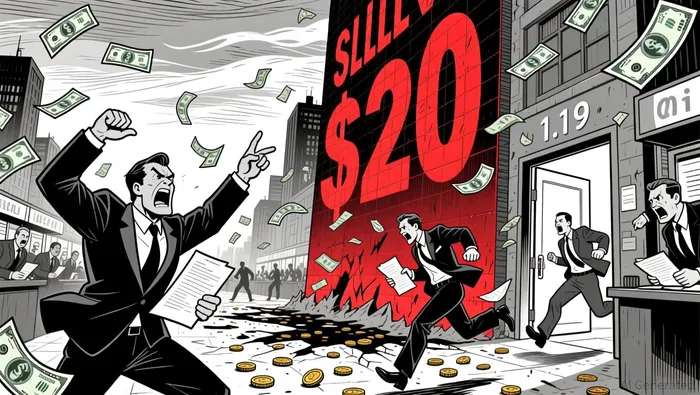
The bid-ask spread further illustrates this fragility. On November 7, 2025, XRP's 7.5% price drop coincided with a 84% surge in trading volume, driven by cascading stop orders and institutional selling. While the token briefly stabilized near $2.20, its failure to reclaim the $2.28 level confirmed a bearish bias, reinforced by technical indicators like the RSI (37.09) and MACD. These patterns suggest that liquidity in XRP is not only concentrated but also susceptible to coordinated selling pressures during periods of stress.
Institutional Accumulation: ETFs, Whales, and OTC Flows
Despite short-term volatility, institutional players are quietly accumulating XRP through strategic channels. At least nine asset managers filed spot XRP ETF applications in 2025, with analysts projecting $5–7 billion in inflows by 2026. ETFs have recorded net inflows for 15 consecutive trading sessions, indicating institutional confidence in XRP's long-term utility, particularly in decentralized finance (DeFi) and cross-border payments.
On-chain data also reveals a shift in ownership dynamics. Whale wallets holding 100 million to 1 billion XRP increased their share to 12.8% of the supply in 2025, while XRP exchange balances dropped by 34.18% over two months, signaling a move toward self-custody. This reduction in liquid supply aligns with historical accumulation phases seen in 2018, 2020, and 2022, where sharp declines were followed by rebounds as noted in previous analysis. Institutions are leveraging over-the-counter (OTC) desks and private liquidity hubs to build positions without directly influencing the public order book, creating a divergence between price action and capital flows.
Market Manipulation: Wash Trading and Coordinated Tactics
XRP's price suppression has sparked debates about coordinated manipulation. A validator on the XRP Ledger (XRPL), Grapedrop, identified unusual trading patterns involving repeated transfers between exchange addresses, particularly Binance, which could distort volume-weighted average prices. These activities, coupled with algorithmic trading bots and spoof orders, allegedly create artificial sell walls at key resistance levels.
Wash trading, a tactic used to inflate perceived liquidity, has also been flagged in XRP's trading patterns. A Chainalysis report notes that such practices obscure real demand and are often paired with pump-and-dump schemes as observed in recent analysis. While on-chain data can identify suspicious patterns, definitive proof of manipulation requires off-chain evidence. Nevertheless, the interplay of these tactics with XRP's escrow mechanism-releasing a fixed amount of tokens monthly-adds a layer of predictability to its supply dynamics, potentially stabilizing the market.
Strategic Accumulation Phases: Opportunities and Risks
For investors, the key lies in identifying accumulation phases amid manipulation risks. XRP's price has shown resilience around the $2.10 level, with technical indicators suggesting consolidation or a potential breakout. Institutional inflows and whale accumulation indicate a redistribution of control, which could stabilize the asset against short-term volatility. However, coordinated selling designed to trigger retail stop-loss orders remains a risk, as seen in November 2025 when XRP's price dropped $0.21 in a single session as reported in market analysis.
A tactical approach involves monitoring on-chain metrics like exchange outflows and whale-to-exchange flows. For example, the 34.18% drop in XRP exchange balances over two months suggests reduced liquidity and rising demand. Additionally, the XRP Ledger's expansion into decentralized media and the upcoming XRPL lending protocol could drive utility-based demand, independent of speculative trading.
Conclusion: Navigating the Manipulative Structure
XRP's market structure in 2025 is defined by liquidity fragility, institutional accumulation, and alleged manipulation. While short-term volatility persists, the alignment of ETF inflows, whale accumulation, and regulatory clarity (post-SEC settlement) points to a potential inflection point. Investors should focus on strategic entry points near key support levels ($2.10–$2.20) and leverage on-chain data to gauge liquidity shifts. In a market where manipulation tactics coexist with structural demand, patience and a long-term perspective may yield the most rewarding outcomes.







Comentarios
Aún no hay comentarios