
Why XRP Investors Must Embrace Patience and Long-Term Vision Amid Regulatory and Market Challenges
In the ever-evolving landscape of digital assets, XRPXRP-- has emerged as a unique case study in resilience and strategic infrastructure development. After years of regulatory uncertainty, the token now stands at a pivotal inflection point, where patience and a long-term vision are not just virtues but necessities for investors seeking to capitalize on its transformative potential.
Regulatory Clarity as a Foundation for Growth
The 2025 resolution of the Ripple vs. SEC case marked a watershed moment for XRP and the broader crypto industry. According to a report by OpenExO, Ripple's partial victory in the lawsuit-culminating in a $50 million settlement and the dissolution of the injunction-provided critical regulatory clarity, enabling U.S. exchanges to relist XRP and unlocking a surge in market activity. This development not only validated XRP's utility as a non-security asset but also set a precedent for how tokens might be classified under U.S. securities law, emphasizing context over blanket assumptions.
The immediate market response underscored investor confidence: XRP's price surged from $0.50 to over $3.00 post-settlement, marking a seven-year high. However, regulatory clarity is just the starting line. For XRP to fully realize its potential, investors must now shift focus from short-term volatility to the long-term infrastructure and adoption trends that will define its trajectory.
Infrastructure Innovation Driving Utility
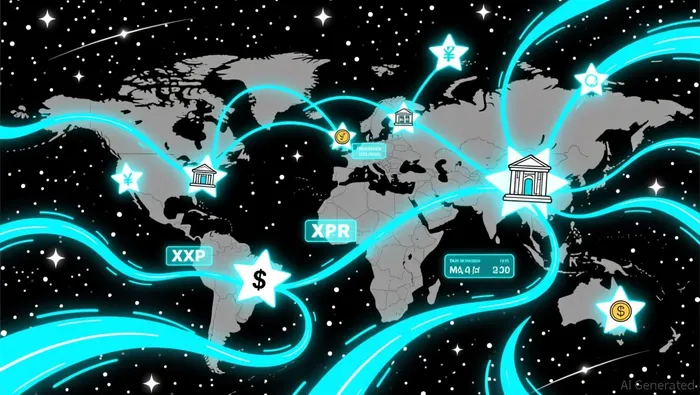
At the heart of XRP's value proposition lies its role as a bridge asset and infrastructure layer for global finance. Data from Yahoo Finance highlights that the XRP Ledger (XRPL) processes over 2 million daily transactions with settlement times of just three to five seconds, outpacing traditional cross-border payment systems. Ripple's On-Demand Liquidity (ODL) service, which allows banks to convert fiat to XRP for real-time settlements, has already unlocked up to $27 trillion in dormant liquidity globally.
This infrastructure is not theoretical-it is operational. With partnerships spanning 300+ financial institutions, including SBI Remit, CIBC, and Santander, RippleNet is redefining how cross-border transactions are executed, reducing costs and eliminating the need for pre-funded foreign currency accounts. For XRP investors, this means the token's utility is deeply embedded in real-world financial workflows, creating a flywheel effect where adoption drives demand.
Institutional Adoption and ETF Catalysis
The launch of XRP ETFs in mid-November 2025 further cemented institutional confidence in the asset. As noted by European Business Magazine, these products-backed by heavyweights like Franklin Templeton, Grayscale, and Bitwise-absorbed $1.3 billion in assets under management within 50 days. This rapid adoption reflects a broader shift in institutional sentiment, with XRP now viewed not as a speculative bet but as a strategic allocation for liquidity management and cross-border efficiency.
The success of these ETFs is a testament to XRP's unique positioning: it is the only major crypto asset with a dual role as both a speculative token and a functional infrastructure component. This duality creates a moat against competition, as institutions are less likely to abandon an asset that directly enhances their operational efficiency.
Expanding Use Cases Beyond Payments
While cross-border payments remain XRP's core use case, its ecosystem is rapidly diversifying. The XRP Ledger's low fees, scalability, and built-in regulatory tools have made it a preferred platform for tokenizing real-world assets (RWAs), including real estate and carbon credits. Ripple's RLUSD stablecoin, for instance, has expanded liquidity pools and facilitated faster institutional transactions across ecosystems, further entrenching XRP's role in decentralized finance (DeFi).
These developments position XRP as more than a payment rail-it is becoming a foundational layer for the next generation of financial infrastructure. For investors, this means the token's value is no longer tied solely to speculative cycles but to the long-term adoption of blockchain-based systems.
The Case for Strategic Patience
XRP's journey has been anything but linear. From the SEC's initial lawsuit in 2020 to the 2025 settlement, the token has weathered regulatory storms that could have derailed its progress. Yet, each challenge has been met with innovation: improved infrastructure, expanded partnerships, and novel use cases.
For investors, this history underscores a critical lesson: patience is the cornerstone of strategic conviction. The regulatory hurdles that once clouded XRP's future have now become the foundation for its growth. As institutional adoption accelerates and the XRP Ledger evolves into a multi-asset platform, those who focus on the long-term vision-rather than short-term noise-will be best positioned to benefit.
In a market obsessed with quick wins, XRP offers a rare opportunity: a digital asset with tangible infrastructure, institutional backing, and a clear roadmap for utility-driven growth. The question is not whether XRP will succeed-it is whether investors are ready to embrace the patience required to see its vision through.






Comentarios
Aún no hay comentarios