
XRP's Institutional Revolution: Regulatory Clarity and Strategic Adoption Fuel Cross-Border Dominance
The cryptocurrency landscape in 2025 is defined by a pivotal shift: regulatory clarity and institutional adoption are converging to redefine cross-border payments. At the center of this transformation is XRPXRPI--, Ripple's digital asset, which has emerged as a bridge between traditional finance and blockchain innovation. The August 2025 U.S. Securities and Exchange Commission (SEC) settlement with Ripple Labs marked a watershed moment, reclassifying XRP as a commodity in secondary markets and unlocking a flood of institutional capital. This development, paired with strategic partnerships and technological upgrades, positions XRP to dominate institutional-grade cross-border payments in the coming years.
Regulatory Clarity: A Catalyst for Institutional Confidence
The 2025 SEC settlement resolved a five-year legal battle by affirming that XRP traded on public exchanges is not a security, a decision that has reshaped the asset's trajectory. According to a report by Finance Feeds, Ripple agreed to a $125 million fine and adhered to an injunction limiting institutional sales, but the settlement preserved the distinction between programmatic (retail) and institutional transactions [1]. This nuanced framework, validated by Judge Analisa Torres, has created a blueprint for future crypto regulation and reduced legal ambiguity for public trading [2].
The regulatory clarity has directly spurred institutional interest. By July 2025, the ProShares Ultra XRP ETF (UXRP) became the first SEC-approved XRP investment product, attracting $1.2 billion in its first month [3]. Bloomberg analysts now assign a 95% probability of XRP ETF approval by year-end 2025, signaling robust institutional demand [4]. Meanwhile, Ripple's $1.25 billion acquisition of Hidden Road in 2025 has further enhanced XRP's liquidity infrastructure, solidifying its role as a reliable bridge asset [5].
Strategic Adoption: XRP's Cross-Border Ecosystem Expands
Institutional adoption of XRP has accelerated post-settlement, driven by its efficiency in cross-border transactions. Ripple's On-Demand Liquidity (ODL) service, which uses XRP to facilitate real-time, low-cost remittances, processed $1.3 trillion in Q2 2025 alone [6]. Major banks like SantanderSAN--, SBI Holdings, and Standard Chartered have integrated XRP into their operations, leveraging its 3–5 second settlement times and 40–70% lower fees compared to SWIFT [7].
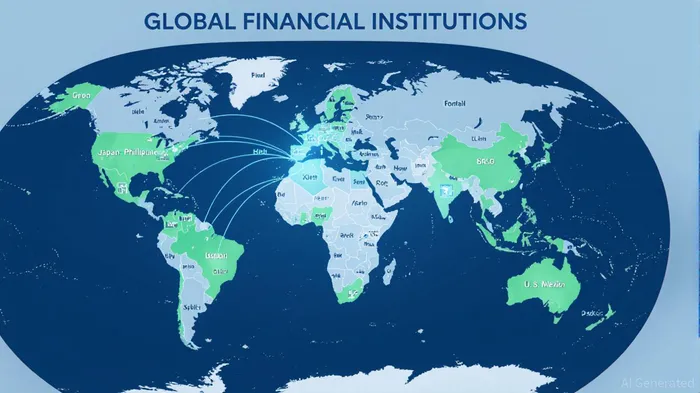
Real-world use cases underscore XRP's utility. SBI Remit, for instance, uses XRP to process remittances from Japan to the Philippines, Vietnam, and Indonesia, while Tranglo and Pyypl have expanded corridors in the Middle East and APAC [8]. In Latin America, Travelex Bank and Unicâmbio now enable instant payments between Brazil and Portugal [9]. These partnerships highlight XRP's ability to act as a liquidity intermediary, reducing the need for pre-funded accounts and cutting operational costs.
Global Regulatory Tailwinds and Technological Advancements
XRP's regulatory profile is further strengthened by favorable treatment in key jurisdictions. Under the European Union's Markets in Crypto-Assets (MiCA) framework, XRP is classified as a utility token rather than a stablecoin, exempting it from stringent reserve requirements [10]. Japan's Financial Services Agency (FSA) and Singapore's Monetary Authority of Singapore (MAS) have also adopted flexible frameworks, making these markets attractive for XRP-related businesses [11].
Technologically, Ripple's XLS-30 automated market maker (AMM) upgrade in 2025 enhanced liquidity and reduced reliance on centralized exchanges [12]. The acquisition of Rail and the launch of Ripple USD (RLUSD), backed by BNY Mellon and SBI, have further bridged traditional finance and DeFi ecosystems [13]. These innovations position XRP as a foundational asset in next-generation financial infrastructure.
Future Outlook: XRP as a Cornerstone of Global Finance
With regulatory clarity and institutional adoption momentum, XRP is poised to become a cornerstone of cross-border payments. The asset's role in facilitating Central Bank Digital Currency (CBDC) interoperability is expected to grow, as Ripple aligns its technology with central banks to streamline transactions [14]. Additionally, the potential approval of XRP ETFs and ongoing regulatory modernization—such as the SEC's “Project Crypto”—could further enhance market stability and adoption [15].
Conclusion
XRP's journey from regulatory uncertainty to institutional adoption exemplifies the transformative potential of blockchain in global finance. The 2025 SEC settlement, coupled with strategic partnerships and technological innovation, has created a flywheel effect: regulatory clarity attracts capital, which fuels adoption, which reinforces utility. As financial institutionsFISI-- increasingly prioritize speed, cost efficiency, and compliance, XRP is uniquely positioned to dominate the cross-border payments landscape—a critical battleground for the future of money.






Comentarios
Aún no hay comentarios