
XRP's Institutional Adoption and Regulatory Uncertainty: A New Era for Institutional Investment?
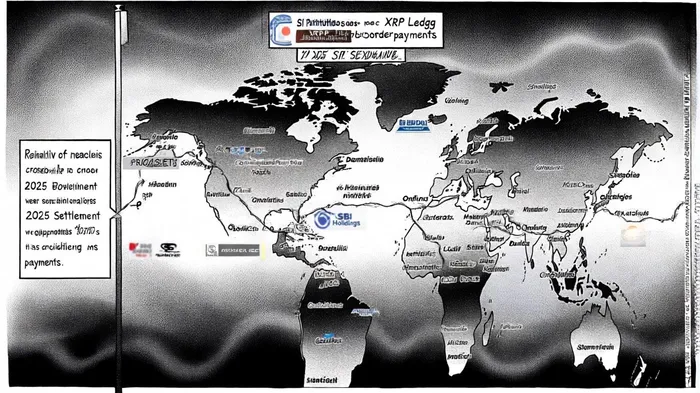
In 2025, XRPXRP-- has emerged as a focal point for institutional investors, driven by a landmark regulatory resolution and strategic partnerships that are reshaping its market dynamics. The U.S. Securities and Exchange Commission's (SEC) August 2025 settlement with Ripple Labs, which reclassified XRP as a utility token in secondary market transactions, removed a critical legal barrier, enabling financial institutions to integrate the asset without fear of regulatory reprisal, as detailed in a OneSafe analysis. This clarity has catalyzed a surge in institutional adoption, with major players like SBI Holdings in Japan leveraging XRP for real-time remittances across Asia, while Onafriq expanded Ripple's network to connect 27 African countries, according to a GN Crypto report.
Institutional Partnerships and Technological Innovation
Ripple's institutional partnerships have underscored XRP's utility in cross-border payments, where its speed and cost efficiency outperform traditional systems. For instance, SantanderSAN--, American ExpressAXP--, and other global banks have adopted Ripple's On-Demand Liquidity (ODL) service, reducing transaction costs by up to 90% in corridors like Japan to the Philippines, as noted in a Bitget report. Technological upgrades, such as the XLS-30 automated market makerMKR-- (AMM), have further enhanced liquidity and operational efficiency, making XRP an attractive tool for real-time settlements, as detailed in the GN Crypto report.
The asset's institutional appeal has also been amplified by the development of XRP-related exchange-traded funds (ETFs). Firms like Bitwise, VanEck, and ProShares submitted filings for spot XRP ETFs, with regulatory decisions anticipated in October 2025, according to a CryptoNewsInsights report. If approved, these products would provide institutional investors with a regulated vehicle to access XRP, potentially injecting $5–$8 billion in liquidity-a trajectory mirroring BitcoinBTC-- and EthereumETH-- ETFs, according to that analysis.
Regulatory Uncertainty and Global Challenges
Despite these advancements, regulatory uncertainties persist, particularly outside the U.S. In Europe and Asia, divergent frameworks create ambiguity for XRP adoption. For example, Singapore's tightened licensing requirements for crypto firms and Vietnam's restrictions on crypto service providers could limit XRP's liquidity and operational scope, as noted by OneSafe. Meanwhile, the SEC's delayed ETF decisions-pushed back due to the U.S. government shutdown-have introduced market volatility, with key filings like Bitwise's Amendment No. 3 awaiting review, according to an FX Leaders article.
Investment Implications and Future Outlook
The interplay of institutional adoption and regulatory risk positions XRP as both an opportunity and a cautionary case study. On one hand, its integration into cross-border payment systems and the potential approval of ETFs could drive significant capital inflows. On the other, unresolved regulatory questions in key markets and the SEC's prolonged review process underscore the need for investor vigilance.
For investors, XRP's trajectory hinges on three factors: the resolution of pending ETF applications, the expansion of its institutional partnerships, and the evolution of global regulatory frameworks. While the asset's utility in real-world use cases-such as Ripple's ODL-provides a tangible value proposition, its long-term success will depend on navigating the delicate balance between innovation and compliance.
Conclusion
XRP's 2025 resurgence reflects a broader shift in institutional attitudes toward cryptocurrencies, driven by regulatory clarity and technological differentiation. However, the path forward remains contingent on resolving global regulatory disparities and the SEC's final stance on ETFs. For investors, this duality-between transformative potential and lingering uncertainties-demands a nuanced approach, balancing optimism with strategic risk management.





Comentarios
Aún no hay comentarios