
XRP's Institutional Adoption and Liquidity Surge: Why Institutional Capital Is About to Flood the XRP Market
The cryptocurrency market has long been characterized by its volatility and speculative nature, but 2025 marked a pivotal shift for XRPXRP--. Regulatory clarity, strategic institutional partnerships, and a surge in ETF inflows have positioned XRP as a prime candidate for sustained institutional adoption. As we enter 2026, the evidence suggests that institutional capital is poised to flood the XRP market, driven by a confluence of regulatory, technological, and market-driven factors.
The Institutional Adoption Catalyst
XRP's institutional adoption story began to crystallize in late 2025 with the resolution of the SEC's long-standing lawsuit against Ripple in August. This legal victory not only re-listed XRP on major exchanges but also unlocked a wave of institutional capital previously constrained by regulatory uncertainty. By December 2025, XRP ETFs had absorbed $483 million in inflows despite a 15% drop in the spot price to $1.77, a testament to the asset's growing appeal among institutional investors.
The momentum accelerated in 2026. XRP ETFs, which had already seen $1.3 billion in assets under management within 50 days of their November 2025 launch, continued to attract capital from major asset managers like Franklin Templeton, Grayscale, and Bitwise. According to analysis, these firms, traditionally cautious in their crypto allocations, have now positioned XRP as a core holding, reflecting a broader institutional recognition of its utility in cross-border payments and decentralized finance (DeFi).
Ripple's strategic moves further solidified this trend. The acquisition of Hidden Road to form Ripple Prime-the first crypto-owned global prime brokerage-expanded XRP's exposure to institutional capital by providing a compliant infrastructure for trading and custody. Meanwhile, partnerships with financial giants like Mizuho Bank, SMBC Nikko, and Securitize Japan, coupled with Ripple's conditional approval to charter a U.S. national trust bank, underscored the asset's regulatory credibility.
Liquidity Surge and Network Activity
Institutional adoption is not just about capital inflows-it's also about liquidity. XRP's liquidity metrics in early 2026 tell a compelling story. The decentralized exchange integrated into the XRP Ledger reported record liquidity of $173 billion, driven by increased institutional activity in cross-border settlements and DeFi protocols. This surge was further amplified by a 50% rise in network transactions over two weeks, with daily transactions nearing 1 million for the first time since 2022.
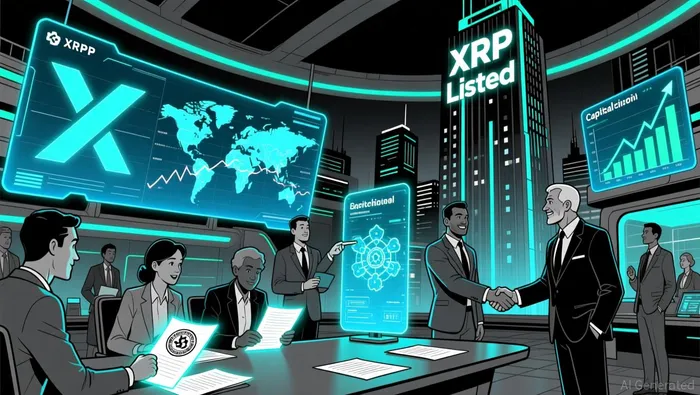
Whale activity also signaled growing institutional interest. Transfers of $100,000 or more hit a three-month high, a pattern historically associated with large-scale accumulation and impending volatility. Meanwhile, exchange reserves for XRP hit multi-year lows on platforms like Binance, indicating tokens are being moved to private wallets for long-term holding-a classic sign of institutional confidence.
Technical indicators corroborate this narrative. XRP's price breakout from a descending wedge and a rising buy-to-sell order ratio suggest that institutional demand is outpacing supply, setting the stage for a potential price surge.
The 2026 Outlook: Regulatory Clarity and Technological Upgrades
Looking ahead, XRP's institutional trajectory is further bolstered by regulatory and technological developments. Goldman Sachs has emphasized that market structure legislation in 2026 will unlock new opportunities in tokenization and DeFi, with regulatory clarity serving as the primary driver for institutional crypto adoption. Ripple's roadmap for the XRP Ledger also includes privacy-preserving features and confidential multi-purpose tokens, aligning with institutional demand for secure, compliant solutions.
The stage is set for a flood of institutional capital into XRP. With ETF inflows already outpacing Bitcoin and Ethereum, a robust network effect, and a regulatory environment that now supports crypto innovation, XRP is no longer a speculative asset-it's a foundational pillar of the institutional crypto ecosystem.
Conclusion
The convergence of regulatory resolution, institutional infrastructure, and liquidity growth has transformed XRP into a must-own asset for institutional portfolios. As 2026 unfolds, the floodgates are opening-not just for XRP's price, but for its role in reshaping global finance. For investors, the message is clear: the institutional adoption story is no longer speculative-it's already here.







Comentarios
Aún no hay comentarios