
XRP's Institutional Adoption in 2025: Regulatory Clarity and Cross-Border Infrastructure Drive Growth
The 2025 U.S. Securities and Exchange Commission (SEC) settlement with Ripple Labs has reshaped the regulatory landscape for XRPXRP--, unlocking new avenues for institutional adoption. By resolving a years-long legal dispute, the ruling clarified that XRP is not a security when sold to retail investors on secondary markets, while institutional sales remain subject to securities laws [1]. This distinction has reduced uncertainty for market participants, enabling major U.S. exchanges to relist XRP and paving the way for the first SEC-approved XRP ETFs [1].
Regulatory Clarity as a Catalyst
The settlement's most immediate impact was the removal of a critical barrier to institutional participation. Ripple agreed to a $125 million fine and agreed to restrict institutional sales of XRP, but the outcome established a precedent that prioritizes functional analysis over rigid categorization of digital assets [2]. This approach aligns with broader efforts by the SEC to modernize its framework for cryptocurrencies, fostering collaboration with industry stakeholders [1].
Institutional investors have responded swiftly. Several major asset managers have filed for XRP ETFs, with approval expected by year-end 2025 [1]. The approval of the first XRP ETF would not only validate the token's utility but also signal a shift in regulatory sentiment toward innovation. As stated by Ripple CEO Brad Garlinghouse, “Regulatory clarity is the bedrock of institutional adoption. The 2025 settlement has created a foundation for XRP to thrive in both retail and institutional markets” [1].
Cross-Border Payments: XRP's Core Value Proposition
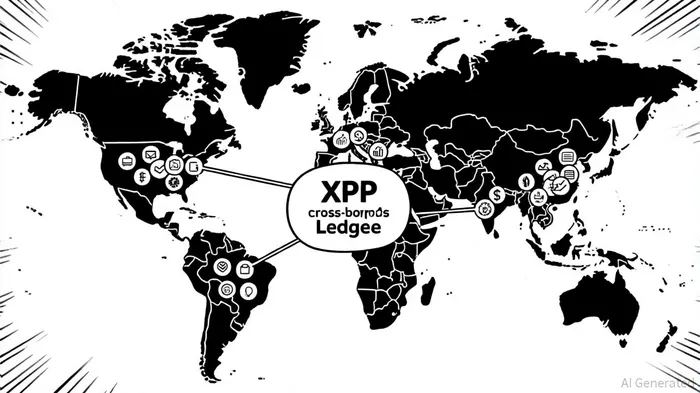
Beyond regulatory developments, XRP's role in cross-border payments remains a cornerstone of its appeal. Designed to facilitate fast, low-cost international transactions, the XRP Ledger has attracted partnerships with financial institutionsFISI-- and payment networks across seven continents [3]. For example:
- South America: The Bank of Colombia tested its Central Bank Digital Currency (CBDC) on Ripple's platform, signaling a commitment to blockchain-driven financial modernization [3].
- Europe: Ripple's collaboration with Clear Junction enables cross-border payments between the EU and the UK under the supervision of the Financial Conduct Authority [3].
- Asia: A long-term partnership with SBI Holdings supports remittances to the Philippines, Vietnam, and Indonesia, while Singapore's Major Payments Institution license expands Ripple's regional footprint [3].
- Middle East and Africa: Partnerships with Dubai's financial sector and Egyptian banks, alongside Onafriq's remittance initiatives, highlight XRP's adaptability to diverse markets [3].
These partnerships underscore XRP's utility as a bridge currency, reducing friction in global trade and remittances. According to a report by FinanceFeeds, Ripple's cross-border solutions have processed over $1 trillion in transactions since 2020, with XRP's role growing as institutions seek cost-effective alternatives to traditional SWIFT systems [1].
Risks and Regulatory Nuances
Despite progress, risks persist. Institutional sales of XRP remain tightly regulated, requiring compliance with securities laws and structured frameworks to avoid penalties [1]. Ripple's prohibition on unregistered institutional sales could limit demand unless intermediaries or custodians develop compliant solutions. Additionally, regulatory scrutiny in other jurisdictions—such as the EU's Markets in Crypto-Assets (MiCA) framework—may introduce new compliance hurdles [2].
However, the 2025 settlement has already influenced broader regulatory trends. The SEC's emphasis on transparency and collaboration has encouraged a more predictable environment for digital assets, potentially accelerating adoption in 2025 and beyond [1].
Conclusion: A Pivotal Year for XRP
The convergence of regulatory clarity and cross-border infrastructure positions XRP for significant institutional adoption in 2025. With ETF approvals on the horizon and a growing network of global partnerships, the token is well-positioned to capitalize on demand for efficient cross-border solutions. While risks remain, the precedent set by the Ripple case has demonstrated that regulatory frameworks can evolve to accommodate innovation without compromising investor protection.





Comentarios
Aún no hay comentarios