
XRP's Imminent ETF Approval and Institutional Adoption as Catalysts for a Supply-Driven Bull Run
The cryptocurrency market has long awaited a regulatory breakthrough that could bridge the gap between digital assets and traditional finance. XRPXRPI--, the native token of the XRP Ledger (XRPL), is now at the epicenter of this transformation. With the U.S. Securities and Exchange Commission (SEC) poised to approve spot-based XRP ETFs by year-end 2025, the token is on the brink of a paradigm shift. This development, coupled with growing institutional adoption and strategic supply dynamics, is setting the stage for a supply-driven bull run that could redefine XRP's role in global asset allocation.
Regulatory Clarity: A Green Light for Institutional Capital
The SEC's evolving stance on XRP has been a critical catalyst. Following Ripple's partial legal victory in late 2023—where a court ruled XRP is not a security in secondary markets—the regulatory landscape has shifted. This clarity has emboldened asset managers to file spot-based XRP ETF proposals. Notably, the ProShares Ultra XRP ETF (UXRP) and the Bitwise Spot XRP ETF are among the most prominent contenders, with approval probabilities now hovering near 95%.
The recent approval of leveraged and futures-based XRP ETFs, such as UXRP, has already signaled the SEC's willingness to accommodate crypto-based financial products. However, the mixed signals—such as the sudden stay on the Bitwise Crypto Index ETF—highlight the regulatory uncertainty that persists. This inconsistency, while frustrating, underscores the SEC's cautious balancing act between innovation and investor protection. For XRP, the resolution of this tension will determine whether it becomes a mainstream asset for institutional portfolios.
Supply Dynamics: A Perfect Storm for XRP
XRP's supply dynamics are uniquely positioned to benefit from ETF-driven demand. With a circulating supply of 59.1 billion tokens and a fixed total supply of 100 billion, XRP's scarcity model is inherently deflationary. Ripple's ongoing token retirements further tighten the supply, with over 700 million XRP relocked in 2025 alone. This controlled supply strategy has already begun to manifest in market behavior:
- Institutional Treasury Holdings: Companies like Nature's Miracle and Trident Digital have committed $1 billion to XRP treasury purchases, effectively removing ~300 million XRP from the open market. These purchases, combined with Ripple's strategic relocking, are creating a supply crunch.
- Utility-Driven Demand: XRP's role in Ripple's On-Demand Liquidity (ODL) service—now operating in 90+ markets—has turned the token into a functional asset. Financial institutionsFISI-- require XRP for cross-border settlements and stablecoin operations, locking it into daily transactional use.
- Whale Accumulation: On-chain data reveals that over 2,742 wallets now hold >1 million XRP each, collectively controlling 47.3 billion tokens. This whale activity signals long-term confidence, with large holders positioning for future price appreciation.
Institutional Adoption: From Speculation to Strategic Allocation
XRP's institutional adoption is no longer speculative—it is structural. The token's utility in real-world applications, such as cross-border payments and asset tokenization, has made it a critical infrastructure asset. Ripple's RLUSD stablecoin, backed by U.S. Treasuries, is now used by institutions for treasury management and settlements, further entrenching XRP's role in the financial ecosystem.
The approval of XRP ETFs will act as a catalyst for broader institutional adoption. Similar to BitcoinBTC-- and EthereumETH-- ETFs in 2024, XRP ETFs will provide a regulated, low-cost entry point for pension funds, endowments, and hedge funds. These institutions are expected to allocate billions to XRP, not just as a speculative play but as a strategic hedge against fiat volatility and a diversifier in digital portfolios.
Market Dynamics: A Bullish Outlook
The interplay of regulatory clarity, institutional demand, and supply constraints is creating a bullish scenario for XRP. Key indicators include:
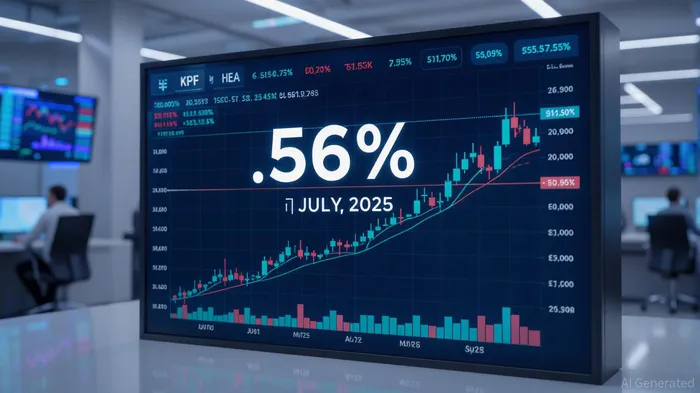
- Price Breakouts: XRP has surged 56% in July 2025, breaking above key resistance levels at $2.50 and $3.40. Technical analysts project a potential rally to $6.19 by Q4 2025. Historically, resistance level breaks have shown a high probability of short-term gains, with a 57.14% win rate over 3 days and 50.00% over 10 days.
- ETF AUM Projections: If the Bitwise XRP ETF is approved, it could attract $50 billion in assets under management (AUM) within its first year, dwarfing the $327 million in AUM for the ProShares Ultra XRP ETF as of July 17, 2025.
- Market Cap Expansion: With current market cap at ~$210 billion, XRP could surpass $400 billion by year-end if ETF inflows materialize.
Strategic Asset Allocation: XRP as a Cornerstone
For investors, XRP's dual role as a speculative and utility-driven asset presents a unique opportunity. Strategic allocation strategies should consider:
1. Hedging Against Fiat Volatility: XRP's utility in cross-border payments and stablecoin settlements makes it a natural hedge for global macro risks.
2. Diversification: XRP's low correlation with traditional assets offers diversification benefits, particularly in portfolios focused on digital infrastructure.
3. Long-Term Exposure: Given Ripple's controlled supply model and growing institutional demand, XRP is well-positioned for sustained appreciation over the next 12–24 months.
Conclusion: Positioning for the Next Bull Cycle
The convergence of regulatory approval, institutional adoption, and supply dynamics is creating a perfect storm for XRP. While the SEC's final decisions on spot ETFs remain pending, the market has already priced in a high probability of success. For investors, the key takeaway is clear: XRP is no longer a niche token—it is a strategic asset in the evolving digital finance landscape. Those who position early, with a focus on both speculative and utility-driven use cases, stand to benefit from a multi-year bull run.
In the post-ETF world, XRP is poised to become a linchpin of institutional portfolios. The time to act is now.






Comentarios
Aún no hay comentarios