
XRP Holder Behavior and Institutional-Grade Asset Structuring: Adapting to a Regulated Future
The digital asset landscape in 2025 is defined by a tectonic shift in institutional investor behavior, driven by regulatory clarity and infrastructure innovation. XRPXRP--, once mired in legal uncertainty, has emerged as a strategic asset for sophisticated investors who are redefining how it is structured, allocated, and utilized. This transformation is not merely speculative-it reflects a calculated alignment with evolving compliance frameworks and the growing utility of blockchain-based solutions.
Regulatory Clarity Fuels Institutional Confidence
The U.S. administration's push for a technology-neutral regulatory framework has been a game-changer. By prioritizing innovation-friendly policies while ensuring compliance, regulators have created a fertile ground for institutional adoption. Nearly half (47%) of institutional investors have increased their digital asset allocations, with XRP benefiting from this broader trend. Ripple, the company behind XRP, has capitalized on this environment by securing a U.S. banking charter for its stablecoin RLUSD and expanding operations in regulated markets like Singapore and the Middle East. These moves signal to investors that XRP is no longer a fringe asset but a component of a diversified, regulated portfolio.
XRP as a Reserve Asset: Family Offices and Tax Strategy
Sophisticated investors, particularly ultra-high-net-worth individuals and family offices, are structuring XRP holdings as a reserve asset-a category traditionally reserved for gold or foreign currency. This shift is underpinned by the resolution of long-standing regulatory disputes, which has reduced legal risk and enhanced XRP's perceived stability. Family offices now allocate between 5% and 15% of their liquid holdings to XRP, depending on risk tolerance. These allocations are governed by rebalancing rules triggered by percentage thresholds or time-based reviews, ensuring disciplined portfolio management.
Tax strategy also plays a critical role. The IRS's classification of XRP as property allows for capital gains treatment and deferral strategies, making it an attractive option for long-term holdings. This tax-efficient structuring is particularly appealing in a low-interest-rate environment, where traditional assets offer limited returns.
Market Trends and Infrastructure: Beyond ETFs
While XRP spot ETFs have captured headlines-collectively managing $941.7 million in assets as of Q3 2025-the real story lies in infrastructure development. Ripple's On-Demand Liquidity processed $1.3 billion in Q2 2025, with annual volume reaching $15 billion, driven by cross-border corridors in the Asia-Pacific. Meanwhile, the XRP Ledger (XRPL) has seen a 142% increase in daily active addresses to 134,600, and tokenized real-world assets on the network hit $347 million in Q3 2025, led by stablecoins like RLUSD and U.S. Treasury tokens.
Institutional liquidity for XRP remains robust, with Kaiko assigning it an AA score of 95-tied with EthereumETH-- and second only to BitcoinBTC--. This liquidity, combined with growing infrastructure, positions XRP as a utility-driven asset rather than a speculative one.
The Future: 2026 and Beyond
Looking ahead, 2026 will be pivotal. Regulatory developments like the proposed GENIUS Act in the U.S. could further accelerate adoption of stablecoins and tokenized assets. For XRP, this means deeper integration into institutional portfolios as a tool for cross-border payments, liquidity management, and RWA tokenization. However, success will depend on maintaining compliance rigor and expanding use cases beyond speculative trading.
Sophisticated investors are already preparing. By structuring XRP holdings with a focus on reserve asset status, tax efficiency, and regulatory alignment, they are positioning themselves to capitalize on a 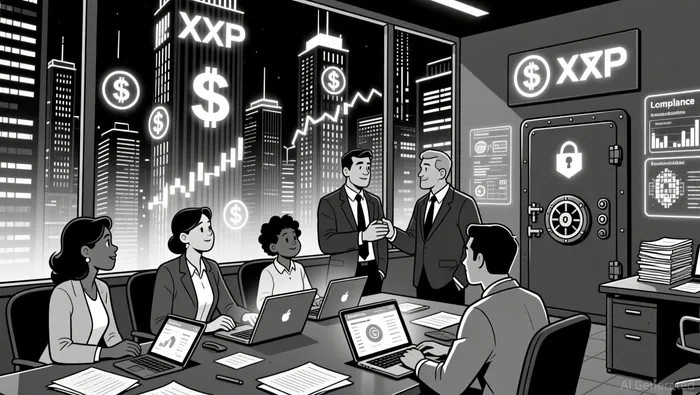 market that is no longer defined by uncertainty but by infrastructure and utility.






Comentarios
Aún no hay comentarios