
XRP's Expanding DeFi Utility: How FXRP on Hyperliquid is Driving Institutional Adoption and Liquidity
The XRPXRP-- ecosystem has entered a transformative phase in 2025, marked by the strategic integration of FXRP (Flare's XRP token) on HyperliquidPURR--, a high-performance decentralized exchange (DEX). This development is not merely a technical upgrade but a pivotal step in redefining XRP's role in decentralized finance (DeFi) and institutional markets. By enabling XRP to be traded as FXRP on Hyperliquid while preserving its native utility on the XRP Ledger, the Flare Network and Hyperliquid have created a bridge between XRP's legacy use cases and modern DeFi infrastructure. This article examines how FXRP's launch is reshaping XRP's market dynamics, driving institutional adoption, and enhancing liquidity, while also addressing the broader implications for its investment potential.
FXRP on Hyperliquid: A New Paradigm for XRP Utility
FXRP's integration on Hyperliquid allows users to trade XRP as a cross-chain asset while maintaining full custody of the underlying XRP Ledger token. This is facilitated by Flare's FAssets system and LayerZero's Omnichain Fungible token standard, which enable seamless bridging between chains. The significance of this lies in its ability to unlock XRP's participation in DeFi ecosystems beyond the XRP Ledger, such as lending, staking, and yield farming, without compromising the asset's native settlement capabilities.
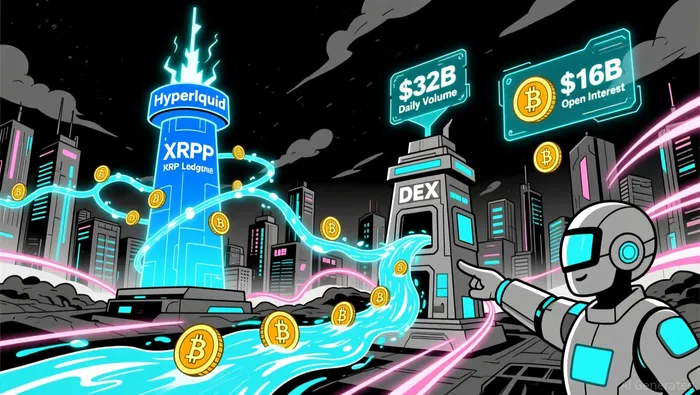
Hyperliquid's orderbook model, designed for high-volume trading, has positioned FXRP as an institutional-grade asset. The platform's 2025 growth metrics underscore this: daily trading volumes reached $32 billion, open interest hit $16 billion, and total value locked (TVL) climbed to $6 billion. These figures highlight Hyperliquid's emergence as a critical liquidity hub, with FXRP contributing to a broader narrative of XRP's programmable utility. For instance, FXRP can now be traded on Hyperliquid's orderbook, bridged back to the XRP Ledger for DeFi use cases, and then re-enter the DEX cycle, creating a closed-loop on-chain trading lifecycle.
Institutional Adoption and Regulatory Clarity
Institutional confidence in XRP has surged following the resolution of Ripple's SEC lawsuit in August 2025, which confirmed XRP's status as a non-security. This regulatory clarity catalyzed a wave of institutional participation, with XRP ETFs absorbing $483 million in inflows during December 2025, despite a 15% price drop to $1.77. The inflows were driven by XRP's role as a bridge currency for cross-border payments, offering faster and cheaper alternatives to traditional systems like SWIFT.
Hyperliquid's institutional footprint has also expanded through partnerships like USDH via Circle's CCTP V2, further solidifying its position in the derivatives market. Meanwhile, Ripple's acquisition of Hidden Road to form Ripple Prime-a crypto-owned global prime brokerage-has provided institutional-grade infrastructure, enhancing XRP's appeal as a collateral asset. These developments align with broader trends in institutional crypto adoption, where liquidity depth, regulatory alignment, and infrastructure maturity are prioritized.







Comentarios
Aún no hay comentarios