
XRP ETF's Record Inflows and Altcoin Implications
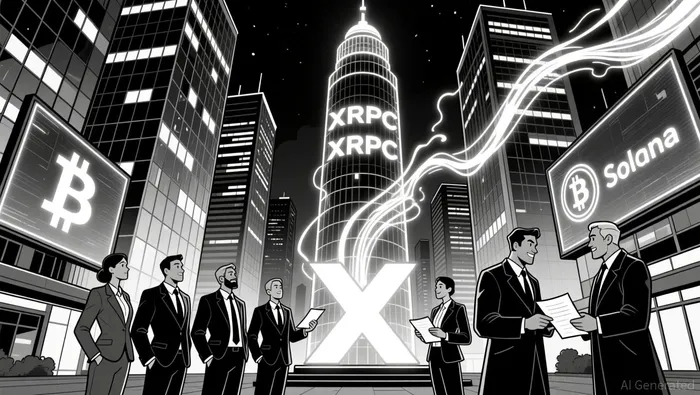
The cryptocurrency market in 2025 is witnessing a seismic shift as institutional investors increasingly pivot toward regulated crypto products. At the forefront of this trend is the Canary XRPXRP-- ETF (XRPC), which shattered expectations with $245 million in net inflows on its debut, outpacing both BitcoinBTC-- and SolanaSOL-- ETFs. This performance, despite an 8% drop in XRP's price on the same day, underscores a critical inflection point: institutional confidence in altcoins is no longer speculative but a tangible force reshaping the market.
The XRPC Phenomenon: Why XRP Outperformed
The XRPC's success stems from a confluence of factors that align with institutional priorities. First, regulatory clarity played a pivotal role. Ripple's legal victories in 2024 resolved lingering uncertainties about XRP's status, making it a safer bet for institutions wary of regulatory overhangs. Second, the ETF's structure-offering exposure to XRP without direct ownership-appeals to traditional investors who previously avoided the asset due to liquidity concerns according to market analysis. Third, product innovation in the altcoin space, such as staking-enabled ETFs for Solana, has set a precedent, but XRP's cross-border payment utility and established ecosystem gave it an edge as research shows.
Data from Coinotag highlights that XRPC's first-day trading volume ($58 million) exceeded the Solana ETF's $57 million and dwarfed the $17 million recorded by the REX-Osprey DOGE ETF. This suggests that XRP's brand recognition and real-world use cases-such as its role in global remittances-resonate more strongly with institutional investors than newer altcoins as market reports indicate.
The Altcoin ETF Pipeline: Undervalued Opportunities
The XRPC's success is not an isolated event but a harbinger of broader institutional adoption. Analysts predict that older cryptocurrencies with clear regulatory pathways and real-world utility-often termed "dinosaur cryptocurrencies"-will dominate the next altcoin cycle. These include Cardano (ADA) and Chainlink (LINK), both of which have seen growing institutional interest due to their smart contract capabilities and decentralized oracle networks according to industry data.
Emerging projects like Rollblock (RBLK) are also gaining traction. With a GameFi platform and profit-sharing mechanisms, RBLK's presale raised $7.7 million, signaling potential for ETF-driven growth in niche sectors like blockchain gaming as crypto news reports. Similarly, Uniswap (UNI) and Aave (AAVE) are attracting smart money traders, indicating a shift toward DeFi-focused altcoins with regulated investment vehicles as market analysis shows.
The Road Ahead: Regulatory MomentumMMT-- and Market Dynamics
The SEC's recent approval of altcoin ETFs-despite the government shutdown-has accelerated this trend according to financial analysts. With five altcoin ETF applications under review in October 2025, the market is primed for a wave of institutional capital. However, challenges remain. Liquidity constraints and macroeconomic headwinds could limit sustained inflows, favoring established assets like XRP over newer tokens.
For investors, the key takeaway is clear: ETF-driven growth is no longer confined to Bitcoin and Ethereum. As regulatory frameworks mature, altcoins with robust ecosystems and institutional-grade products will capture a disproportionate share of capital inflows. The XRPC's record-breaking debut is a case study in how regulatory clarity, product innovation, and market demand can converge to unlock value.






Comentarios
Aún no hay comentarios