
The XRP ETF Halt: A Buying Opportunity Amid Institutional Accumulation
The recent halt of XRPXRP-- ETFs in late 2025 has sent ripples through the cryptocurrency market, sparking debates about its implications for XRP's structural supply dynamics and long-term institutional demand. While the price of XRP has declined by over 45% since its July 2025 peak, a closer examination of on-chain activity, institutional adoption, and Ripple's controlled supply mechanisms suggests that this correction may represent a strategic entry point for investors with a long-term horizon.
Structural Supply Dynamics: Escrow and Controlled Release
Ripple's escrow system remains a cornerstone of XRP's supply management strategy. By locking 55% of its XRP reserves in escrow accounts, Ripple ensures a steady, predictable release of tokens aligned with market demand. This mechanism has been critical in mitigating the volatility often associated with cryptocurrencies, particularly as institutional investors seek stability.
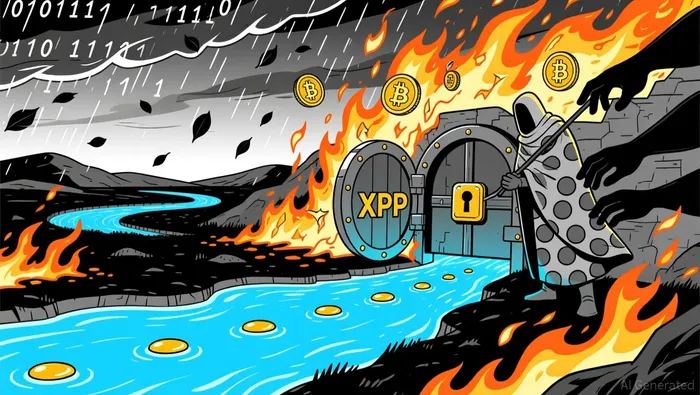
The launch of XRP ETFs in late 2025 initially accelerated this dynamic. Within four weeks, these funds amassed $1.2 billion in assets, with the Canary XRP ETFXRPC-- alone managing $335 million. This surge in institutional demand led to a 45% reduction in XRP's circulating supply as tokens were withdrawn from exchanges and locked into ETF custodial accounts. However, the ETF halt disrupted this flow, creating uncertainty about the pace of future institutional accumulation.
Institutional Accumulation: ETFs and Ripple's Strategic Moves
Despite the ETF halt, institutional interest in XRP has not waned. Ripple's acquisition of Hidden Road to establish Ripple Prime-a global prime brokerage-has expanded its institutional offerings, including clearing and trading services. Additionally, the launch of RLUSD has provided institutional traders with a compliant on-ramp to engage with XRP-based products. These developments underscore Ripple's commitment to building infrastructure that aligns with institutional-grade requirements.
The concentration of ETF assets in a few large funds, however, introduces risks. For instance, Canary Capital's XRPC fund accounts for over half of all XRP ETF assets. If inflows into these funds slow or reverse, the structural demand for XRP could weaken. Yet, the broader trend of institutional adoption-driven by Ripple's regulatory clarity post-SEC settlement-suggests that long-term demand remains intact.
Price Analysis: Macroeconomic Headwinds vs. Structural Demand
XRP's price decline in 2025, despite a $125 million SEC settlement, highlights the interplay between macroeconomic factors. A 13% drop in the asset's value was attributed to profit-taking by early investors, macroeconomic headwinds, and limited real-world demand beyond institutional channels. On-chain data further reveals that 37% of XRP holders are now underwater, exacerbating selling pressure.
However, the ETF halt has also created a dislocation in the market. With XRP's circulating supply reduced by 45%, the token's scarcity has increased, potentially setting the stage for a rebound if institutional demand stabilizes. The challenge lies in whether ETF inflows can outpace selling from large holders, who offloaded 200 million XRP ($400 million at the time) in late November 2025.
Is This a Buying Opportunity?
For long-term investors, the current price correction may present an attractive entry point. Ripple's escrow system ensures that XRP's supply remains tightly controlled, reducing the risk of inflationary pressures that plague other cryptocurrencies. Meanwhile, the institutional infrastructure built by Ripple-through ETFs, prime brokerage services, and stablecoins-positions XRP as a viable asset for institutional portfolios.
That said, risks persist. The concentration of ETF assets in a few funds and the broader crypto market's risk-off sentiment (evidenced by declines in BitcoinBTC-- and Ethereum) could prolong the downturn. Investors must also consider the potential for regulatory shifts or further disruptions in ETF structures, such as the 21Shares XRP ETF's gradual transfer of holdings to pay sponsor fees.
Conclusion
The XRP ETF halt has undoubtedly introduced volatility, but it has also highlighted the resilience of Ripple's structural supply framework and the growing institutional appetite for XRP. While short-term headwinds remain, the controlled release of tokens, combined with institutional-grade infrastructure, suggests that XRP's long-term fundamentals are intact. For investors willing to navigate the near-term uncertainty, this correction may represent a compelling opportunity to participate in a market that continues to evolve toward mainstream adoption.





Comentarios
Aún no hay comentarios