
XRP's DeFi Gambit: Can Ripple Dethrone Ethereum in 2025?
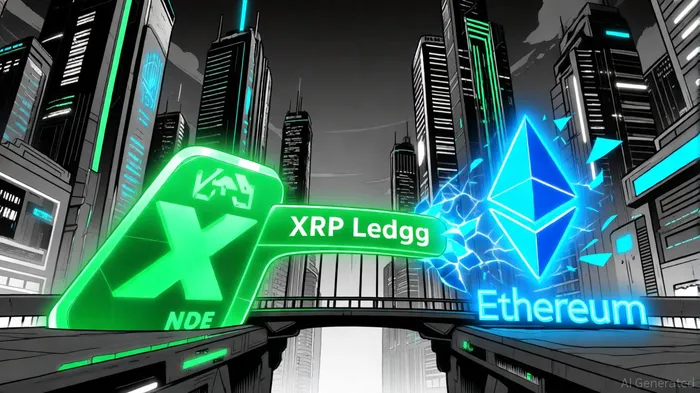
The DeFi landscape in 2025 is no longer a binary battle between EthereumETH-- and altcoins—it's a multi-layered chess match where regulatory compliance, institutional adoption, and real-world utility define the victor. Ripple, long dismissed as a “payment rail” purveyor, has emerged as a formidable challenger to Ethereum's DeFi throne. With a strategic roadmap emphasizing regulatory clarity, institutional-grade infrastructure, and real-world asset (RWA) tokenization, XRP's ascent in decentralized finance is notNOT-- just plausible—it's accelerating.
Ripple's DeFi Playbook: Compliance-First Innovation
Ripple's 2025 DeFi strategy is a masterclass in institutional alignment. The XRPXRP-- Ledger (XRPL) now boasts a native lending protocol, enabling pooled lending and underwritten credit directly on-chain[1]. This isn't just another AMM—it's a framework designed for regulated institutions, with features like Decentralized Identity (Credentials) to streamline KYC/AML processes[4]. By 2026, Ripple plans to integrate Zero-Knowledge Proofs (ZKPs) to enhance privacy while maintaining oversight—a critical feature for banks and asset managers navigating complex regulations[2].
The Multi-Purpose Token (MPT) standard further cements XRPL's institutional appeal. Unlike Ethereum's ERC-20 tokens, MPTs can represent complex financial instruments like bonds, structured products, and tokenized real estate[2]. This flexibility, combined with Ripple's EVM-compatible sidechain launching in Q2 2025, reduces friction for Ethereum developers while slashing gas fees by 90%[1]. For institutions, this means a hybrid ecosystem where they can leverage Ethereum's developer base without sacrificing cost efficiency or compliance.
XRP vs. Ethereum: Metrics That Matter
While Ethereum retains a $50B+ TVL and a sprawling dApp ecosystem, XRP's $80.63M TVL is growing at a 14% monthly clip[4]. The key differentiator? Transaction economics. XRPL processes 1,500 TPS with $0.0001 fees, compared to Ethereum's 50–60 TPS and $1–$50+ fees during peak times[1]. For institutions handling cross-border payments, this isn't just a technical edge—it's a business imperative.
Institutional adoption metrics tell an even clearer story. Ripple's On-Demand Liquidity (ODL) solution is now live with Santander, SBI Holdings, and MoneyGram, enabling real-time FX settlements at market rates[5]. JP Morgan's rumored exploration of Ripple's tech for cross-border corridors adds another layer of credibility[4]. Meanwhile, Ethereum's institutional traction, though robust, is largely driven by ETF inflows and speculative DeFi activity—less aligned with the operational needs of global banks[2].
Real-World Assets: The XRP Edge
Ripple's RWA tokenization efforts are rewriting the rules. The RLUSD stablecoin, paired with tokenized U.S. Treasuries (OUSG) and digital commercial paper (DCP), has turned XRPL into a 24/7 capital market infrastructure[1]. For example, Guggenheim Treasury Services and Zeconomy's DCP offering—rated Prime-1 by Moody's—provides institutional-grade liquidity without the counterparty risks of traditional markets[1].
Ethereum's RWA experiments, while innovative, lag in institutional trust. Tokenized real estate or gold on Ethereum still face regulatory ambiguity, whereas XRPL's compliance-ready tools (e.g., AMM Clawback, Deep Freeze) offer granular control over asset permissions[2]. This isn't just about speed—it's about regulatory proof of work.
The Road Ahead: Can XRP Overtake Ethereum?
Ethereum's dominance in DeFi is far from over. Its EVM ecosystem and developer network remain unmatched, and the Dencun upgrade has improved Layer 2 scalability[6]. However, Ripple's regulatory clarity—bolstered by the SEC's 2025 reclassification of XRP as a commodity—has unlocked a new era of institutional onboarding[3]. Whale accumulation and derivatives activity suggest XRP's market cap could surge if an XRP ETF is approved[3].
The CLARITY Act, which promotes small issuer exemptions, further tilts the playing field. By reducing compliance burdens for tokenized assets, it accelerates adoption of XRPL's RWA infrastructure[1]. For Ethereum, this means competing not just on code, but on regulatory agility—a domain where Ripple now holds the upper hand.
Conclusion: A New DeFi Paradigm
Ripple's DeFi strategy isn't about out-innovating Ethereum—it's about out-complying it. By building a blockchain that aligns with traditional finance's pain points, XRPL is carving a niche where Ethereum's “move fast and break things” ethos falls short. For investors, this means XRP isn't just a cross-border payment token anymore—it's a compliance-first DeFi platform with the potential to redefine institutional finance.
As the CLARITY Act and EVM sidechain roll out, one question looms: Will Ethereum adapt to the institutional-grade demands of DeFi, or will Ripple's regulatory-first approach cement XRP as the preferred ledger for institutional finance? The answer may determine the next decade of crypto's evolution.






Comentarios
Aún no hay comentarios