
XRP's 2025 Breakout: How Institutional Adoption and DeFi Utility Are Rewriting the Narrative
In 2025, XRPXRP-- is no longer just a speculative asset-it is emerging as foundational infrastructure for global finance. The token's strategic partnerships, regulatory clarity, and institutional-grade utility are reshaping its narrative from a volatile digital asset to a durable, deflationary medium of exchange. This transformation is driven by two key forces: institutional adoption and DeFi integration, both of which are accelerating XRP's transition into a critical component of traditional and decentralized financial systems.
Strategic Partnerships: Bridging Chains and Institutions
XRP's cross-chain utility has been amplified by Hex Trust's launch of wrapped XRP (wXRP) on LayerZero's Omnichain Fungible Token (OFT) standard. This innovation enables seamless movement of XRP across multiple blockchains, including SolanaSOL--, Optimism, and EthereumETH--, while maintaining 1:1 backing by native XRP in audited custody. With over $100 million in Total Value Locked (TVL), wXRP has unlocked DeFi use cases such as liquidity provisioning, swaps, and rewards, directly enhancing XRP's interoperability and liquidity.
Simultaneously, Ripple's acquisition of Hidden Road for $1.25 billion-rebranded as Ripple Prime-has solidified its institutional footprint. Ripple Prime now offers services like clearing, financing, and OTC trading, targeting institutional clients seeking compliance-driven solutions. This move, combined with the integration of RLUSD, a $1 billion market cap stablecoin, into real-world applications like Gemini's credit card payments, underscores XRP's role in bridging traditional finance (TradFi) and decentralized finance (DeFi).
Regulatory Clarity: A Catalyst for Institutional Adoption
The U.S. Securities and Exchange Commission's (SEC) 2025 settlement with Ripple, which confirmed XRP as a non-security, has been a watershed moment. This regulatory clarity has spurred nine asset managers to file for spot XRP ETF applications, with analysts projecting $5–7 billion in inflows by 2026. Ripple's recent approval to establish a National Trust Bank by the Office of the Comptroller of the Currency (OCC) further reinforces institutional confidence, enabling XRP to operate within a framework of compliance and trust.
The impact is already visible: Ripple's On-Demand Liquidity (now Ripple Payments) processed $1.3 billion in cross-border transactions in Q2 2025, with over 300 financial institutions-including SBI Holdings, Santander, and Tranglo-adopting the service according to a new DAS report. This infrastructure-driven approach contrasts sharply with Cardano's speculative focus on long-term smart contract development, which lacks immediate real-world applications according to financial analysis.
DeFi Utility: From Speculation to Infrastructure
While CardanoADA-- (ADA) is often framed as a high-risk, high-reward bet on future scalability and governance upgrades, XRP's DeFi utility is already materializing. The XRP Ledger v3.0.0 upgrade has enhanced network stability and cross-chain interoperability, enabling seamless integration with DeFi protocols. 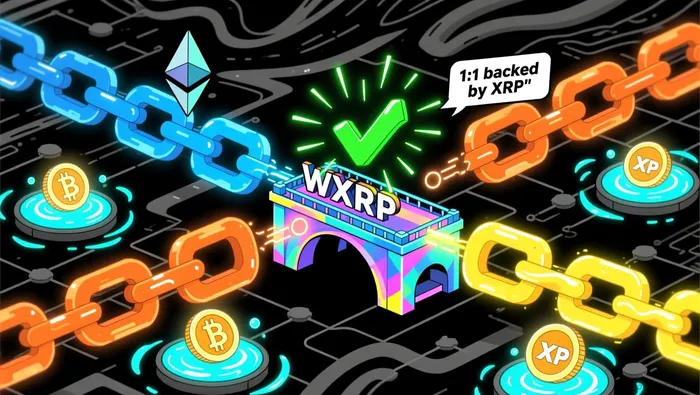 wXRP's deployment on Solana and other chains has created a bridge between XRP's low-cost, high-speed network and DeFi's liquidity pools, further cementing its role as a multi-chain asset according to market reports.
Critically, XRP's deflationary mechanics-stemming from its fixed supply and transactional burn-align with its growing institutional adoption. As on-chain activity surged by 500% in Q3 2024, with 75% of transactions settling in under five seconds, XRP demonstrated its capacity to handle high-volume, low-cost cross-border payments according to a new DAS report. This contrasts with Cardano's speculative price targets (e.g., $1–$2 by 2026), which rely on unproven use cases and prolonged development timelines.
Institutional Traction: ETFs and Custody Solutions
Institutional demand for XRP is accelerating through structured investment products and custody solutions. ETFs now hold $945 million in XRP net assets, with clients snapping up $8.73 million worth of the token in recent months according to market data. Improved custody infrastructure, such as Hex Trust's segregated, audited custody for wXRP, has reduced operational friction for large investors, enabling XRP to compete with more mature assets like gold and treasuries.
This institutional traction is critical for long-term value creation. Unlike Cardano's speculative narrative, XRP's utility in cross-border payments and stablecoin settlements provides a durable revenue stream. For instance, RLUSD's integration into TradFi workflows-such as credit card settlements-creates a flywheel effect, where increased usage drives network effects and token demand according to industry analysis.
Contrasting XRP and Cardano: Fundamentals vs. Speculation
Cardano's roadmap, including the Basho and Voltaire phases, promises scalability and decentralized governance but lacks immediate utility. While ADA's price predictions hinge on speculative bets, XRP's value is underpinned by real-world adoption. For example, XRP's 1% gain in the past year outperformed Cardano's 50% decline, reflecting divergent trajectories according to financial data.
Moreover, XRP's regulatory progress-culminating in the SEC's non-security ruling-has created a stable environment for institutional adoption. In contrast, Cardano's future depends on uncertain regulatory outcomes and the success of its research-driven development model. For fundamentals-driven investors, XRP's deflationary supply, institutional-grade infrastructure, and cross-chain utility present a compelling case for long-term value creation.
Conclusion: A New Era for XRP
XRP's 2025 breakout is not a speculative bubble but a structural shift toward institutional-grade utility. By leveraging strategic partnerships like wXRP and RLUSD, securing regulatory clarity, and expanding into DeFi, XRP is redefining its role as a bridge between TradFi and decentralized ecosystems. While Cardano's speculative potential may appeal to risk-tolerant investors, XRP's durable infrastructure and growing institutional traction make it a superior choice for those prioritizing long-term value.
As the XRP Ledger continues to process billions in transactions and ETF inflows accelerate, the token's narrative is evolving from a regulatory gray zone to a cornerstone of global finance. For patient investors, the question is no longer if XRP will break out-but how quickly.






Comentarios
Aún no hay comentarios