
XPeng's Strategic Expansion and Technological Edge in European EV Markets: A Catalyst for Long-Term Growth
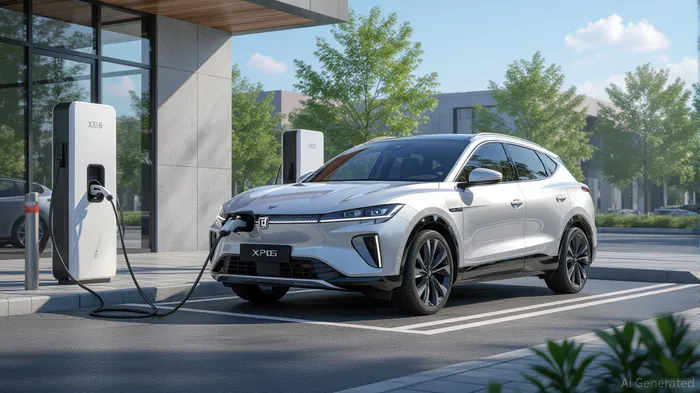
The European electric vehicle (EV) market is undergoing a seismic shift, driven by regulatory pressures, consumer demand for sustainability, and the rapid rise of Chinese automakers. Among these, XPengXPEV-- (XPEV) has emerged as a standout player, leveraging aggressive expansion, cutting-edge battery technology, and AI-driven innovation to carve a niche in a market once dominated by TeslaTSLA-- and European legacy automakers. For investors, the question is no longer whether XPeng can succeed in Europe but how quickly it can scale its disruptive model—and what this means for long-term returns.
Market Share and Strategic Expansion: Outpacing Rivals
XPeng's European sales surged to 8,400 units in the first half of 2025, a 200% year-over-year increase, with the Xpeng G6 accounting for over 65% of these sales. This growth is a direct result of the company's strategic product rollout: after launching the P7 sedan in select markets, XPeng expanded its lineup to include the G9 SUV and G6 crossover in late 2024. The G6, in particular, has proven to be a versatile competitor, priced €5,000–10,000 below the Tesla Model Y while offering comparable or superior performance metrics.
The European EV landscape is highly competitive, with Tesla's market share slipping to 2.8% in June 2025 (down from 3.4% in 2024) and Volkswagen struggling to maintain relevance against Chinese rivals. BYD's success in the region—selling 70,500 units in the first half of 2025—has further fragmented the market, but XPeng's focus on premium features and fast-charging infrastructure has allowed it to outperform peers in key segments.
800V Battery Technology: A Game Changer for Charging Anxiety
XPeng's 800V silicon carbide (SiC) platform is a cornerstone of its competitive advantage. The technology enables ultra-fast charging, with the G9 and G6 models achieving 10–80% charge in just 12 minutes (and 5 minutes for the 5C battery variant). This outpaces Tesla's 3C Supercharger and even BMW's experimental 10C prototype, addressing one of the most significant barriers to EV adoption: charging time.
The 800V system is paired with lithium iron phosphate (LFP) batteries, which eliminate reliance on cobalt and nickel, reducing costs by 30–40% and improving thermal stability. While LFP batteries traditionally lag in energy density, XPeng's vertical integration allows for optimized design, ensuring that real-world range and efficiency remain competitive. This cost-effective approach has enabled XPeng to maintain healthy margins while undercutting rivals on price.
AI-Driven Innovation: XNGP and the Future of Autonomous Driving
XPeng's XNGP (X-Pilot Next Generation Platform) is another differentiator. With an 86% monthly active user penetration rate in urban driving scenarios, the system has gained traction in Europe for its advanced features: adaptive cruise control with lane centering, automated lane changes, and self-parking capabilities. Unlike Tesla's FSD, which remains in beta in Europe, XPeng's XNGP is already deployed in mass-market models, offering a seamless user experience.
The latest version of XNGP, integrated with the Tianji XOS 5.7.0 system, introduces a “human-AI co-pilot” interface, allowing drivers to customize autonomous driving preferences. This level of personalization and reliability is critical in markets like Germany and France, where consumer trust in autonomous systems is still developing. Furthermore, XPeng is exploring subscription-based monetization for XNGP, a move that could unlock an additional €10 billion in revenue by 2030.
Challenges and Risks
XPeng's European expansion is not without hurdles. A 30.7% EU tariff on Chinese EVs has raised concerns about pricing pressures, though the company's cost-disciplined approach—70% of components sourced in-house—mitigates this risk. Additionally, regulatory scrutiny of autonomous driving systems in Europe could slow feature rollouts. However, XPeng's partnerships with local charging networks (e.g., PlugSurfing's 940,000 stations) and its focus on right-hand-drive markets (e.g., UK, Ireland) demonstrate a commitment to localization.
Investment Thesis: A High-Growth Play in a Transformative Market
XPeng's dual focus on technological differentiation and strategic expansion positions it as a long-term winner in the European EV race. The company's 800V battery technology and AI-driven features address core consumer pain points, while its aggressive pricing strategy undercuts Tesla and BYD in the premium segment. Financially, XPeng's H1 2025 revenue of $197 million (up 224% YoY) and plans to enter 30 European markets by 2025 underscore its scalability.
For investors, XPeng represents a high-growth opportunity with a clear path to profitability. While short-term volatility is inevitable given the sector's competitive dynamics, the company's first-mover advantage in fast-charging and autonomous driving, combined with its expanding European footprint, makes it a compelling long-term bet. As the EU accelerates its EV transition, XPeng's ability to innovate and adapt will likely determine its place at the forefront of the next industrial revolution.
Final Verdict: Investors with a 5–10 year horizon should consider XPeng as a strategic holding. The company's technological edge, coupled with its aggressive expansion into Europe, offers a unique combination of growth and differentiation in a market primed for disruption.







Comentarios
Aún no hay comentarios