
Xpeng's Physical AI Bet: Assessing the Infrastructure of the Next S-Curve
Xpeng is making a clear bet on the next technological paradigm. The company's strategic thesis, articulated by CEO He Xiaopeng, is a direct pivot from being a hardware-focused automaker to becoming a provider of physical AI infrastructure. This is not a minor product update; it's a fundamental repositioning. As He stated, the company should be known for its "physical AI" rather than just an automaker. The goal is to become a "global technology company", competing not on car sales volume but on the depth of its technological moats.
This shift is a calculated response to a predicted industry consolidation. In a candid interview, He delivered a stark prophecy: "only five Chinese car companies will survive" over the next few years. This brutal outlook frames the current era as an elimination round, where companies selling cars at razor-thin margins are essentially "selling scrap iron". The economic reality driving this shakeout is immense. True AI car companies require $50 billion in annual R&D investment, a scale that demands at least 500 billion yuan in annual revenue. For XpengXPEV--, the path forward is vertical integration on compute power, building its own AI chip and a large-scale physical model to achieve Level 4 autonomy.
The company is already executing this infrastructure play. It is developing its own Turing AI chip and a Vision-Language-Action (VLA) model that will be open-source, signaling potential licensing revenue. Its robotaxi service, set for trials this year, will operate without reliance on high-definition maps or LiDAR, a move that could lower the infrastructure barrier for autonomous fleets. This is the core of the physical AI bet: building the fundamental rails for a new transportation paradigm, not just riding on them.
Adoption Rate Analysis: The Physical AI Infrastructure Race
Xpeng's bet on physical AI is now entering its critical adoption phase. The company is no longer just outlining a vision; it is deploying a suite of technologies designed to accelerate the paradigm shift from human-driven to autonomous transportation and robotics. The key to this race is not just capability, but the rate at which that capability can be deployed and adopted.
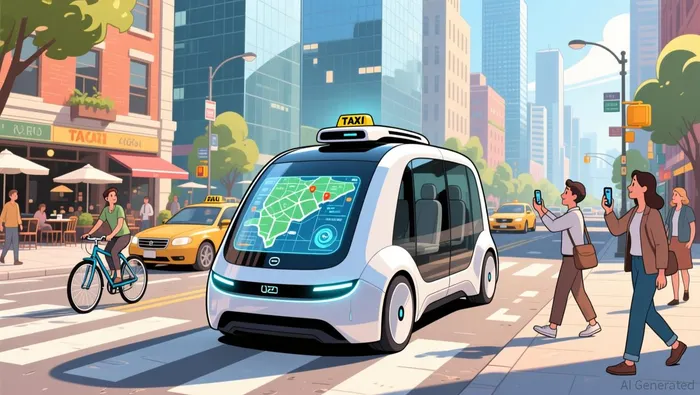
The centerpiece is the VLA 2.0 system, a large-scale physical model that Xpeng claims enables "entry-level Level 4 capabilities". This is a direct technological differentiator. By aiming for "unrestricted, full-scenario Level 4 autonomy" that operates without high-definition maps or LiDAR, Xpeng is targeting a lower-cost, more scalable infrastructure layer. The company is already moving from closed-venue testing to "public road tests", a crucial step toward real-world adoption. This open approach to autonomy could significantly accelerate deployment compared to map-dependent systems, creating a potential adoption rate advantage.
Simultaneously, Xpeng is building its physical AI stack for robotics. Its humanoid robot, the IRON, is slated for "production in the latter half of the year" and will target commercial services like tour guiding and patrols. This moves the company from concept to a tangible product with a clear path to market, aiming for "1 million units annually by 2030". This production target signals a commitment to scaling the physical AI infrastructure for humanoid applications, a parallel track to its robotaxi ambitions.
The company's strategy also includes a potential licensing play to turbocharge adoption. By making its VLA model "open-source", Xpeng is positioning itself as a foundational technology provider. This could create a network effect, where more developers and partners build on its platform, accelerating the overall adoption of its physical AI stack. This approach directly challenges established players like Nvidia's Alpamayo model and aims to become the standard for the next generation of autonomous systems.
The competitive landscape is now set. Xpeng plans to launch "three robotaxi models in 2026", with public road tests imminent. This aggressive timeline puts it squarely in the ring with Tesla's Optimus robot and its FSD technology. The race is no longer about who has the best prototype, but who can build the most scalable, cost-effective infrastructure and achieve the fastest adoption rate. Xpeng's integrated stack-its in-house Turing AI chips, open-source VLA model, and dual focus on robotaxis and humanoid robots-represents a comprehensive infrastructure play designed to capture the exponential growth curve of physical AI.
Financial Fuel: Sustaining the Exponential Bet
For Xpeng's physical AI infrastructure bet to succeed, it needs a powerful engine to burn. The company's core automotive business is that engine, and its recent performance shows it is firing on all cylinders. The growth trajectory is staggering, with third-quarter deliveries surging "149.3% from 46,533 in the corresponding period of 2024". This isn't just a spike; it's the acceleration of a new paradigm. The business is scaling at an exponential rate, which is the fuel required for a $50 billion annual R&D investment.
Profitability is following growth, providing a crucial margin of safety. The company's vehicle margin expanded to "13.1%" in Q3, up significantly from 8.6% a year ago. More broadly, the gross margin reached "20.1%", a 4.8 percentage point jump. This improvement signals better control over costs and pricing power, a sign that the company is moving beyond volume to value. The bottom line is also turning, with the non-GAAP net loss shrinking to just "RMB0.15 billion" in the quarter. This is the financial discipline needed to fund a multi-year, capital-intensive bet.
The cash runway is substantial. As of September, Xpeng held "RMB48.33 billion (US$6.79 billion)" in cash and equivalents. That's a war chest of over $6.7 billion, providing a critical buffer. This capital isn't just sitting idle; it's the direct fuel for the physical AI stack. It funds the development of the Turing AI chip, the VLA model, and the robotaxi and humanoid robot production lines. The company's ability to generate cash from its scaling vehicle business is what makes this infrastructure play possible.
Yet, the path from hyper-growth to sustained profitability has a known friction point: the recent moderation in monthly growth. While the full-year 2025 deliveries of "429,445 units" still represent a 126% increase, the monthly pace has cooled from the blistering quarterly pace. This is a reality check for any exponential bet. The company must now focus on converting its massive delivery volume into consistent, high-margin revenue and managing its cash burn as it ramps up R&D. The financial fuel is there, but the engine must now be tuned for efficiency as well as speed.
Valuation and Catalysts: Watching the S-Curve
The investment case for Xpeng now hinges entirely on the adoption curve of physical AI infrastructure. With a market cap of $17.9 billion, the stock prices in a future where its VLA model and robotaxi stack become foundational rails for autonomous transportation and robotics. This is a bet on a paradigm shift, not current automotive earnings. The valuation must be judged by the speed at which its infrastructure can achieve commercial scale.
The near-term catalysts are concrete milestones that will test the company's execution. First is the "public road tests" for its robotaxis, a critical step from closed-venue validation to real-world deployment. Success here will demonstrate the robustness of its map-free, LiDAR-free autonomy and signal progress toward the promised "trials soon". The second major catalyst is the "production in the latter half of the year" for its humanoid robot. Moving from concept to manufacturing is the first tangible proof of its robotics infrastructure, aiming for a path to "1 million units annually by 2030". These events, expected in late 2026, will be the first real-world data points on the adoption rate of its physical AI stack.
The primary risk is execution and capital burn. The company must successfully transition its massive cash flow from the scaling vehicle business to fund its physical AI ambitions without depleting its "RMB48.33 billion (US$6.79 billion)" war chest before achieving commercial scale. The prophecy of industry consolidation underscores the stakes: "only five Chinese car companies will survive" the next few years. Xpeng's bet is that by building its own AI chip and open-source model, it can become one of those survivors and a dominant infrastructure provider. The risk is that the transition fails, leaving it with a high-cost, unproven technology stack and exhausted reserves.
The bottom line is that Xpeng is trading at a premium for its future. Its current financial fuel-exponential growth and improving margins-is the only thing that can power this bet. Investors are not buying a car company; they are buying a company attempting to build the next layer of compute and autonomy infrastructure. The stock's trajectory will now be dictated by the company's ability to hit its 2026 milestones and demonstrate that its physical AI stack can achieve the adoption rate needed to justify its place on the next technological S-curve.





Comentarios
Aún no hay comentarios