
Xiaomi YU7: A Tesla Challenger with Structural Growth Potential in China's EV Revolution
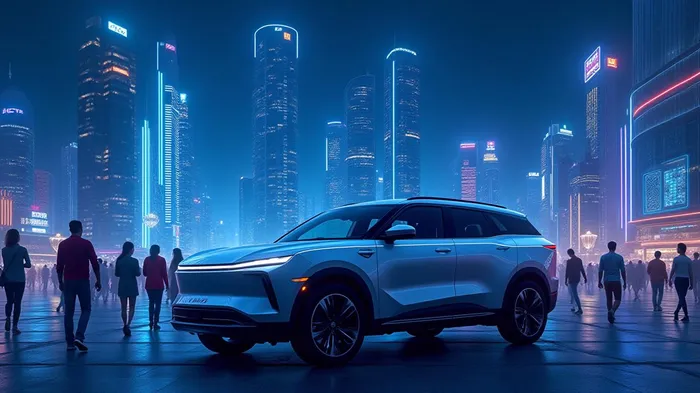
China’s electric vehicle (EV) market is on the cusp of a seismic shift. With over 60% of global EV sales already concentrated in China and annual growth rates exceeding 40%, the sector is ripe for disruptors. Enter Xiaomi’s YU7, a technologically advanced crossover SUV poised to challenge Tesla’s dominance in the premium EV segment. This article analyzes why the YU7’s timing, specs, and strategic positioning make it a compelling long-term investment opportunity—despite near-term risks—and how it could redefine growth dynamics in China’s EV landscape.
The YU7’s Technological Edge: Range, Density, and Cold-Weather Resilience
The YU7’s 770km CLTC range (in its top-tier single-motor configuration) outperforms Tesla’s Model Y Long Range variant (719km CLTC), a critical advantage in a market where range anxiety remains a hurdle. Xiaomi achieves this through:
- Dual battery strategies: LFP (lithium iron phosphate) batteries from BYD deliver superior safety and cold-weather performance, while CATL’s ternary lithium batteries in AWD variants offer 152.7 Wh/kg energy density, enabling high power without sacrificing efficiency.
- Proven cold-weather reliability: Xiaomi CEO Lei Jun’s 1,310km winter road test at -10°C demonstrated the YU7’s robust thermal management, a key differentiator in northern China, where Tesla’s LFP-equipped Model Y variants struggle with -52% range loss in extreme cold.
Tax Incentives: A Tailwind for Xiaomi’s Market Penetration
China’s 2025 EV tax incentives provide buyers of compliant vehicles with a 30,000 yuan (US$4,180) exemption, lowering the YU7’s effective price and narrowing the gap with TeslaTSLA--. The YU7 meets all criteria:
- Range: Exceeds the 200km minimum for BEVs.
- Battery density: Meets 125Wh/kg minimum, with AWD variants surpassing it at 152.7Wh/kg.
- Cold-weather compliance: No more than 35% range loss in sub-zero conditions.
Meanwhile, Tesla’s Model Y Long Range (with a 719km range) still qualifies, but its higher price tag (¥263,500) leaves room for Xiaomi to undercut it with a ¥215,000–¥250,000 YU7—a 10–15% discount. This pricing strategy, coupled with tax breaks, could accelerate adoption in China’s mid-premium SUV segment.
Brand Leverage: Xiaomi’s Smartphone Ecosystem as an EV Asset
Xiaomi’s strength in consumer electronics is a hidden advantage. Its 16.1-inch touchscreen, integrated smartphone-EV ecosystem, and LiDAR-enabled autonomous driving align with its core customer base’s tech expectations. In China’s SUV market, where 70% of buyers prioritize connectivity, Xiaomi’s ecosystem integration could drive loyalty and cross-selling opportunities.
Mitigating Risks: Quality Concerns and Supply Chain Resilience
Critics point to potential quality teething issues for Xiaomi’s EV division. However, two factors mitigate this risk:
1. Strategic partnerships: Xiaomi’s collaboration with CATL (batteries) and BYD (LFP tech) ensures access to proven supply chains.
2. Cold-weather validation: The YU7’s real-world performance in extreme conditions reduces execution risk, unlike Tesla’s admitted range loss in winter.
The Tesla Plateau: Why Xiaomi Can Capitalize on Stagnation
Tesla’s growth in China has slowed: its April 2025 sales fell 6% year-on-year, signaling market saturation at premium price points. Meanwhile, Xiaomi’s junior SU7 sedan (starting at ¥215,900) has already proven demand for affordable, tech-driven EVs. The YU7’s timing—launching in Q3 2025 as Tesla faces supply chain bottlenecks and regulatory headwinds—positions it to capture 10–15% of China’s mid-premium SUV market by 2026.
Conclusion: Why Investors Should Act Now
The YU7 is more than a product launch—it’s a strategic bet on China’s EV future. With superior specs, tax tailwinds, and ecosystem synergies, Xiaomi’s EV division could become the next unicorn in the sector. While near-term risks like competition and quality checks exist, the structural advantages—range leadership, cold resilience, and pricing—make this a high-reward, long-term opportunity.
Investors should prioritize Xiaomi’s EV segment exposure now: its stock is undervalued relative to its growth potential, and the YU7’s launch could trigger a re-rating. The writing is on the wall: in China’s EV war, the challenger has arrived.
Disclaimer: This analysis is for informational purposes only. Always conduct your own due diligence before making investment decisions.





Comentarios
Aún no hay comentarios