
Xiaomi Raises 2025 EV Delivery Target to 400,000 on Profit Turnaround
Xiaomi Corp. has raised its 2025 electric vehicle (EV) delivery goal to 400,000 units, a significant jump from its earlier target of 350,000 units. The company announced this update following a strong third-quarter earnings report, which showed its EV and AI division had achieved a 700 million yuan profit. Xiaomi CEO Lei Jun shared on social media that the 500,000th vehicle had rolled off the production line, signaling a milestone in its rapid market expansion.
The EV segment, launched just 19 months ago, has defied industry norms by turning a profit faster than most of its peers. This performance has positioned Xiaomi as a disruptive force in the EV market, where traditional automakers and startups have struggled with extended losses. Xiaomi's success is attributed to its ability to leverage an existing customer base and a strong brand, significantly lowering customer acquisition costs.
The company has also reported strong financial performance in its overall business. In its third-quarter earnings report, Xiaomi's net profit more than doubled to 12.27 billion yuan, driven by growth in its Internet of Things (IoT) and EV segments. According to financial reports, revenue for the quarter rose 22% to 113.12 billion yuan, exceeding market expectations. 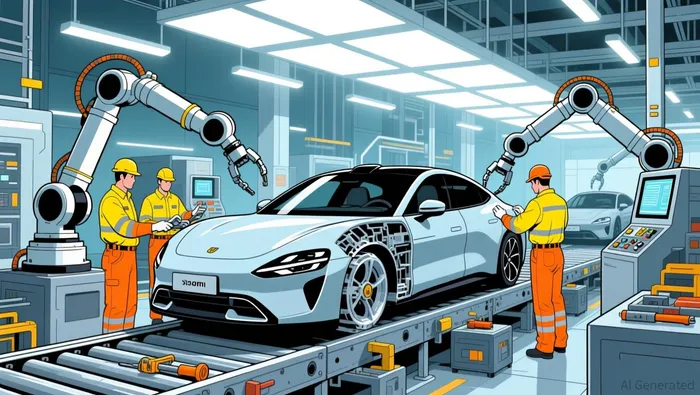 The EV business alone generated 28.3 billion yuan in revenue, up from 32.8 billion yuan in 2024 according to market data.
Why the Standoff Happened
Xiaomi's EV business faced initial challenges as it broke even only in Q3 2025, despite selling its first car in 2024. The company reported an adjusted net loss of 6.2 billion yuan for 2024, but by Q3 of 2025, the EV division had turned a 700 million yuan profit. This turnaround was driven by economies of scale, which rose from 15.4% in Q2 to over 20% in Q4. The Q3 profit marked the first time the division achieved profitability, a major milestone for the company's long-term ambitions in the automotive sector.
Xiaomi's approach to EVs has been notably different from traditional automakers. Treating the car launch like a smartphone release, the company used high-frequency livestreams and phased reveals to generate buzz. This strategy helped Xiaomi tap into its existing tech-savvy customer base, turning them into a built-in demand engine.
Risks to the Outlook
Despite the strong financial performance, Xiaomi faces several headwinds. One major challenge is the scaling back of Chinese tax breaks on EV purchases, which could dampen demand in the coming years. Additionally, rising global memory chip prices are pushing up production costs for both the company's smartphones and EVs. These factors could weigh on Xiaomi's margins and affect its ability to maintain its current pace of growth.
Xiaomi's CEO, Lei Jun, acknowledged these risks in a recent earnings call and emphasized that the company is working on ways to mitigate them. The company is investing heavily in R&D to improve its AI-driven driver-assistance systems and is also planning to expand its product lineup with new models like the YU7 SUV, expected to launch in late 2025 according to company updates. These efforts are aimed at maintaining momentum in the highly competitive EV market.
What This Means for Investors
For investors, Xiaomi's rapid progress in the EV space represents both an opportunity and a risk. On one hand, the company's ability to scale quickly and achieve profitability in a short time demonstrates strong execution and market potential. On the other hand, the EV market is highly competitive, with companies like Tesla, BYD, and XPengXPEV-- also vying for dominance. Xiaomi's delay in overseas expansion until 2027 could leave it exposed to domestic price wars in the near term.
Analysts have noted that Xiaomi's ecosystem-driven strategy gives it a unique advantage. By integrating its EVs with its existing smartphone and IoT products, the company can create new monetization opportunities beyond hardware, such as cloud services and premium infotainment features. This strategy could help Xiaomi maintain a loyal customer base and generate recurring revenue streams.
Xiaomi's stock has been under pressure this year, with its shares down about 20% since May. This decline reflects broader market concerns about the company's ability to sustain its growth in both the smartphone and EV sectors. However, the recent earnings report and the updated delivery target may provide a boost to investor confidence, especially if the company can continue to outperform expectations in the coming quarters.







Comentarios
Aún no hay comentarios