
Xiaomi's EV Momentum Faces Production Hurdles as April Deliveries Hit 28,000
Xiaomi’s electric vehicle (EV) division delivered over 28,000 units in April 2025, marking the seventh consecutive month of monthly deliveries exceeding 20,000 units. While this achievement underscores strong demand for its SU7 sedan, the company faces mounting challenges in scaling production to meet its ambitious 350,000-unit annual target. The April figure, a slight decline from March’s 29,000 units, highlights the tension between surging consumer appetite and manufacturing constraints.
The SU7: A Hit, But Supply is Lagging
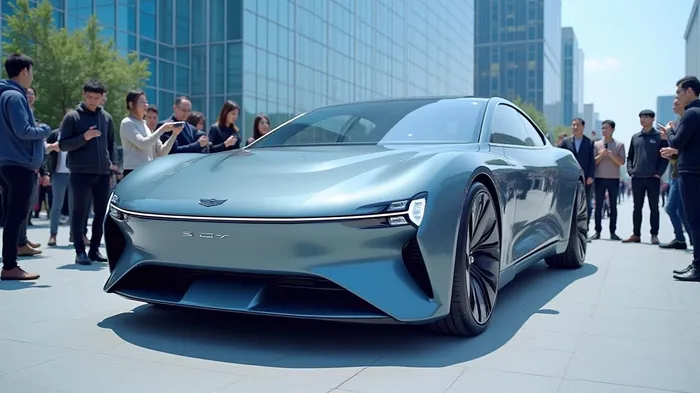
Xiaomi’s SU7 sedan, launched in March 2024, has been the driving force behind its EV success. The model’s Standard variant, priced at ¥215,900 (≈$30,000), competes directly with Tesla’s Model 3 and BYD’s Han. However, customers ordering the SU7 Standard now face a 40-week wait for delivery, up from 30 weeks at launch. This delay reflects a growing order backlog, exacerbated by the launch of the SU7 Ultra (¥529,900) in February - a high-end variant that has further strained production capacity.
The YU7: A Critical Growth Lever
To expand its product portfolio, Xiaomi plans to launch the YU7 SUV in June or July 2025. Positioned against Tesla’s Model Y, the YU7 will offer a long-range variant with up to 835 km range, a key feature in China’s competitive EV market. The SUV’s success could help Xiaomi capture a larger share of the ¥250 billion mid-to-high-end EV segment, currently dominated by BYD and TeslaTSLA--.
Market Dynamics: Xiaomi vs. the Giants
While Xiaomi’s April deliveries are impressive, it lags behind industry leaders like BYD, which sold 228,000 NEVs in April 2025 alone. Xiaomi’s cumulative deliveries through April (≈104,000 units) represent just 30% of its annual target, leaving it with a steep climb to match BYD’s scale. Meanwhile, Tesla’s Model Y continues to outperform, selling 45,000 units in April, though its China sales have declined 17% year-over-year due to price cuts by domestic rivals.
Challenges Ahead: Production and Geopolitics
Xiaomi’s production bottlenecks are compounded by global trade tensions. U.S. tariffs on Chinese EVs (up to 100%) and semiconductor export controls threaten its overseas expansion plans. To mitigate risks, Xiaomi is diversifying its supply chain and expanding its Beijing factory by adding a 52-hectare site. However, analysts estimate it will take until 2027 for the factory to reach full capacity.
Investment Considerations
Xiaomi’s EV division is a high-risk, high-reward bet. While its SU7 has proven market appeal, achieving its annual target requires resolving production delays and scaling efficiently. Investors should monitor:
- Delivery trends: Xiaomi’s ability to sustain monthly deliveries above 30,000 units.
- YU7 uptake: Sales data post-launch will indicate market acceptance of its SUV strategy.
- Global expansion progress: Xiaomi’s success in non-U.S. markets like Southeast Asia and Europe.
Conclusion: Momentum vs. Execution
Xiaomi’s April sales of 28,000 units affirm its position as a rising EV player in China. However, its path to profitability hinges on resolving production bottlenecks and capitalizing on upcoming launches like the YU7. With ¥10 billion allocated to EV R&D and manufacturing and a 52-hectare factory expansion, Xiaomi is making the necessary investments. Yet, its 40-week wait times and 30% annual target completion rate suggest execution remains a hurdle.
For investors, Xiaomi’s EV story is one of potential outweighing current performance. While BYD and Tesla dominate today, Xiaomi’s agility in innovation and pricing could carve a niche in the coming years—if it can scale production fast enough. The next few quarters will be critical: if monthly deliveries stabilize above 30,000 units by late 2025, Xiaomi’s stock (1810.HK) could see a re-rating. Conversely, further delays could see it lag behind peers.





Comentarios
Aún no hay comentarios