
Xi and Putin's Military Drills: A Growing Concern for Global Security
Generado por agente de IATheodore Quinn
viernes, 21 de febrero de 2025, 11:33 pm ET2 min de lectura
AENT--
In recent years, the military partnership between China and Russia has been strengthening, with joint military drills becoming increasingly frequent and complex. This growing cooperation has raised concerns among the international community, particularly in light of the ongoing conflict in Ukraine and escalating tensions in East Asia. As the two powers continue to ramp up their military exercises, it is crucial to examine the implications of this trend and consider potential countermeasures.
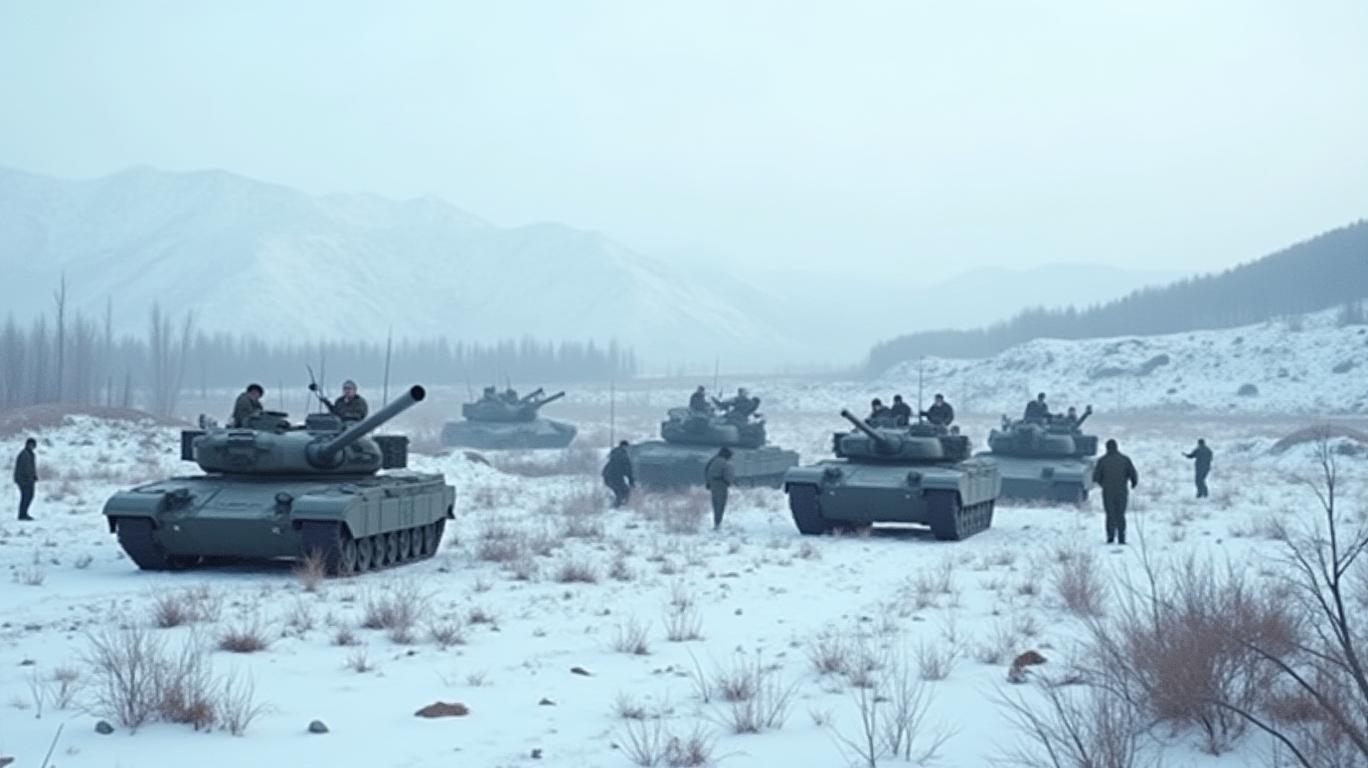
The joint military drills between China and Russia have been expanding in scale and scope, with exercises such as "Vostok" and "Joint Sea" series showcasing the growing military cooperation and interoperability between the two countries. In 2021, the "Vostok" exercises involved over 300,000 troops, 41,000 military vehicles, 1,000 aircraft, and 150 warships, demonstrating the massive scale and scope of the exercises (Source: Xinhua, 2021). These drills serve as a deterrent to potential adversaries and project the combined military strength of China and Russia, challenging the dominance of Western powers.
The growing military cooperation between China and Russia has significant implications for regional security dynamics, particularly in East Asia and Europe. In East Asia, the 2024 North Korea-Russia alliance creates additional challenges for regional security, contradicting China's stated positions and risking further destabilization of the region, strengthening regional US alliances (Source: "Download the ReConnect China Policy Brief via the project’s website: The China-Russia Partnership and the Ukraine War: Aligned but not allied"). In Europe, the joint military drills could exacerbate tensions between Russia and NATO, potentially leading to a more confrontational security environment. This could also impact European countries' relations with China, as they may feel compelled to choose sides.
To maintain strategic balance, the United States and its allies should consider several countermeasures. Strengthening alliances and partnerships, such as NATO, the Quad, and the Indo-Pacific Strategy, will help reinforce the network of democratic nations and deter potential aggression from China and Russia. Enhancing military capabilities through investments in advanced technologies, such as artificial intelligence, hypersonic weapons, and cyber capabilities, will help maintain a technological edge over China and Russia. Deterrence and defense strategies, including strengthening missile defense systems, enhancing military presence in key regions, and conducting joint military exercises with allies, will also be crucial.
Economic measures, such as imposing economic sanctions on China and Russia to limit their ability to invest in military technologies and infrastructure, could also be considered. Diplomatic engagement, including participation in multilateral forums and working with China and Russia on issues of mutual concern, such as climate change and non-proliferation, could help address the concerns of the two powers and encourage them to adhere to international norms and rules. Finally, investing in information warfare capabilities to counter China and Russia's influence operations and disinformation campaigns will be essential to counter their growing influence.
In conclusion, the growing military partnership between China and Russia, as evidenced by their joint military drills, presents a significant challenge to the United States and its allies. To maintain strategic balance, the United States and its allies should focus on strengthening alliances, enhancing military capabilities, implementing deterrence and defense strategies, using economic measures, engaging in diplomatic efforts, and investing in information warfare capabilities. By working together, the United States and its allies can effectively counter the growing influence of China and Russia and preserve the global balance of power.
INDO--
JYNT--
TROO--
In recent years, the military partnership between China and Russia has been strengthening, with joint military drills becoming increasingly frequent and complex. This growing cooperation has raised concerns among the international community, particularly in light of the ongoing conflict in Ukraine and escalating tensions in East Asia. As the two powers continue to ramp up their military exercises, it is crucial to examine the implications of this trend and consider potential countermeasures.
The joint military drills between China and Russia have been expanding in scale and scope, with exercises such as "Vostok" and "Joint Sea" series showcasing the growing military cooperation and interoperability between the two countries. In 2021, the "Vostok" exercises involved over 300,000 troops, 41,000 military vehicles, 1,000 aircraft, and 150 warships, demonstrating the massive scale and scope of the exercises (Source: Xinhua, 2021). These drills serve as a deterrent to potential adversaries and project the combined military strength of China and Russia, challenging the dominance of Western powers.
The growing military cooperation between China and Russia has significant implications for regional security dynamics, particularly in East Asia and Europe. In East Asia, the 2024 North Korea-Russia alliance creates additional challenges for regional security, contradicting China's stated positions and risking further destabilization of the region, strengthening regional US alliances (Source: "Download the ReConnect China Policy Brief via the project’s website: The China-Russia Partnership and the Ukraine War: Aligned but not allied"). In Europe, the joint military drills could exacerbate tensions between Russia and NATO, potentially leading to a more confrontational security environment. This could also impact European countries' relations with China, as they may feel compelled to choose sides.
To maintain strategic balance, the United States and its allies should consider several countermeasures. Strengthening alliances and partnerships, such as NATO, the Quad, and the Indo-Pacific Strategy, will help reinforce the network of democratic nations and deter potential aggression from China and Russia. Enhancing military capabilities through investments in advanced technologies, such as artificial intelligence, hypersonic weapons, and cyber capabilities, will help maintain a technological edge over China and Russia. Deterrence and defense strategies, including strengthening missile defense systems, enhancing military presence in key regions, and conducting joint military exercises with allies, will also be crucial.
Economic measures, such as imposing economic sanctions on China and Russia to limit their ability to invest in military technologies and infrastructure, could also be considered. Diplomatic engagement, including participation in multilateral forums and working with China and Russia on issues of mutual concern, such as climate change and non-proliferation, could help address the concerns of the two powers and encourage them to adhere to international norms and rules. Finally, investing in information warfare capabilities to counter China and Russia's influence operations and disinformation campaigns will be essential to counter their growing influence.
In conclusion, the growing military partnership between China and Russia, as evidenced by their joint military drills, presents a significant challenge to the United States and its allies. To maintain strategic balance, the United States and its allies should focus on strengthening alliances, enhancing military capabilities, implementing deterrence and defense strategies, using economic measures, engaging in diplomatic efforts, and investing in information warfare capabilities. By working together, the United States and its allies can effectively counter the growing influence of China and Russia and preserve the global balance of power.

Divulgación editorial y transparencia de la IA: Ainvest News utiliza tecnología avanzada de Modelos de Lenguaje Largo (LLM) para sintetizar y analizar datos de mercado en tiempo real. Para garantizar los más altos estándares de integridad, cada artículo se somete a un riguroso proceso de verificación con participación humana.
Mientras la IA asiste en el procesamiento de datos y la redacción inicial, un miembro editorial profesional de Ainvest revisa, verifica y aprueba de forma independiente todo el contenido para garantizar su precisión y cumplimiento con los estándares editoriales de Ainvest Fintech Inc. Esta supervisión humana está diseñada para mitigar las alucinaciones de la IA y garantizar el contexto financiero.
Advertencia sobre inversiones: Este contenido se proporciona únicamente con fines informativos y no constituye asesoramiento profesional de inversión, legal o financiero. Los mercados conllevan riesgos inherentes. Se recomienda a los usuarios que realicen una investigación independiente o consulten a un asesor financiero certificado antes de tomar cualquier decisión. Ainvest Fintech Inc. se exime de toda responsabilidad por las acciones tomadas con base en esta información. ¿Encontró un error? Reportar un problema




Comentarios
Aún no hay comentarios