
Xerox's Strategic Reentry into the Mid-Production Print Market: AI-Driven Efficiency and Long-Term Competitive Positioning
Xerox's AI-Enhanced Reentry: A Strategic Bet on Automation
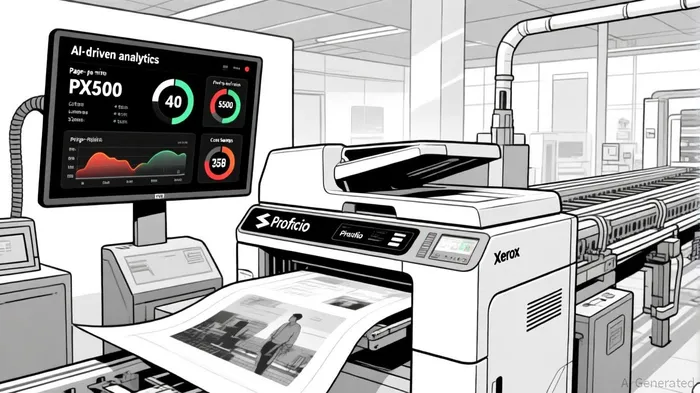
Xerox's Proficio Production Series, unveiled at the PRINTING United Expo, represents a bold step into a segment where speed, customization, and cost efficiency are paramount. The PX300 and PX500 presses operate at 85 and 100 pages per minute, respectively, and integrate AI-assisted workflows to automate repetitive tasks such as color calibration and job scheduling, according to a MarketScreener report. These features are designed to reduce operational costs by up to 30% and minimize production delays.
The company's strategy hinges on its end-to-end ecosystem, which includes FreeFlow Workflow Software and real-time production analytics. By embedding AI into these tools, XeroxXRX-- aims to streamline workflows for print providers, enabling them to compete with larger rivals in high-value applications like fluorescent inks and low-gloss finishes. This approach aligns with broader industry trends: a 2025 Gelato survey found that 80% of print professionals view AI and automation as essential for improving workflows, though only 55% have actively invested in these technologies.
Competitive Landscape: Xerox's Position Amid Industry Titans
Xerox's market share in the mid-production print segment remains modest. As of Q1 2025, it holds just 2.80% of the Technology sector's revenue, trailing HP (24.59%) and Dell (40.55%). However, its competitors are not idle.
- Canon has introduced the Inspection Unit-C1, an AI-powered module for its imagePRESS V Family presses that automates defect detection and variable data verification, per a Canon press release.
- Ricoh leverages AI in its Managed Print Services to analyze usage data and automate service delivery, while its "Deep Alignment" technology streamlines document workflows, according to a Ricoh AI report.
- HP is expanding its AI footprint through a new Saudi Arabian manufacturing hub, producing systems optimized for AI applications and enterprise use, as covered in a TechSpot report.
- Konica Minolta has partnered with Adobe on Project Goldsmith, an AI-driven pre-press embellishment tool that reduces manual labor in adding finishes like foiling, per the Project Goldsmith announcement.
While Xerox's Proficio series is technologically robust, its success will depend on execution. The company's recent financial performance-missing earnings estimates in consecutive quarters-raises questions about its ability to sustain innovation amid rising R&D costs, according to a MarketBeat alert.
AI-Driven Industry Trends: Efficiency, Sustainability, and Personalization
The mid-production print market is being reshaped by three AI-driven trends:
1. Automation of Prepress and Production: AI tools now cut errors by 40% and reduce maintenance costs by 25% through predictive analytics.
2. Dynamic Pricing and Customer Service: Print shops using AI chatbots report 60% faster response times, while dynamic pricing models improve profitability by 20%.
3. Sustainability: AI-powered predictive maintenance extends equipment life, and digital workflows reduce waste, aligning with global zero-waste goals, according to Konica Minolta predictions.
Xerox's integration of AI into its Proficio ecosystem positions it to capitalize on these trends. However, rivals like Konica Minolta and Canon are already embedding AI into their offerings, creating a race to dominate the next phase of print innovation.
Long-Term Outlook: Can Xerox Sustain Its Momentum?
Xerox's reentry is a high-stakes gamble. The Proficio series addresses key pain points-speed, customization, and cost-but the company must navigate a crowded market. Its 2.80% market share pales against HP's 24.59%, yet Xerox's focus on AI-assisted workflows could differentiate it if adoption accelerates.
The broader industry's reliance on AI suggests that Xerox's strategy is timely. However, execution risks remain. The company's delayed shipment timeline (first-half 2026) and mixed financial performance could deter early adopters. Meanwhile, competitors like Canon and Konica Minolta are already reaping the benefits of early AI integration, with partners like PostcardMania case study reporting 508% output growth.
For Xerox to succeed, it must not only deliver on its technological promises but also convince print providers that its ecosystem offers a sustainable edge. The coming months will test whether its AI-driven reentry is a disruptive leap-or a fleeting attempt to catch up.





Comentarios
Aún no hay comentarios