
Xerox's Strategic Campus Reconfiguration and Its Impact on Real Estate and Economic Development in Webster, NY
Infrastructure as the Foundation for Value Creation
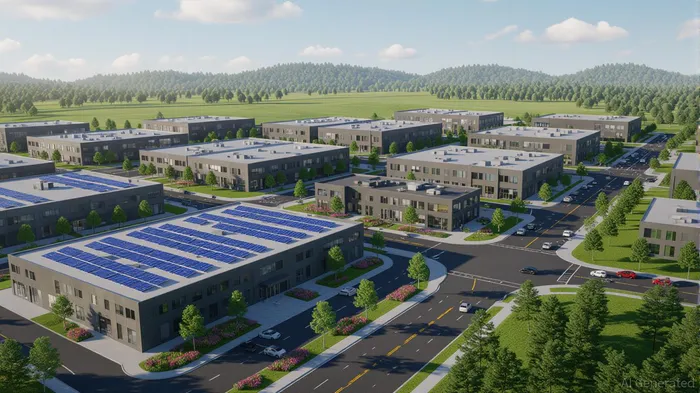
At the core of Xerox's reconfiguration is a $9.8 million FAST NY grant, which funds critical infrastructure improvements such as road realignment, sewer system modernization, and electrical capacity expansion. These upgrades are not merely maintenance efforts but foundational investments designed to position the campus as a competitive industrial hub. For instance, enhanced connectivity and upgraded utilities enable the site to rival industrial markets in the Sun Belt and Midwest, where low vacancy rates and robust supply chains have historically driven investment.
The infrastructure investments also address a key bottleneck in industrial real estate: the underdevelopment of brownfield sites. By transforming a contaminated 300-acre campus into a "bluefield" model-where infrastructure and zoning reforms enable mixed-use development-the project reduces risks for private developers and accelerates redevelopment timelines. This approach aligns with broader state initiatives, such as New York's Brownfield Opportunity Area (BOA) designation, which streamlines regulatory processes and incentivizes private-sector participation.
Public-Private Partnerships and Strategic Location
The Webster Economic Development Alliance (WEDA) has played a pivotal role in orchestrating this transformation. Through its collaboration with XeroxXRX-- and state agencies, WEDA has secured funding to modernize internal campus roadways (e.g., Orchard Street, Panama Road) and prepare the site for subdivision. These efforts are complemented by the strategic location of the campus near the U.S.-Canada border and the 600 Ridge Road property, enhancing its appeal as a logistics and manufacturing hub.
A key milestone in this partnership is the $650 million fairlife® dairy facility, which is projected to create 250 high-paying jobs and serve as an anchor tenant for the redeveloped campus according to industry analysis. This project exemplifies how infrastructure investments can attract high-value industries, such as advanced manufacturing and food and beverage production, which require robust utilities and transportation networks. The low industrial vacancy rate in Webster (2% vs. the national average of 7.3%) further validates the effectiveness of this strategy, as firms seek locations with pre-vetted infrastructure and tax incentives.
Ripple Effects on Real Estate and Economic Development
The economic impact of Xerox's reconfiguration extends beyond industrial real estate. Median home prices in Webster have surged by 10.1% annually through 2025, driven by job creation and infrastructure improvements. This residential real estate growth is a direct byproduct of the industrial boom, as new jobs attract workers and increase demand for housing. Additionally, the Webster Economic Development Alliance has leveraged the momentum from the Xerox project to advance complementary initiatives, such as the West Webster Hamlet Revitalization Project and the Sandbar Waterfront Revitalization, which aim to diversify the local economy.
The state-backed $283 million initiative to revitalize Upstate New York's industrial sector further amplifies these effects, signaling a broader commitment to regional economic growth. By integrating advanced manufacturing, logistics, and residential components into a cohesive development plan, Webster is positioning itself as a model for sustainable, mixed-use industrial hubs.
Conclusion: A Blueprint for Future-Proofing Industrial Real Estate
Xerox's strategic reconfiguration of its Webster campus demonstrates the transformative power of infrastructure investment and municipal collaboration. By addressing historical barriers to development-such as brownfield contamination and outdated utilities-the project has unlocked 300 acres of previously underused land, attracting high-value industries and driving real estate appreciation. For investors, this case study highlights the importance of aligning with regions that prioritize infrastructure modernization and regulatory agility. As industrial demand continues to shift toward locations with pre-developed, scalable sites, Webster's approach offers a replicable framework for maximizing long-term value in industrial real estate markets.







Comentarios
Aún no hay comentarios