
The Xerox Campus in Webster: A Strategic Land-Use Shift and Its Implications for Real Estate and Industrial Investment
Infrastructure as a Catalyst for Redevelopment
The FAST NY grant has been pivotal in unlocking the potential of the 300-acre Xerox brownfield. According to a report by , the funds have supported critical upgrades, including road realignment, sewer system expansion, and electrical grid modernization, rendering the site "shovel-ready" for development. These improvements are not merely cosmetic; they address foundational challenges that historically hindered industrial activity in the region. For instance, the expansion of sanitary sewer capacity and multimodal transportation connections ensures that the site can support high-demand industries like semiconductor manufacturing and renewable energy.
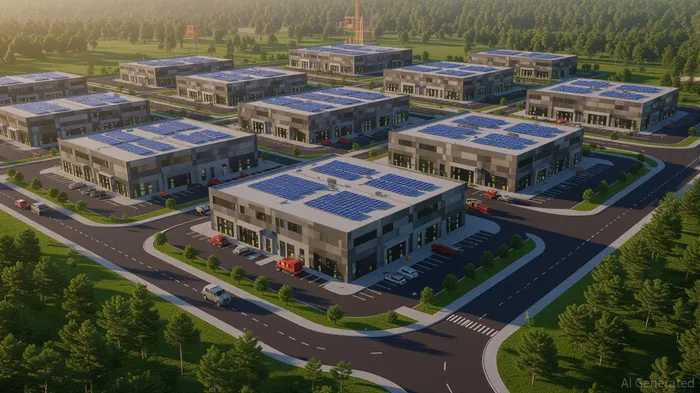
The economic impact of these upgrades is already evident. indicates that Webster's industrial vacancy rates have plummeted to 2%, while home prices have surged by 10.1% annually, driven by the town's improved economic outlook and enhanced connectivity. Such metrics underscore the symbiotic relationship between infrastructure investment and real estate value creation.
Municipal Boundary Realignments and Zoning Innovations
Beyond infrastructure, Webster's strategic redefinition of municipal boundaries and zoning policies has amplified the site's appeal. analysis, the town has created a 1,400-acre contiguous development-ready zone by consolidating fragmented land parcels and streamlining regulatory hurdles. This zone, branded as the Northeast Area for Technology (NEAT), is a testament to the power of proactive land-use planning.
Key to this strategy was the rezoning of the former Xerox campus to accommodate mixed-use and industrial development under the Reimagine Webster Initiative. This flexibility has attracted anchor projects like the $650 million fairlife® dairy facility, which is projected to generate 250 jobs by 2025. By aligning zoning policies with market demands, Webster has effectively reduced development costs for investors, making the area a competitive alternative to traditional industrial hubs.
A Blueprint for Future Investment
The confluence of infrastructure and land-use reforms has positioned Webster as a model for industrial revitalization. By 2025, over one million square feet of industrial space will be available, with full site readiness anticipated by 2026. These timelines align with national trends favoring nearshoring and supply chain resilience, further enhancing the site's strategic value.
For investors, the implications are clear: Webster offers a rare combination of pre-developed infrastructure, tax incentives, and a business-friendly regulatory environment. The town's ability to transform a brownfield into a $1 billion industrial hub demonstrates its capacity to execute large-scale projects efficiently-a critical factor in an era where development timelines often stretch for years.
Conclusion
The Xerox campus redevelopment in Webster exemplifies how municipalities can leverage infrastructure grants and land-use innovation to catalyze industrial investment. With the FAST NY grant serving as a cornerstone, the town has not only revitalized a dormant asset but also created a scalable framework for future growth. As the NEAT district gains momentum, Webster stands to become a benchmark for communities seeking to balance economic development with sustainable land management. For investors, the message is unequivocal: the strategic alignment of infrastructure, policy, and market demand in Webster is a formula for long-term value creation.





Comentarios
Aún no hay comentarios