
The Xerox Campus Transformation in Webster, NY: A Strategic Opportunity for Industrial Real Estate and Development Investment
Infrastructure Upgrades: A Catalyst for Industrial Demand
The FAST NY grant is driving critical infrastructure improvements, including road realignment, expanded sewer capacity, and electrical system modernization, to create a competitive environment for industrial tenants. These upgrades are not merely cosmetic; they address foundational barriers to development, ensuring the site meets the demands of modern industries such as semiconductor manufacturing and food processing. For instance, the $650 million fairlife® dairy plant, already underway, will occupy over one million square feet of the redeveloped campus and generate 250 jobs, anchoring the area as a logistics and production hub.
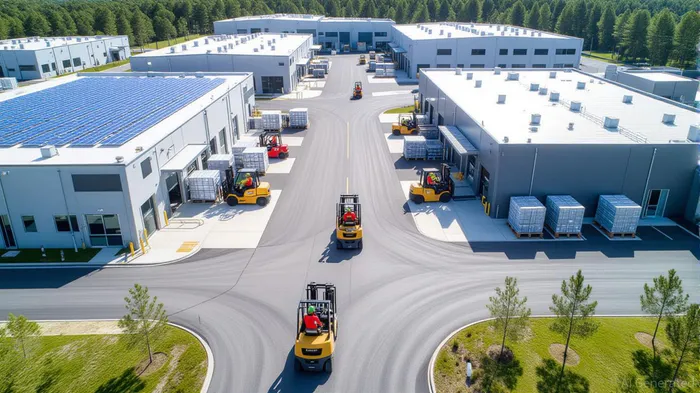 The strategic location of the campus near the I-90 corridor further amplifies its appeal, providing access to regional and national markets. According to a report by the Southern Tier Central Regional Planning and Development Board, Webster's proximity to Buffalo's port and rail networks enhances its viability as a logistics nexus, a factor that has already attracted firms like Ranger Design, which secured 151,169 square feet of industrial space in 2024. Such developments underscore the site's readiness to accommodate high-growth sectors, supported by infrastructure that reduces operational risks for new tenants.
Tax Incentives and Public-Private Partnerships
The Xerox campus redevelopment is underpinned by a robust framework of tax incentives and public-private partnerships (PPPs) designed to de-risk investment. The Brownfield Opportunity Area (BOA) program, for example, offers simplified permitting and tax breaks to developers, while the Community Access Project-a $2.041 million initiative-improves connectivity through roadways and pedestrian access, further enhancing the site's appeal. These incentives align with broader state and federal strategies, such as New York's NY Forward program, which prioritizes infrastructure-driven economic growth in post-industrial zones.
The financial benefits extend beyond upfront cost savings. For developers, the combination of tax abatements and infrastructure readiness reduces long-term operational costs, making the campus an attractive alternative to primary markets like New York City or Chicago, where land and labor expenses are significantly higher. As noted in a 2025 analysis by Bloomberg, Webster's median home prices have risen by 10.1% annually, reflecting a broader economic uplift driven by job creation and industrial demand. This trend mirrors successful post-industrial redevelopment models in St. Louis, where New Markets Tax Credits (NMTC) and public-private financing catalyzed the revitalization of historic industrial sites.
Sustainability and Long-Term Viability
Environmental remediation is a cornerstone of the Xerox campus transformation, with EPA-compliant techniques addressing contamination on the brownfield site. This focus on sustainability aligns with global trends in industrial development, where ecological resilience is increasingly tied to financial viability. The North End Business District Sustainable Development Plan, funded by a $203,130 state grant, further reinforces this commitment by exploring zoning reforms and transportation improvements to support long-term growth.
The project's alignment with global infrastructure spending trends also strengthens its investment case. With an estimated $106 trillion in worldwide infrastructure spending projected by 2040, sites like Webster-strategically located and prepped for industrial use-are poised to benefit from sustained demand. This is particularly relevant for sectors such as renewable energy and advanced manufacturing, which require scalable, well-connected facilities.
Conclusion: A Model for Post-Industrial Investment
The Xerox campus in Webster, NY, exemplifies how post-industrial zones can be reimagined as engines of economic growth through strategic infrastructure investment and policy support. By combining municipal upgrades, tax incentives, and a focus on sustainability, the site has transformed from a legacy industrial asset into a high-potential hub for advanced manufacturing and logistics. For investors, the project offers a rare convergence of affordability, strategic location, and government-backed support-a formula that has proven successful in other post-industrial redevelopments across the U.S. According to a 2025 analysis by Husch Blackwell, this model demonstrates strong returns on investment in post-industrial zones. As global industrial demand continues to rise, Webster's Xerox campus stands as a testament to the power of collaborative planning and forward-thinking investment.





Comentarios
Aún no hay comentarios