
The Xerox Campus Redevelopment in Webster, NY: A Strategic Opportunity for Industrial Real Estate Investors
Infrastructure as a Foundation for Value Creation
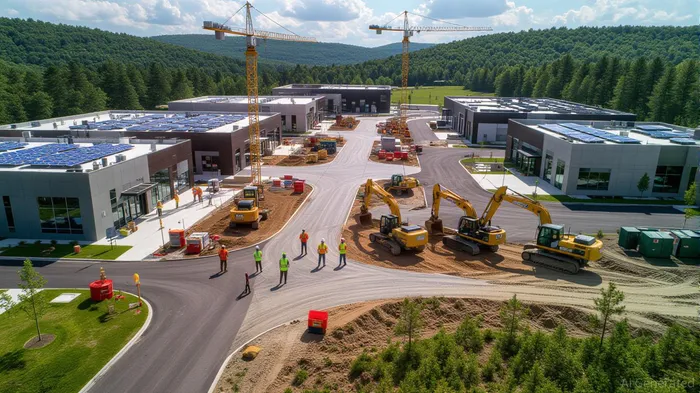
The redevelopment's success hinges on robust infrastructure investments aimed at making the site "shovel-ready" for development. New York State's allocation of $9.8 million in FAST grant funding underscores this priority, targeting road dedication, road construction, and electrical master planning to streamline future development according to the project report. These upgrades are critical for reducing industrial vacancy rates to 2% and attracting high-tech manufacturers, as highlighted by a 2025 report on the project.
Complementing these efforts, the Community Access Project-a $500,000 federally funded initiative-focuses on roadway rehabilitation, pedestrian accessibility, and beautification to connect the Xerox campus with surrounding communities. Such connectivity not only enhances the site's appeal but also aligns with broader brownfield redevelopment goals, creating a seamless link between industrial zones and residential areas. For investors, these infrastructure strides mitigate development risks and accelerate time-to-revenue for future tenants.
Public-Private Partnerships and the Master Developer Model
The Village of Webster's collaboration with Xerox CorporationXRX-- and local government partners exemplifies a strategic public-private partnership (PPP) framework. A key milestone in 2025 is the identification of a Master Developer to craft a preliminary proposal, ensuring coordinated efforts across zoning, land use, and infrastructure. This approach mirrors successful models in industrial real estate, where centralized planning reduces fragmentation and maximizes site potential.
The $650 million fairlife® dairy facility, a private-sector anchor project, further illustrates the power of these partnerships. Expected to generate 250 jobs, this facility not only bolsters the local economy but also validates the NEAT zone's appeal to high-impact industries according to WEDA reports. According to a report by the Webster Economic Development Alliance (WEDA), such projects are pivotal in transforming Webster into a contiguous 1,400-acre industrial hub-one of the largest in Upstate New York as detailed in the analysis. For investors, the presence of anchor tenants like fairlife reduces market risk and establishes a foundation for secondary leasing.
Economic Catalysts and Long-Term Value Drivers
The economic ripple effects of the Xerox redevelopment are poised to drive sustained value. Over 500 mixed-income housing units and 200,000 square feet of commercial space are projected to be developed, directly increasing demand for nearby industrial and retail assets. Additionally, job growth from the project is expected to elevate residential home prices by 10.1% annually, creating a virtuous cycle of economic activity.
The strategic expansion of Webster's industrial area, facilitated by the Reimagine Webster Initiative, further amplifies these benefits. By introducing new zoning policies and municipal boundary changes, the initiative has positioned the area as a magnet for domestic and international companies seeking scalable, development-ready sites. For industrial real estate investors, this translates to a diversified tenant base and long-term occupancy stability.
Future Outlook and Investment Considerations
With timelines aligned for 2025-2026, the Xerox campus redevelopment is entering a critical phase. The Village of Webster's continued coordination with Monroe County, the Town of Webster, and Xerox ensures infrastructure improvements remain synchronized with private-sector development plans. Investors should monitor the Master Developer's preliminary proposal, as it will likely outline phased development strategies and financing mechanisms that could influence entry points and asset allocation.
Moreover, the NEAT zone's emphasis on sustainability and smart infrastructure-such as upgraded electrical grids and sewer systems-aligns with global industrial trends, enhancing the site's competitiveness in a post-pandemic economy. As supply chain resilience becomes a priority, Webster's strategic location near major transportation corridors and its proximity to the Rochester metropolitan area further strengthen its case as a logistics and manufacturing hub.
Conclusion
The Xerox campus redevelopment in Webster, NY, is a masterclass in leveraging infrastructure, PPPs, and economic foresight to unlock industrial real estate value. For investors, the project offers a rare combination of immediate catalysts-such as FAST grant-funded upgrades-and long-term tailwinds, including job creation and housing demand. As the NEAT zone gains momentum, Webster's 1,400-acre industrial footprint is poised to become a blueprint for 21st-century industrial development, making it an attractive destination for capital seeking high-growth, low-volatility opportunities.





Comentarios
Aún no hay comentarios