
The Xerox Campus Redevelopment in Webster, NY: Industrial Real Estate and Infrastructure-Driven Growth Opportunities in 2025
Infrastructure as a Catalyst for Industrial Revitalization
The cornerstone of Webster's transformation is the $9.8 million in infrastructure upgrades, which includes road realignment, sewer expansion, and electrical modernization. These improvements are critical for making the former Xerox campus "shovel-ready" for advanced manufacturing and logistics operations. By addressing legacy infrastructure gaps, the project reduces development risks for private investors, enabling rapid deployment of capital into industrial and mixed-use projects. For instance, the planned $650 million fairlife® dairy plant-a key tenant in the redevelopment-relies on these upgrades to support its operations and create 250 new jobs.
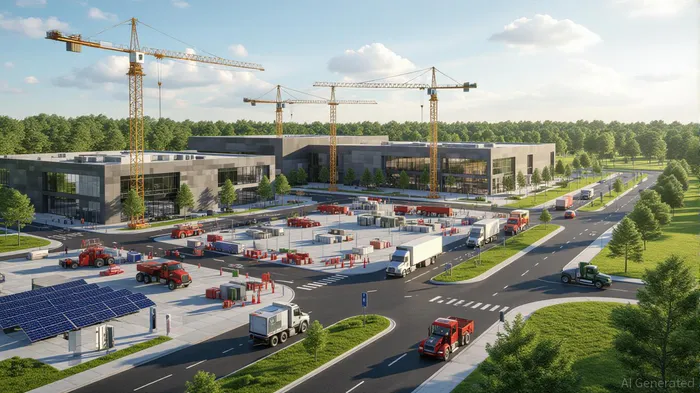 The infrastructure investments also align with broader trends in industrial real estate. As e-commerce and supply chain demands surge, industrial properties with modern utilities and accessible transportation networks are commanding premium valuations. In Webster, property values have already risen by 10.1% annually, outpacing regional averages, while industrial vacancy rates have plummeted to 2%-a stark indicator of strong demand.
Municipal Boundary Adjustments and Subdividability
A less visible but equally impactful component of the redevelopment is the adjustment of municipal boundaries to enhance land subdividability. The Village of Webster has strict subdivision regulations under its 1968 Subdivision Regulations, requiring Zoning Board of Appeals approval for plats to ensure compliance with zoning laws and public welfare objectives. By redefining municipal lines, the town ensures that subdivided parcels fall entirely within Village or Town limits, eliminating jurisdictional ambiguities that could delay permitting and construction.
This approach addresses a common pain point in brownfield redevelopment: fragmented land ownership and regulatory oversight. For developers, the clarity provided by adjusted boundaries reduces legal and logistical hurdles, accelerating project timelines. For investors, it enhances the predictability of returns, as streamlined processes lower development costs and mitigate delays. The Town of Webster's broader development standards further reinforce this framework, emphasizing public health, safety, and orderly growth through regulated land use.
Long-Term Value Creation and Economic Impact
The combined effect of infrastructure upgrades and boundary adjustments is a surge in subdividable land availability, with over one million square feet of industrial space already earmarked for development. This scalability is attracting a diverse range of investors, from logistics firms seeking warehousing hubs to manufacturers pursuing nearshoring opportunities. The inclusion of mixed-use components in the redevelopment also positions Webster to capture growth in residential and commercial sectors, diversifying its economic base.
Moreover, the town's ongoing comprehensive plan update-expected to be finalized by mid-2026-will codify these strategies into a long-term vision for growth. This forward-looking approach ensures that Webster remains adaptable to shifting market demands, such as the rise of green manufacturing or autonomous logistics technologies. For investors, this signals a stable and innovation-friendly environment.
Strategic Opportunities for Investors
For real estate investors, the Xerox Campus redevelopment offers a unique window to acquire subdividable land at pre-infrastructure prices, with the potential for significant appreciation as the site matures. Logistics firms can capitalize on Webster's proximity to major transportation corridors (including the Thruway and rail networks) to establish cost-efficient distribution centers. Meanwhile, economic development stakeholders-ranging from venture capitalists to public-private partnerships-can leverage the town's job creation goals to fund workforce training programs or green technology initiatives.
The key to success lies in aligning with the town's phased development timeline. Early-stage investments in infrastructure-adjacent land or modular construction firms stand to benefit most from the current momentum, while later-stage players can focus on tenant acquisition and operational optimization.
Conclusion
The Xerox Campus redevelopment in Webster, NY, exemplifies how strategic infrastructure investment and regulatory innovation can unlock dormant value in brownfield sites. By 2025, the $9.8 million in upgrades and municipal boundary adjustments are not just transforming a single property-they are redefining the economic trajectory of an entire region. For investors, this represents a rare convergence of public and private incentives, where long-term growth is underpinned by tangible, data-driven outcomes. As Webster's comprehensive plan takes shape, the lessons from this project will likely influence similar redevelopments nationwide, cementing its legacy as a model for 21st-century industrial revitalization.





Comentarios
Aún no hay comentarios