
The Xerox Campus Redevelopment in Webster, NY: A Hidden Opportunity in Industrial Real Estate
Strategic Infrastructure as a Catalyst
At the heart of Webster's transformation is the $9.8 million FAST NY grant, which has funded critical upgrades to roads, sewer systems, and the electrical grid. These improvements have rendered the site "shovel-ready" for advanced manufacturing operations, a term that underscores the immediacy of development potential. According to a report by the Webster Economic Development Alliance, such infrastructure investments are pivotal in reducing the time and cost for developers to bring projects to fruition. The modernization of the electrical grid, for instance, ensures the site can support energy-intensive operations like the $650 million fairlife® dairy plant, a project expected to create 250 jobs and begin operations by late 2025.
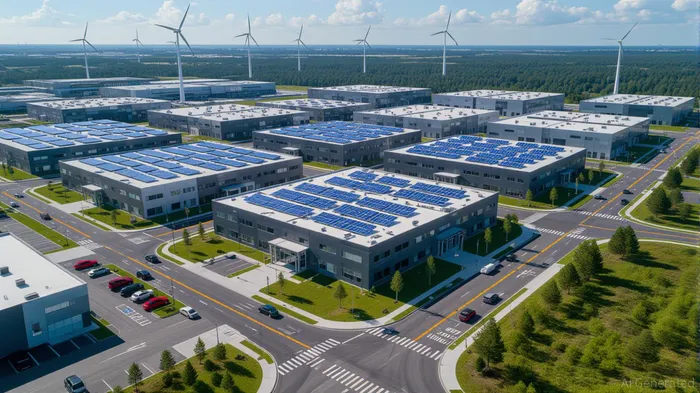 The alignment of infrastructure timelines with private-sector projects is equally significant. The synchronized completion of road enhancements and sewer expansions with the fairlife plant's construction schedule demonstrates a strategic approach to minimizing delays and maximizing efficiency. This coordination is not accidental but a result of deliberate municipal planning, including boundary adjustments to streamline land transactions and permitting. Such foresight reduces regulatory friction, a critical factor for developers seeking predictable returns.
Municipal Partnerships and Economic Resilience
Webster's success hinges on its ability to leverage public-private partnerships. The Village of Webster, in collaboration with state consultants, has developed a Strategic Investment Plan aimed at securing additional funding through initiatives like the NY Forward Program. A $4.5 million allocation from this program, announced in Spring 2025, will further bolster community revitalization efforts. These partnerships extend beyond financial support; Xerox itself contributed $1.8 million to road enhancements, illustrating a shared commitment to the site's viability.
The economic impact of these efforts is already evident. Residential property values in Webster have surged by 10.1% annually, while industrial vacancy rates have plummeted to 2%, signaling robust demand. The reclassification of the Xerox site as a Brownfield Opportunity Area has amplified this momentum by granting priority access to state resources and simplifying regulatory processes. For investors, this creates a virtuous cycle: infrastructure investments attract private capital, which in turn drives asset appreciation.
A Blueprint for Sustainable Growth
Webster's approach aligns with broader regional goals of revitalizing brownfield sites and fostering sustainable economic development. The $283 million statewide initiative to prepare industrial sites for development, of which Webster is a flagship example, highlights the scalability of this model. Additionally, the village's $20 million wastewater treatment upgrade and its Brownfield Opportunity Area designation underscore a commitment to environmental responsibility, a growing priority for ESG-focused investors.
The strategic location of the Xerox campus-adjacent to major transportation routes and supported by a high-capacity power grid-further enhances its appeal. As the fairlife plant and other projects come online, demand for industrial and technology properties is expected to peak, creating a unique window for investment in 2025–2026. This timing is critical: infrastructure projects like the transfer of key roadways to public ownership, slated for late 2025 or mid-2026, will further stabilize the market.
Conclusion: A Model for Industrial Real Estate
Webster's Xerox campus redevelopment exemplifies how strategic infrastructure investment and municipal alignment can catalyze industrial real estate value. By addressing both the physical and regulatory barriers to development, the village has created a resilient ecosystem for advanced manufacturing and logistics. For investors, the combination of immediate development readiness, job creation, and asset appreciation makes this a compelling opportunity. As the 2025–2026 timeline unfolds, Webster's model may well serve as a template for other municipalities seeking to transform brownfields into engines of economic growth.





Comentarios
Aún no hay comentarios