
The Xerox Campus Redevelopment: A Strategic Buy Signal in Industrial Real Estate
Infrastructure-Driven Value Creation: The FAST NY Grant as a Catalyst
At the heart of the Xerox campus redevelopment is the $9.8 million FAST NY grant, part of a broader $51 million initiative to accelerate industrial site readiness across New York State. This funding is directly addressing critical infrastructure gaps, including road construction and extension, sanitary sewer upgrades and electrical master planning. By 2025, these improvements are expected to prepare nearly 300 acres and over one million square feet of industrial space for advanced manufacturing, targeting sectors such as semiconductors, renewable energy, and food processing.
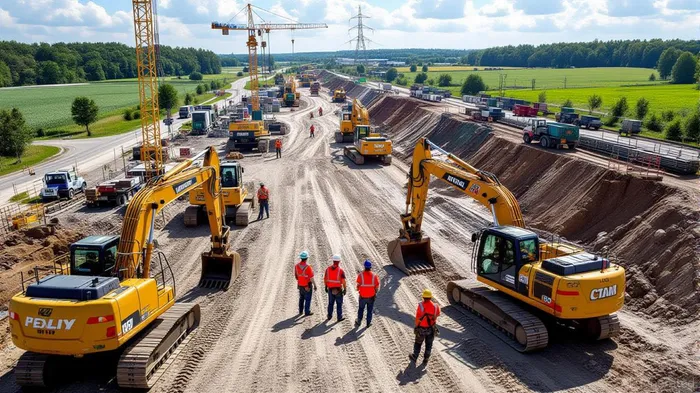
The significance of this infrastructure investment cannot be overstated. According to a report by , the upgrades are making the campus "shovel-ready" for businesses seeking to establish operations in a location with access to skilled labor and major transportation corridors. This readiness reduces development timelines and capital expenditures for future tenants, creating a competitive advantage in a market where industrial vacancy rates are already constrained. For investors, the implication is clear: assets in proximity to this infrastructure will benefit from increased demand and premium valuations.
Municipal Line Adjustments: Streamlining Development Timelines
Complementing the infrastructure upgrades are Xerox's municipal line adjustments, which aim to reclassify the 87-acre West Campus entirely under the jurisdiction of the Village of Webster. This move addresses a longstanding barrier to development: parcels bisected by the current boundary between the Village and Town of Webster. By consolidating jurisdiction, the adjustment simplifies zoning regulations and streamlines permitting processes, accelerating the timeline for subdividing and selling off 300–500 acres of the campus.
This strategic reconfiguration aligns with broader efforts to position Webster as a hub for capital-intensive industries. As noted in the , the adjustment is part of a plan to enhance the campus's subdivisibility and attract large-scale manufacturers. For investors, the reduced regulatory friction translates to lower transaction costs and faster asset turnover, both of which are critical in a market where speed to market can determine profitability.
Environmental Remediation: Mitigating Risk, Enhancing Resilience
A critical but often overlooked component of the Xerox campus redevelopment is the environmental remediation efforts at 600 Ridge Road. Demolition and Phase 2 testing have already commenced, with results expected to determine whether Phase 3 remediation is necessary. While the presence of contamination could introduce short-term delays, the proactive approach to addressing environmental risks is a testament to the project's long-term viability.
The state's $203,130 grant for the North End Business District further underscores the commitment to revitalizing the area. By resolving environmental liabilities upfront, the project minimizes the risk of future regulatory hurdles or devaluation, a key consideration for risk-averse investors. highlights, such efforts are essential for transforming brownfield sites into assets that meet modern sustainability standards.
The Bigger Picture: A Sustainable Economic Ecosystem
The Xerox campus redevelopment is not occurring in isolation. It is part of Governor Kathy Hochul's broader vision to build a sustainable economic ecosystem through public-private partnerships. The proximity to the $650 million fairlife® production plant, which will generate 250 jobs, further enhances the region's appeal for industries requiring a skilled labor pool and robust supply chains. With limited industrial vacancy rates and strategic positioning near the U.S.-Canada border, Webster is becoming a magnet for businesses seeking to expand their U.S. footprint.
For investors, the combination of infrastructure, regulatory alignment, and environmental due diligence creates a virtuous cycle of value creation. The campus is not merely being redeveloped-it is being repositioned as a cornerstone of a larger industrial corridor.
Conclusion: A Strategic Buy Signal
The Xerox Webster campus exemplifies how infrastructure-driven redevelopment can catalyze long-term asset appreciation. The FAST NY grant, municipal line adjustments, and environmental remediation efforts collectively address the key barriers to industrial development, creating a blueprint for commercial land reactivation. As the campus transitions from a legacy site to a modern manufacturing hub, it offers investors a unique opportunity to capitalize on a market poised for sustained growth.
In an era where industrial real estate is increasingly defined by its connectivity, sustainability, and regulatory efficiency, the Xerox campus stands out as a strategic buy signal.





Comentarios
Aún no hay comentarios