
WTW's H&B Hire: A Tactical Play in a Cost-Crunch Market
The immediate catalyst is a routine but targeted leadership move. WTWWTW-- announced yesterday that Sheila Nordquist will become the new leader for its Health & Benefits business in North America, effective January 12. This is an operational appointment, not a strategic pivot. Yet it lands at a moment of acute market pressure.
That pressure is stark. According to WTW's own survey, U.S. employers project a 9.1% healthcare cost increase for 2026, the highest in over two decades. This isn't a minor headwind; it's a fundamental cost crunch forcing companies to re-evaluate their entire employee benefit strategy. The company's survey shows one in three employers is considering significant changes to their healthcare programs within the next three years.
In this context, the hire is tactical. WTW is placing a proven operator in charge of its North American H&B growth strategy just as its core clients are under the most intense financial pressure to control costs. Management's rationale is clear: Nordquist brings an innovative outlook on the market and a focus on turning priorities into action. These are the exact qualities needed to help clients navigate disruptive changes and, by extension, to help WTW capture growth in a pressured market.
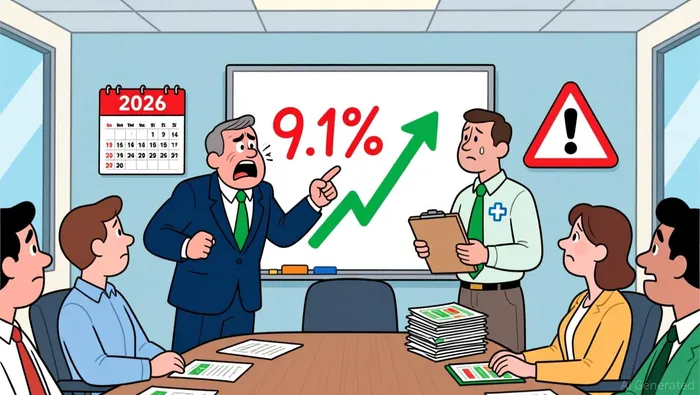
The setup is straightforward. As employers scramble to manage rising costs, they will need expert advisory help. Nordquist's role is to position WTW's H&B business to be that partner, driving growth by solving client problems. This is a bet on execution in a high-stakes environment, not a bet on a new valuation story.
The Market Setup: Why This Matters Now
The leadership change lands squarely in the middle of a cost crisis that is reshaping the entire market. Employers are under relentless pressure, with more than half exceeding their healthcare budgets in 2025 by an average of 4.5%. This isn't a budgetary oversight; it's a direct hit to profitability. The drivers are shifting, creating a clear advisory opportunity. Cost increases are now being fueled by pharmacy costs, primarily specialty pharmaceuticals and GLP-1 medications, alongside a small group of high-cost claimants who account for nearly one-third of all plan expenses.
This pressure is forcing a strategic pivot. Employers are moving away from simply absorbing costs or aggressive cost-shifting that could hurt morale. Instead, they are looking for bold disruptive changes to control spending while improving health outcomes. Their top priorities are directly aligned with WTW's advisory services: managing company medical and pharmacy costs, ensuring affordability, and expanding clinical programs for chronic conditions. This creates a powerful demand for the kind of data-driven, insight-led solutions WTW provides.
Nordquist's prior role as U.S. Growth co-leader signals this hire is focused on expanding WTW's market share in this high-growth, high-pressure segment. She is being placed in charge of the North American growth strategy at a time when clients need expert help navigating these complex changes. The setup is clear: as healthcare costs continue to climb, the need for sophisticated advisory services to manage risk and variability will only intensify. This is the direct market driver behind the tactical leadership move.
The Tactical Play: Is This a Catalyst or Already Priced?
The market has already moved. WTW shares are up 4.8% over the last 20 days and 9.1% over 120 days, trading near its 52-week high. This recent strength suggests broader optimism about the Health & Benefits segment's prospects is already baked into the stock price. The tactical play here hinges on whether the leadership change is a catalyst that can push the stock higher from this elevated level, or if it's a routine succession that the market has already discounted.
On one hand, the setup remains favorable. The fundamental pressure on employers is real and persistent, with healthcare costs projected to rise sharply. This creates a sustained demand for advisory services, which is the core of WTW's H&B business. The hire of a growth-focused leader like Nordquist is a logical step to capture that demand. If she can execute and drive share gains in this pressured market, the stock could continue its upward trajectory.
On the other hand, the risk is that the event itself is priced in. The stock's 120-day gain of 9.1% indicates investors are already betting on H&B growth. A leadership change, while tactical, may not be transformative enough to create a new mispricing. The primary risk is that this is a routine succession, not a game-changing announcement, and the market's recent rally has already reflected the best-case scenario for the segment.
The bottom line is that this is a play on the market pressure, not the hire. The event is a confirmation of management's focus, but the stock's recent performance shows the market is already leaning in. For a tactical investor, the opportunity is there if the cost crunch intensifies further and Nordquist's execution delivers tangible results. But the easy money may have already been made.
The Watchlist: Near-Term Catalysts to Monitor
For a tactical investor, the leadership change is a setup, not the payoff. The real test is whether the market pressure translates into visible growth and client retention. The key near-term catalysts are specific metrics and commentary that will validate or invalidate the thesis.
First, monitor the financial results. The initial impact of Nordquist's leadership will be reflected in the Health & Benefits segment's revenue growth. Watch for Q4 2025 and Q1 2026 H&B segment revenue to see if it accelerates as employers scramble for cost-containment solutions. Any deviation from the company's prior guidance would be a direct signal of her influence in a pressured market.
Second, listen for management's commentary in upcoming earnings calls. The critical watchpoint is WTW's discussion on healthcare cost trend management and client retention. Management should provide updates on how many employers are actually implementing the disruptive changes WTW's survey identified. Positive commentary here would confirm the demand thesis is intact.
The overarching validation hinges on the stock's ability to sustain its recent strength. WTW shares are up 9.1% over the last 120 days and trade near a 52-week high. This rally assumes the cost crunch will persist. The key risk is that the 9.1% projected healthcare cost increase for 2026 proves to be a peak, not a new norm. If the trend moderates, the fundamental driver for advisory services weakens, and the stock's recent gains could be vulnerable.
In short, the tactical play requires monitoring two things: the segment's top-line growth for early execution signals, and management's qualitative assessment of the cost environment for fundamental validation. The stock's recent performance has priced in optimism; these near-term catalysts will determine if that optimism is justified.





Comentarios
Aún no hay comentarios