
Wrapped Tokens and Their Role in Enhancing DeFi Liquidity: Cross-Chain Interoperability as the New Catalyst
The Mechanics of Wrapped Tokens: Bridging Chains Without Compromise
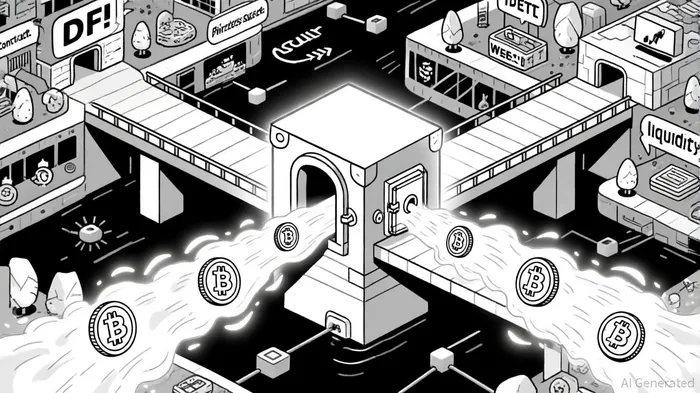
Wrapped tokens operate by converting native assets (e.g., BitcoinBTC-- or Ethereum) into tokenized counterparts compatible with other blockchains. For example, WBTCWBTC-- allows Bitcoin holders to access Ethereum-based DeFi platforms by locking BTCBTC-- in a custodial or decentralized vault and minting an equivalent amount of WBTC on EthereumETH--, as explained in The Standard's WBTC explainer. This process, facilitated by protocols like RenVM, ensures trustless and secure cross-chain transfers without relying on centralized intermediaries. Similarly, WETH-Ethereum's ERC-20 tokenized version-enables ETHETH-- to interact with smart contracts and decentralized exchanges (DEXs) that require fungible tokens, as outlined in a wrapped-tokens guide.
The custodial model for WBTC, however, introduces a layer of centralization, as minting and redemption require approved custodians, a tension highlighted by The Standard's coverage. This duality-decentralized benefits with centralized risks-highlights the ongoing tension in DeFi's quest for scalability and security.
Liquidity Amplification: TVL and Transaction Volumes as Metrics of Success
The impact of wrapped tokens on DeFi liquidity is quantifiable. By 2025, WBTC had accumulated over $4 billion in total value locked (TVL) across platforms like AaveAAVE-- and CompoundCOMP--, according to reported WBTC TVL figures, while WETH's TVL remained a core pillar of Ethereum's DeFi infrastructure, as noted in a best DeFi projects list. These figures underscore the growing demand for cross-chain assets, as users leverage wrapped tokens to access yield farming, staking, and lending opportunities beyond their native chains.
Transaction volumes further validate this trend. In Q3 2025, DEXs recorded a record $1.43 trillion in spot volume, with WETH alone accounting for $2.02 billion in 24-hour trading activity, according to a CryptoSlate report. This surge reflects notNOT-- only the token's utility in decentralized exchanges but also its role in facilitating price discovery, as DEXs increasingly outpace centralized exchanges in liquidity depth.
Regulatory Clarity: A New Era for Wrapped Tokens
Regulatory frameworks are catching up with DeFi's innovation. Australia's financial regulator, ASIC, recently classified stablecoins and wrapped tokens as financial products, requiring compliance with licensing requirements, per updated ASIC guidance. This move, while initially seen as a hurdle, provides a legal foundation for wrapped tokens to integrate into traditional financial systems. By aligning with regulatory standards, cross-chain solutions can attract institutional investors and reduce the stigma of unregulated experimentation.
Investment Implications: Cross-Chain as the Next Frontier
For investors, the rise of wrapped tokens signals a shift in DeFi's value proposition. Cross-chain interoperability is no longer a niche feature but a necessity for protocols aiming to scale. Projects that reduce custodial risks (e.g., through decentralized minting) or enhance token utility (e.g., multi-chain governance) are likely to outperform in this landscape. Additionally, the growing TVL and transaction volumes of wrapped tokens suggest that liquidity provision will remain a key revenue driver for DeFi platforms, as highlighted in the FinanceFeeds report.
However, risks persist. Regulatory changes in jurisdictions beyond Australia could disrupt custodial models, and smart contract vulnerabilities in wrapping protocols remain a concern. Investors should prioritize projects with transparent governance and audited infrastructure.
Conclusion: Liquidity Without Borders
Wrapped tokens are more than technical workarounds-they are the linchpins of a new financial paradigm. By enabling cross-chain liquidity, they address one of DeFi's most persistent challenges: asset silos. As DeFi platforms mature into fee-generating systems, the role of wrapped tokens will only expand, offering both opportunities and complexities for investors. The future of decentralized finance lies not in isolated chains but in a web of interconnected ecosystems, where wrapped tokens serve as the universal currency of interoperability.







Comentarios
Aún no hay comentarios