
Worthington Enterprises (WOR): Can the LSI Acquisition and Strong Revenue Growth Offset Earnings Shortfalls?
In the second quarter of fiscal 2026, WorthingtonWOR-- Enterprises (WOR) reported a 19% year-over-year revenue increase, with net sales climbing to $327.5 million, driven largely by its Building Products segment. This segment alone saw a 31.9% surge in net sales to $207.5 million, fueled by the Elgen acquisition and higher volume. However, the company missed earnings expectations, delivering an adjusted EPS of $0.65 versus the forecasted $0.70. This raises a critical question: Can the pending LSI Group acquisition and sustained revenue growth offset near-term earnings shortfalls while unlocking long-term margin expansion?
Strategic Acquisitions and Revenue Synergies
Worthington's acquisition strategy has long centered on acquiring niche market leaders to diversify its product portfolio and strengthen its position in engineered building systems. The $205 million acquisition of LSI Group-a manufacturer of commercial metal roofing components-is a prime example. Expected to close in January 2026, this deal aligns with the company's focus on "resilient and retrofit-driven revenue streams," as highlighted by management.
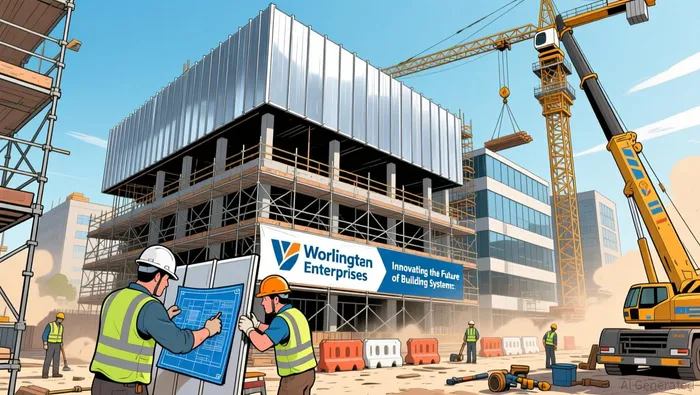 The Building Products segment's performance underscores the potential of this strategy. Its 31.9% revenue growth in Q2 2026 demonstrates the immediate value of strategic acquisitions like Elgen, while the LSI deal is poised to further solidify Worthington's dominance in the commercial construction sector. By integrating LSI's expertise in metal roofing, Worthington can expand its offerings in high-margin, engineered solutions, which are less cyclical than traditional steel products.
EBITDA Margin Expansion and Operational Leverage
Worthington's trailing 12-month adjusted EBITDA margin has risen to nearly 23%, up from 20% in the prior year. This margin improvement reflects the company's operational discipline and its ability to extract value from acquired assets. The LSI acquisition is expected to be accretive to EBITDA margins, building on this trajectory. Management has emphasized that the deal will enhance long-term profitability by adding "resilient revenue streams" and leveraging cross-selling opportunities within the Building Products segment.
Critically, Worthington's track record of margin expansion-achieved through cost optimization and strategic acquisitions-suggests the company can integrate LSI profitably. For instance, the Elgen acquisition contributed meaningfully to Q2 2026's results, illustrating how targeted deals can drive both top-line and bottom-line growth. If LSI follows a similar trajectory, its contribution to EBITDA could offset near-term earnings shortfalls by mid-2026.
Earnings Shortfalls and Q3 Guidance
While Q2 2026's adjusted EPS fell short of expectations, management has outlined a more optimistic outlook for the second half of the fiscal year. The LSI acquisition, expected to close in January 2026, is projected to bolster Q3 and Q4 performance as integration progresses. Additionally, the company anticipates seasonal strength in the back half of 2026, driven by increased demand for engineered building systems.
The earnings shortfall in Q2 must be viewed in the context of Worthington's broader strategic priorities. The company has consistently prioritized long-term margin expansion over short-term earnings volatility, as evidenced by its disciplined approach to capital allocation and operational optimization. The LSI acquisition, in particular, is positioned to enhance cash flow generation and reduce exposure to commodity price fluctuations, which have historically pressured margins.
Conclusion: A Calculated Bet on Strategic Value
Worthington Enterprises' Q2 2026 results highlight both the challenges and opportunities inherent in its growth strategy. While the earnings miss is a near-term headwind, the LSI acquisition and sustained revenue growth in the Building Products segment suggest a path to margin recovery and long-term value creation. By leveraging its expertise in niche markets and operational efficiency, Worthington is well-positioned to transform the LSI acquisition into a catalyst for profitability. Investors should monitor the integration of LSI and the company's Q3 guidance, which will provide critical insights into whether this strategic bet delivers on its promise.







Comentarios
Aún no hay comentarios