
Wormhole's Tokenomics Overhaul: Rebalancing Utility and Scarcity in Blockchain Bridges
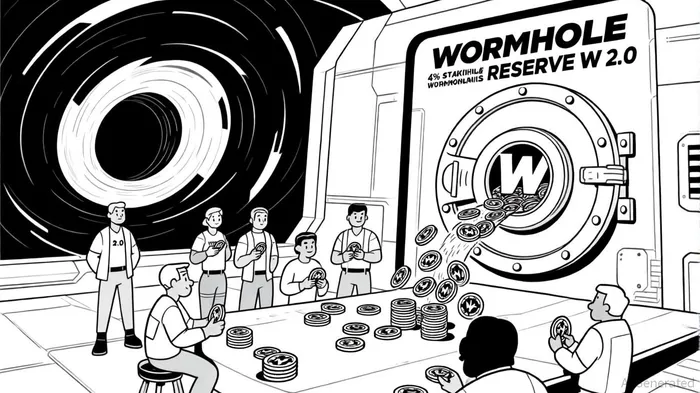
Blockchain bridges are the arteries of the multichain future, but their economic models must evolve to sustain growth and security. Wormhole's recent W Token 2.0 overhaul and the launch of the WormholeW-- Reserve represent a bold reimagining of tokenomics, directly addressing the dual challenges of utility and scarcity in cross-chain infrastructure. By aligning incentives, reducing volatility, and embedding scarcity through strategic token locking, Wormhole is positioning itself as a leader in a crowded space.
Wormhole's W 2.0: A New Paradigm for Tokenomics
Wormhole's W Token 2.0 introduces three foundational changes:
1. The Wormhole Reserve: A strategic fund accumulating protocol value (e.g., fees from the Wormhole PortalPORTAL-- and ecosystem apps) to lock W tokens and align long-term value with platform growth[1]. This reserve acts as a “token sink,” reducing circulating supply and enhancing scarcity.
2. 4% Base Yield for Stakers: Stakers now earn a guaranteed 4% yield, with additional rewards for engaging with ecosystem applications like Portal Earn[1]. This creates a direct feedback loop: higher user activity boosts staking yields, which in turn drives token demand.
3. Bi-Weekly Token Unlocks: Replacing annual cliff unlocks with bi-weekly distributions over 4.5 years reduces market volatility and ensures a steady supply of tokens for liquidity[1]. The Wormhole Foundation Treasury and Core Contributors retain original unlock schedules, balancing decentralization with stability.
These changes are already paying off. The W token surged 9% post-announcement[3], reflecting renewed confidence in Wormhole's ability to balance utility and scarcity—a critical challenge for cross-chain bridges.
Rebalancing Utility and Scarcity: A Competitive Edge
Wormhole's approach contrasts sharply with competitors like ChainlinkLINK--, AxelarAXL--, and Cosmos.
- Chainlink's CCIP relies on off-chain oracles for data integrity, avoiding token-driven scarcity but sacrificing direct economic alignment between users and the protocol[1].
- Axelar's AXL token is central to its model, used for staking, gas fees, and validator incentives[3]. While this creates strong scarcity, it also ties the token's value to the bridge's operational costs, which can be volatile.
- Cosmos bridges (e.g., Gravity Bridge) prioritize interoperability without a central token, but this decentralization complicates token-driven scarcity strategies[3].
Wormhole's W Reserve and 4% yield model combine the best of both worlds: token scarcity via locked reserves and utility through governance, staking, and ecosystem participation. By capping supply at 10 billion tokens and locking a growing portion in the reserve, Wormhole ensures that demand outpaces supply—a recipe for long-term value accrual[1].
Implications for Investors
The overhaul addresses two critical pain points for blockchain bridges:
1. Volatility Mitigation: Bi-weekly unlocks and the reserve's token buybacks reduce the risk of sudden supply shocks, stabilizing the W token's price.
2. Governance Alignment: The shift to on-chain governance under the Wormhole DAO ensures token holders have direct control over protocol upgrades and fee adjustments[1], fostering trust and long-term participation.
For investors, this translates to a more predictable and defensible asset. The W token's role in over 40 blockchains further amplifies its utility, creating a flywheel effect: as more chains adopt Wormhole, demand for W tokens rises, driving up scarcity and price.
Conclusion: A Strategic Bet on the Multichain Future
Wormhole's W 2.0 is more than a tokenomics update—it's a strategic repositioning in the cross-chain bridge wars. By rebalancing utility and scarcity, Wormhole is building a protocol where token value is inextricably linked to real-world usage. As the multichain ecosystem matures, projects that master this balance will dominate. Wormhole's 9% price surge post-announcement[3] is a harbinger of what's to come.
For investors, the question isn't whether Wormhole will succeed—it's whether they're positioned to capitalize on its ascent.






Comentarios
Aún no hay comentarios