
World Liberty Financial's DeFi Lending Expansion and USD1's Strategic Positioning in 2026
In 2026, the DeFi lending market is rebounding with renewed vigor, and World Liberty FinancialWLFI-- (WLFI) has positioned itself at the intersection of regulatory ambition and decentralized finance. With total crypto lending reaching $74 billion by Q3 2025 and DeFi accounting for 66.9% of all crypto-collateralized borrowing, WLFI's launch of World Liberty Markets-a lending protocol built on Dolomite-marks a pivotal step in its strategy to scale USD1USD1--, its dollar-backed stablecoin according to official launch details. This analysis evaluates the investment potential of USD1 and WLFIWLFI-- tokens, balancing their growth trajectories against regulatory risks and market dynamics.
DeFi Lending Expansion: A Strategic Bet on USD1 Utility
World Liberty Markets, launched in January 2026, allows users to supply USD1 and other assets to access borrowing functionality. USD1's market value has surged to over $3.5 billion, making it one of the largest stablecoins. This growth is driven by strategic incentives, such as Binance's 20% APR yield program for USD1 holders, and WLFI's roadmap to tokenize real-world assets (RWAs) like commodities and debt instruments.
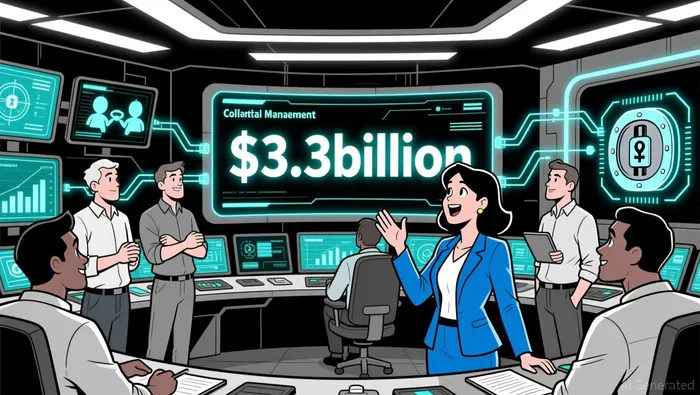
The platform's integration with Dolomite-a well-established DeFi infrastructure provider- ensures robust collateral management and liquidity. By enabling peer-to-peer lending and borrowing, WLFI is creating a flywheel effect: increased USD1 adoption drives higher TVL (total value locked), which in turn attracts more institutional and retail users. As of December 2025, USD1's TVL had reached $3.3 billion, a figure projected to grow as WLFI expands to SolanaSOL-- and other low-cost blockchains according to market analysis.
Regulatory Ambition: The National Bank Charter as a Game Changer
WLFI's application for a national trust bank charter through its subsidiary, World Liberty Trust Company (WLTC), is a bold move to bring USD1 under federal oversight according to official announcement. This aligns with the broader trend of crypto firms seeking banking licenses to integrate digital assets into traditional finance. The OCC's 120-day conditional approval timeline suggests WLFI could secure the charter by mid-2026, enabling USD1 to operate as a regulated settlement layer for institutions.
The implications are significant. A federally chartered trust bank would reduce friction for cross-border payments and treasury operations, positioning USD1 to compete with USDTUSDT-- and USDCUSDC--. Moreover, the GENIUS Act of 2025- mandating 1:1 dollar pegging and U.S. Treasury reserves for stablecoins-has already bolstered USD1's compliance profile. If approved, the charter would enhance institutional trust, potentially accelerating USD1's adoption in corporate treasuries and AI-driven payment systems.
Market Performance: Volatility and Institutional Hype
The WLFI token, however, tells a different story. As of December 2025, WLFI traded at $0.135, down 56% from its September 2025 peak of $0.46. While the token experienced an 8% rally in late December 2025, its ROI remains mixed. Institutional interest has been mixed: a $10 million buyback initiative and a 5% treasury allocation to boost USD1 adoption signal optimism, but political risks-such as legal actions against the Trump family- could destabilize sentiment.
USD1, by contrast, has maintained its peg and grown in utility. Its expansion to Solana and partnerships with MMA Partners and Binance have enhanced liquidity and real-world use cases. The stablecoin's TVL of $3.3 billion and projected $10 billion valuation in 2026 suggest strong institutional adoption, particularly in cross-border payments and RWA tokenization.
Risks and Rewards: A Balancing Act
WLFI's strategy is ambitious but not without risks. Regulatory uncertainty around the bank charter application could delay its timeline, while competition from established stablecoins remains fierce. Additionally, the WLFI token's reliance on USD1's success creates a feedback loop: if USD1 fails to scale, WLFI's value proposition weakens.
However, the rewards are equally compelling. A successful bank charter would transform USD1 into a regulated, full-stack financial infrastructure asset, potentially driving its market cap to $10 billion or more. For WLFI, this could unlock new revenue streams through custody fees and RWA tokenization.
Conclusion: A High-Stakes Play on DeFi's Future
World Liberty Financial's DeFi expansion and USD1's strategic positioning reflect a calculated bet on the convergence of crypto and traditional finance. While regulatory hurdles and token volatility pose challenges, the project's institutional partnerships, RWA roadmap, and federal oversight ambitions position it as a key player in 2026's evolving DeFi landscape. For investors, the key question is whether USD1 can sustain its growth trajectory and whether WLFI's tokenomics can weather political and market headwinds.






Comentarios
Aún no hay comentarios