
World Liberty Financial's Airdrop Strategy: A Catalyst for USD1 Stablecoin Adoption and Long-Term Value
Economic Model and Tokenomics: A Framework for Sustainable Growth
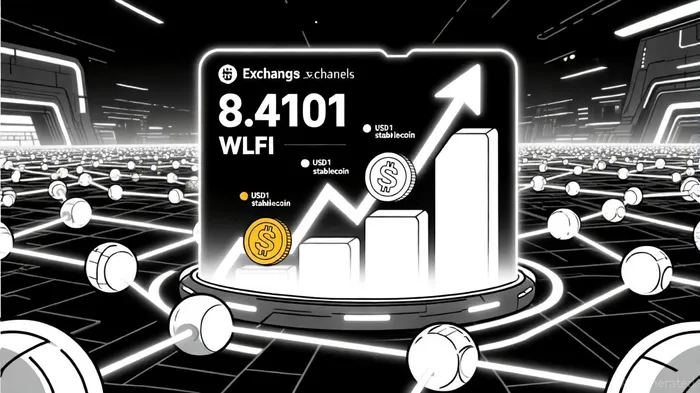
WLFI's airdrop strategy is deeply embedded in its economic model, which prioritizes user retention and ecosystem expansion. By rewarding participants for trading USD1 on partner exchanges and maintaining balances in the stablecoin, WLFI incentivizes active participation in its network. The project further plans to expand the points program through DeFi integrations, new trading pairs, and additional use cases for USD1, creating a multi-layered value proposition for token holders, as noted in the LiveBitcoinNews report.
This approach aligns with broader trends in the stablecoin sector. For instance, Visa's support for stablecoin-linked programs has driven a $2.5 billion annualized run rate in stablecoin card spending by 2025, highlighting the growing integration of digital assets into traditional financial systems, according to a Blockonomi article. Such developments suggest that airdrop-driven loyalty programs can serve as a bridge between decentralized ecosystems and mainstream adoption, particularly when paired with institutional partnerships and regulatory alignment.
Case Studies: Proven Success of Airdrop-Driven Loyalty Programs
The long-term success of airdrop-driven loyalty programs is evident in projects like ZAR, a fintech startup in Pakistan that raised $12.9 million to bring stablecoins to unbanked populations. By leveraging local distribution channels and a cash-to-stablecoin conversion model, ZAR has enabled access to dollar-backed digital assets for millions, demonstrating how airdrops can drive financial inclusion and infrastructure growth in emerging markets, according to a FintechWeekly article. Similarly, BlockDAG's 100 million token airdrop, coupled with a $323 million funding round, has expanded its user base and miner network, reinforcing token utility and value through active participation, as Coinrise reports.
These examples highlight a critical insight: airdrops are most effective when paired with non-monetary incentives such as governance rights, DeFi integration, and mission alignment. For instance, Zama's airdrop strategy, which rewards testnet participants with tokens, has fostered a developer community aligned with the project's goals of advancing privacy-preserving blockchain technology, as noted in a Coinotag report. This dual focus on financial and non-financial incentives creates a sustainable model for user retention and token value appreciation.
Long-Term Value Proposition: Beyond Short-Term Gains
The long-term value of early engagement in decentralized loyalty programs lies in their ability to create network effects. WLFI's airdrop strategy not only rewards early adopters but also positions them as stakeholders in the USD1 ecosystem. As the stablecoin gains traction in DeFi and cross-border payments, the utility of WLFI tokens is likely to increase, driven by demand for governance and fee-rebate mechanisms.
This dynamic is mirrored in the Citi–Coinbase partnership, which is streamlining fiat-to-stablecoin transactions for institutional clients. By integrating stablecoins into traditional financial infrastructure, such initiatives reduce friction and enhance liquidity, creating a fertile ground for airdrop-driven loyalty programs to thrive, according to a BraveNewCoin analysis. The projected growth of the stablecoin market-from $316 billion to potentially $3.7 trillion in five years-further underscores the scalability of these models, the BraveNewCoin analysis projects.
Conclusion: A Strategic Bet on Decentralized Adoption
World Liberty Financial's airdrop strategy exemplifies the power of decentralized loyalty programs in driving stablecoin adoption. By aligning user incentives with ecosystem growth, WLFI is positioning USD1 as a versatile tool for payments, DeFi, and financial inclusion. While risks such as regulatory shifts and market volatility persist, the project's focus on expanding use cases and institutional partnerships offers a compelling long-term value proposition. For investors, early engagement in such programs could yield significant returns as the USD1 ecosystem matures.







Comentarios
Aún no hay comentarios