
World Bank's $90.7 Million Loan Sparks Renewables Revolution in Bosnia
The World Bank’s recent approval of a $90.7 million loan and $3.3 million grant to Bosnia and Herzegovina (BiH) marks a pivotal moment in the country’s energy transition. The funds, part of BiH’s National Energy and Climate Plan, aim to repurpose coal-dependent regions, accelerate renewable energy adoption, and address systemic challenges hindering progress toward a 43.6% renewable energy target by 2030. This investment not only signals a shift away from fossil fuels but also underscores the economic and social opportunities embedded in BiH’s energy overhaul.
The Loan’s Dual Focus: Infrastructure and Social Equity
The loan package will finance three core initiatives:
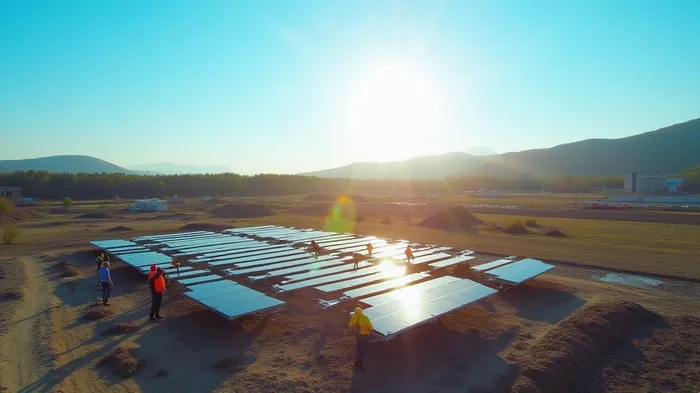
1. Repurposing Post-Mining Lands: Renovating areas in coal regions like Banovići, Kreka, and Zenica to host solar and wind projects, while closing outdated underground coal operations.
2. Social Protection Programs: Supporting workers displaced by the coal phaseout through job training, re-skilling, and safety nets.
3. Economic Diversification: Boosting energy independence and creating green jobs in regions historically reliant on coal.
The World Bank’s $94 million commitment (including the grant) is a fraction of the estimated $6.8 billion required to fully meet BiH’s climate goals by 2030, but it represents a critical first step.
BiH’s Energy Sector: Progress Amid Stagnation
BiH currently generates 60% of its electricity from coal and 40% from hydropower, with renewables contributing minimally to the electricity mix despite a 2020 renewable share of nearly 40% in final energy consumption (driven largely by biomass for heating). The 2030 target of 43.6% renewables in gross final consumption remains ambitious, as progress has been hampered by:
- Political fragmentation: BiH’s decentralized governance complicates unified policy implementation.
- Fossil fuel dependency: Coal plants like Tuzla 4 and Kakanj 5 were illegally extended beyond their 2022 closure deadlines, prolonging emissions.
- Underdeveloped renewables: Solar and wind capacity total just 102 MW and 135 MW, respectively, despite IRENA’s estimate of 4,500 MW solar potential by 2050.
Challenges to the Transition
While the World Bank’s funding is a positive step, BiH faces significant hurdles:
1. Coal’s entrenched role: Plans for new coal plants like Ugljevik III and Gacko II risk locking in fossil fuel dependence.
2. Environmental conflicts: Large hydropower projects (e.g., the Ulog plant) face public opposition over ecological harm.
3. Energy efficiency gaps: BiH’s energy intensity is four times higher than the EU average, driven by artificially low electricity prices.
Investment Opportunities and Risks
The loan opens pathways for foreign investors in:
- Solar and wind development: Southern regions, with 2,400 annual sunlight hours, are prime for utility-scale solar projects.
- Grid modernization: Upgrades are critical to integrate renewables into an aging infrastructure.
- Green hydrogen: BiH’s renewable potential could support emerging hydrogen economies in the Balkans.
However, risks persist:
- Geopolitical instability: Reliance on Russian gas imports and regional tensions could disrupt progress.
- Regulatory delays: BiH’s slow legal harmonization with EU standards may deter investment.
Conclusion: A Fragile Path to Renewables Leadership
The World Bank’s $90.7 million loan is a vital catalyst for BiH’s energy transition, but success hinges on overcoming structural barriers. With renewables potential exceeding 19,900 MW for wind alone and solar capacity poised for exponential growth, BiH could transform from a coal-dependent economy into a regional renewable powerhouse.
Crucial next steps include:
- Phasing out coal: Enforcing closure deadlines for aging plants and canceling new coal projects.
- Leveraging EU funds: Aligning with the Energy Community Treaty to secure additional financing under the EU’s Green Deal.
- Addressing energy efficiency: Raising electricity prices to reflect true costs and incentivize conservation.
While the 2030 target of 43.6% renewables is achievable, it will require sustained political will, international support, and private-sector investment. For investors, BiH’s energy transition presents a high-risk, high-reward opportunity to capitalize on an underdeveloped renewable market with vast untapped potential.
The World Bank’s intervention is a starting point—but the true test lies in whether BiH can translate financial support into lasting systemic change. The stakes, both for the environment and the economy, could not be higher.







Comentarios
Aún no hay comentarios