
The Workforce Transition to Low-Emissions Sectors: Skills Alignment and Investment Opportunities
The global energy transition is accelerating, driven by the urgent need to reduce greenhouse gas emissions. Central to this shift is the reintegration of fossil fuel workers into low-emissions sectors. While challenges such as geographic immobility and skill gaps persist, emerging data reveals significant opportunities in construction, hydrogen production, and carbon capture. These sectors not only align with the skills of fossil fuel workers but also offer robust job growth, making them critical focal points for investment.
Skills Alignment: A Foundation for Transition
Fossil fuel workers possess transferable skills that align with low-emissions sectors. A 2023 study notes that approximately 50% of fossil fuel workers have skills applicable to clean energy sectors, including construction, hydrogen, and carbon capture. For instance, oil and gas workers often hold expertise in engineering, project management, and heavy machinery operation-skills directly applicable to hydrogen production and carbon capture facilities according to data. 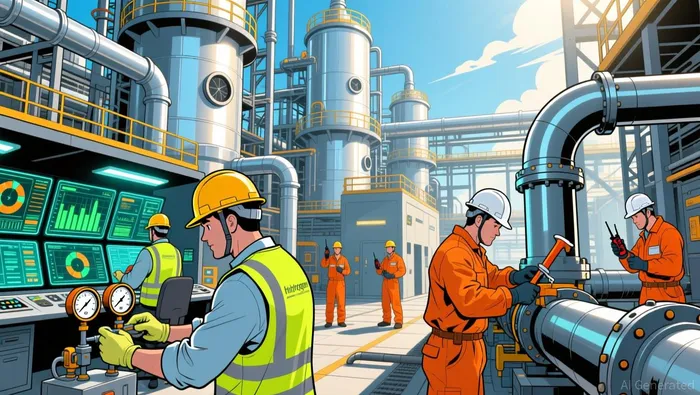 In construction, roles such as electricians, welders, and technicians are in high demand for renewable energy projects, with 90% of oil and gas workers possessing transferable skills to nuclear energy, a sector closely aligned with hydrogen technologies.
However, geographic mismatches remain a barrier. Fossil fuel jobs are concentrated in regions like Appalachia and Texas, while green energy hubs are often coastal or in new industrial zones according to research. This spatial disconnect underscores the need for localized training programs and infrastructure investments to facilitate smoother transitions.
Sector Readiness: Job Growth and Economic Potential
Low-emissions sectors are experiencing rapid expansion, creating opportunities for fossil fuel workers. The International Renewable Energy Agency (IRENA) reports that global renewable energy employment surged to 16.2 million jobs in 2023, with solar photovoltaics alone accounting for 7.2 million roles. While construction for hydropower saw a slight decline, wind energy employment remains strong, with China and Europe dominating the sector according to analysis.
Hydrogen production is another growth area. A least-cost shift to electrolytic hydrogen is projected to support net job creation, particularly in regions already producing carbon-intensive hydrogen according to modeling. Meanwhile, the carbon capture sector is expected to generate 200,000–300,000 direct job-years in the near term, with cumulative employment reaching 3 million by 2050 according to projections. Retrofitting facilities for carbon capture alone could create 107,000 jobs by 2035 according to industry estimates.
Education and Training: Bridging the Green Skills Gap
Despite the potential, educational programs for low-emissions technologies remain modest. Current initiatives focus on construction and heat pump installation, but broader training in hydrogen and carbon capture is lacking. Expanding these programs is critical. For example, the wind energy sector has successfully leveraged skills from oil and gas workers, growing from 360,000 jobs in 2024 to 550,000 projected by 2030. Similar strategies could be applied to hydrogen and carbon capture, where engineering and operational expertise are in high demand.
Investment Opportunities: Training Infrastructure and Green Tech Deployment
Investors should prioritize sectors where skills overlap and job growth are most pronounced. Key areas include:
1. Training Infrastructure: Developing regional training centers in fossil fuel regions to upskill workers for low-emissions roles.
2. Green Tech Deployment: Funding hydrogen production facilities and carbon capture projects in existing fossil fuel hubs to leverage geographic and skill proximity.
3. Policy Advocacy: Supporting policies that incentivize retraining and geographic flexibility, such as tax credits for companies hiring transitioned workers.
Conclusion
The transition of fossil fuel workers to low-emissions sectors is not only feasible but economically advantageous. With strategic investments in training, infrastructure, and policy, construction, hydrogen, and carbon capture can become engines of job creation and climate action. As the energy landscape evolves, stakeholders must act swiftly to ensure a just and prosperous transition.







Comentarios
Aún no hay comentarios