
WonderChain and the Emergence of Web3.5: A New Paradigm for Community-Driven Value Creation
The Web3.5 Revolution: From Code to Community
Web3.0 promised decentralization but struggled with scalability and user adoption. Web3.5, by contrast, emphasizes community-driven value creation, where users are not just participants but co-owners. WonderChain embodies this ethos. According to a report by BitcoinWorld Media, the project has amassed nearly 100,000 members across Telegram and other platforms, a figure that has grown by 300% monthly. This growth is not accidental-it's fueled by a vision to make blockchain accessible and rewarding for everyday users.
Traditional tech giants, meanwhile, rely on centralized innovation. Meta, for instance, is pivoting toward robotics and AI, hiring top talent like MIT roboticist Sangbae Kim and former Cruise CEO Marc Whitten. While these efforts are impressive, they lack the decentralized, community-first approach that Web3.5 projects like WonderChain prioritize.
Network Effects: Community vs. Capital
Network effects are the lifeblood of tech dominance. Meta's recent success with the Remini app-boosted by Google's "Nano Banana" AI model-showcases how AI integration can drive user engagement, with installs surging by 175% and image generation spiking 5x. However, these gains are driven by top-down innovation, not organic community participation.
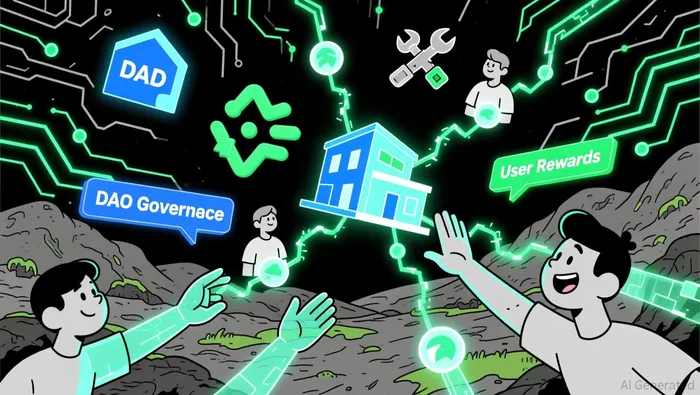
WonderChain's model is different. By rewarding users for contributing to the network-whether through governance votes, content creation, or real-world service usage-it creates a self-sustaining flywheel. As noted by CoinMarketCap, the project's "community-centric approach is a new model for decentralized innovation," combining technical advancements with socio-cultural impact. This aligns with the principles of Web3.5, where value is distributed rather than extracted.
Governance and Scalability: The DAO Advantage
Decentralized Autonomous Organizations (DAOs) are central to WonderChain's governance. Unlike traditional companies, where decisions are made by executives, WonderChain's DAO allows users to vote on key initiatives, from protocol upgrades to partnerships. This democratization of decision-making fosters trust and engagement-a stark contrast to the opaque strategies of Big Tech.
Moreover, WonderChain's focus on real-world integration-such as blockchain-based services for everyday tasks-addresses a critical gap in Web3.0. As TechBullion highlights, the project aims to deliver "practical, scalable solutions" that bridge the digital and physical worlds. This could unlock new use cases for blockchain, from supply chain transparency to decentralized identity verification.
Challenges and the Road Ahead
Despite its promise, WonderChain faces hurdles. The absence of an official 2025 whitepaper raises questions about technical transparency according to the same report. Additionally, sustaining 300% monthly growth is a tall order, even in a bullish market. Traditional tech giants, with their vast resources and established ecosystems, remain formidable competitors.
However, the project's rapid adoption and third-party validation-such as Binance Square's spotlight-suggest it is gaining traction. If WonderChain can maintain its momentum while addressing technical and regulatory challenges, it could redefine how value is created and distributed in the digital age.
Conclusion: A New Era of Social Capital
The rise of Web3.5 marks a shift from "build it and they will come" to "build it with them." WonderChain's explosive community growth, DAO-driven governance, and focus on real-world integration position it as a unique player in this landscape. While traditional tech giants like Meta and Google continue to innovate, their centralized models may struggle to match the organic network effects of a community-first approach.
For investors, the question is not whether blockchain will disrupt traditional industries-but which projects will lead the charge. WonderChain's trajectory suggests it could be one of them.





Comentarios
Aún no hay comentarios