
Won Poised to Jump 4% This Quarter on Boost From Policy, Inflows
South Korea's currency, the won, is set for a significant rebound in early 2026, with analysts projecting a 4% appreciation against the U.S. dollar. This surge is driven by a confluence of monetary policy normalization, robust capital inflows into AI-driven equities, and structural reforms aimed at stabilizing the currency. For investors, the interplay between these factors presents a compelling case for strategic positioning in South Korea's high-growth sectors, particularly semiconductors and cyclical industries, as the nation leverages its role in the global AI supply chain.
Policy Tailwinds and Currency Stabilization
The Bank of Korea (BoK) has signaled a shift toward policy stability, maintaining its benchmark rate at 2.5% through 2026 amid expectations of a soft economic landing. With inflation stabilizing near the 2% target and a narrowing U.S.-South Korea interest rate differential, the BoK has concluded its easing cycle, reducing downward pressure on the won. Governor Rhee Chang-yong has explicitly criticized current exchange rates as "misaligned" with economic fundamentals, vowing to stabilize the currency through enhanced communication and market interventions.
This policy clarity has bolstered confidence in the won, with forecasts suggesting USD/KRW could dip to 1,430–1,450 by mid-2026 before stabilizing around 1,400 by year-end. The BoK's commitment to a 24-hour foreign exchange trading system, set to launch in July 2026, further underscores its ambition to attract foreign capital and improve the won's international standing.
AI-Driven Equities: The Engine of Capital Inflows
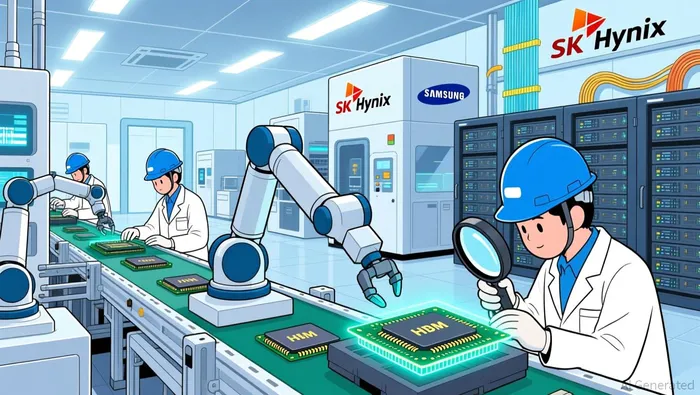
The KOSPI's historic 75% surge in 2025-its best performance since 1999-was fueled by AI-driven equities and cyclical sectors. South Korea's semiconductor industry, led by SK Hynix and Samsung Electronics, has become a linchpin of the global AI infrastructure, producing high-bandwidth memory (HBM) critical for advanced computing. These companies have benefited from a "profit cycle" in the AI industry, with visible supply constraints creating a favorable risk-reward profile for investors.
 Capital inflows into AI-driven equities have been further amplified by South Korea's "Value-Up" corporate governance reforms, which align with global trends in shareholder value creation. Foreign investors injected approximately 2 trillion won into the KOSPI in early 2026, reflecting confidence in the nation's structural reforms and AI-led growth trajectory. Leveraged ETFs listed in Hong Kong, such as the "CSOP Samsung Electronics Daily 2X Leveraged" and "CSOP SK Hynix Daily 2X Leveraged," have also gained traction among global investors seeking exposure to these high-growth names.
Cyclical Sectors and Export-Driven Momentum
Beyond AI, South Korea's cyclical sectors-shipbuilding, defense, and power equipment-are gaining momentum as global demand for industrial capacity rebounds. The government's 2026 Economic Growth Strategy, which includes a 2.0% real GDP growth target, emphasizes expanding semiconductor exports and accelerating AI infrastructure projects. These efforts are supported by a record $709.7 billion in 2025 exports, driven by semiconductor and automotive exports.
The BoK's tax incentives and collaboration with the National Pension Service (NPS) to curb outflows have also mitigated currency volatility, ensuring that export gains translate into won strength. However, structural challenges persist: Korean institutions' investments in U.S. assets, particularly in AI-driven equities, have created outflows that offset some of the currency's gains.
Strategic Positioning for Investors
For investors, the won's appreciation and policy tailwinds create a dual opportunity:
1. AI-Driven Equities: Direct investments in SK Hynix and Samsung Electronics, or leveraged ETFs like the CSOP products, offer exposure to the semiconductor boom.
2. Cyclical Sectors: ETFs focused on shipbuilding and defense, such as the KODEX Global Tech Hardware ETF, align with South Korea's export-led growth.
3. Currency Play: The won's projected 4% rise, coupled with the BoK's 24-hour FX trading initiative, makes hedging strategies more attractive for foreign investors.
The government's planned introduction of spot BitcoinBTC-- ETFs in 2026 also adds a speculative layer, as digital assets could further diversify inflows and enhance the won's appeal.
Risks and Mitigants
While the outlook is optimistic, risks remain. Global trade tensions and U.S. dollar strength could temper the won's gains, and structural outflows to U.S. markets may persist. However, the BoK's proactive measures-such as FX hedging incentives and 24-hour trading- aim to counteract these pressures. Additionally, South Korea's focus on AI innovation, including a national AI computing center and regulatory alignment with the EU AI Act, positions it as a long-term beneficiary of the global AI race.
Conclusion
South Korea's won is poised for a 4% rebound in early 2026, driven by policy normalization, AI-driven capital inflows, and cyclical sector strength. For investors, the nation's strategic positioning in the global AI supply chain and its structural reforms offer a unique combination of currency appreciation and equity growth. As the BoK and government continue to align monetary and fiscal policies with global trends, South Korea's markets are set to remain a focal point for those seeking high-conviction, long-term opportunities.







Comentarios
Aún no hay comentarios