
Wizz Air's Strategic Turnaround: Evaluating the Cost-Cutting Impact on Long-Term Viability
In the fiercely competitive ultra-low-cost carrier (ULCC) sector, Wizz Air has embarked on a strategic overhaul to solidify its position as a leader in operational efficiency. Amid post-pandemic industry challenges and shifting demand dynamics, the airline's focus on fleet modernization, cost optimization, and network expansion offers a compelling case study for investors assessing its long-term viability.
Fleet Modernization: A Pillar of Cost Efficiency
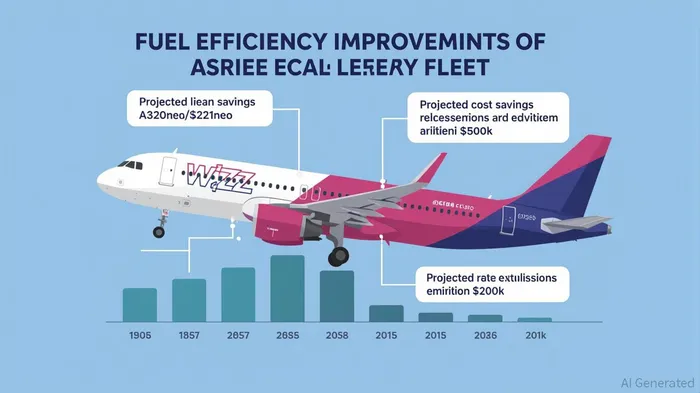
Wizz Air's commitment to next-generation aircraft underscores its strategy to reduce fuel consumption and maintenance costs. As of 2023, the airline has ordered 75 Airbus A320neo and 27 A321neo aircraft for delivery between 2023 and 2025, aligning with broader industry trends toward fuel-efficient fleets [1]. These aircraft, equipped with advanced Pratt & Whitney GTF engines, are projected to cut fuel burn by up to 15% compared to older models, directly addressing one of the largest cost drivers in aviation [4]. Additionally, the average age of Wizz Air's fleet stood at 5.6 years as of October 2023, contributing to lower maintenance expenditures and operational reliability [1].
The airline's decision to standardize its fleet to four aircraft types further enhances economies of scale, streamlining training, spare parts inventory, and crew operations. This simplification, combined with increased seating capacity in existing planes, aims to maximize revenue per flight while minimizing per-unit costs [2].
Operational Restructuring: Partnerships and Network Optimization
Wizz Air's cost-cutting measures extend beyond hardware. Strategic partnerships with airport operators have enabled the airline to secure favorable landing fees and improve turnaround times, critical factors in maintaining low operating costs [1]. Collaborations with fuel suppliers also mitigate exposure to price volatility, a persistent risk in the sector. These efforts are part of a broader push to refine the airline's business model, emphasizing direct sales through its online platform and mobile app, which has reduced marketing expenses while boosting customer satisfaction [1].
Geographically, Wizz Air has expanded its footprint in high-growth markets, such as Saudi Arabia, where 20 new routes were launched to capitalize on surging tourist demand [4]. This network diversification not only spreads risk but also aligns with global trends of emerging markets driving air travel growth.
Challenges and Grounded Realities
Despite these strides, Wizz Air faces headwinds. As of May 2025, 37 aircraft remain grounded, with approximately 34 expected to stay out of service by September 2025 [2]. While fleet modernization is a long-term play, the short-term impact of grounded planes could strain liquidity and operational flexibility. However, the airline's focus on fuel efficiency and route optimization may offset these challenges by improving cash flow margins.
Investor Confidence and Sustainability Synergies
Institutional investors, including BlackRockBLK-- Inc. and The Vanguard Group, have signaled confidence in Wizz Air's trajectory. BlackRock's 1.5% shareholding increase in July 2023 reflects optimism about the airline's ability to navigate industry cycles through disciplined cost management [3]. Furthermore, Wizz Air's sustainability initiatives—such as adopting GTF engines to reduce carbon emissions—align with regulatory pressures and investor preferences for environmentally responsible operators [4].
Conclusion: A Resilient Model in a Dynamic Sector
Wizz Air's strategic turnaround hinges on its ability to balance capital-intensive modernization with agile operational adjustments. While specific financial metrics like EBITDA and operating cost per ASM remain undisclosed in recent reports , the airline's focus on fleet standardization, fuel efficiency, and network diversification provides a robust foundation for long-term viability. For investors, the key will be monitoring how effectively these strategies translate into sustained profitability amid industry-wide volatility.







Comentarios
Aún no hay comentarios