
WiseTech Global's Leadership Transition and Path to Recovery: Zubin Appoo's Strategic and Governance Implications
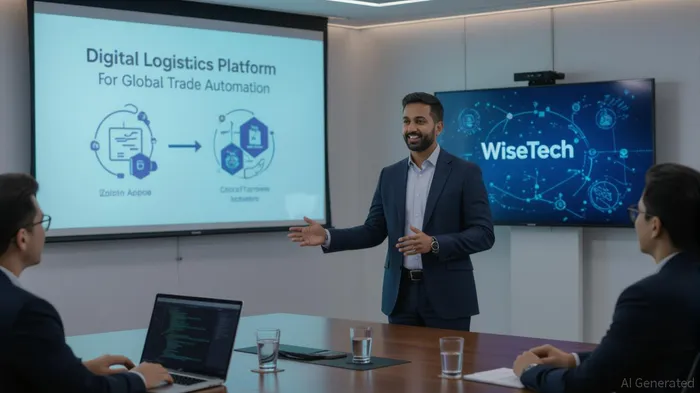
WiseTech Global, the Australian logistics software giant, is navigating a pivotal moment in its corporate history. The recent appointment of Zubin Appoo as CEO marks a strategic pivot aimed at stabilizing the company's governance structure and reinvigorating shareholder value. For investors, the question is whether Appoo's leadership can address the lingering scars of past governance controversies while capitalizing on the company's technological strengths and expansive market opportunities.
Strategic Reforms: AI-Driven Efficiency and Global Expansion
Appoo's tenure as CEO has been defined by a dual focus on operational efficiency and innovation. Since taking the helm in July 2025, he has accelerated the integration of artificial intelligence into WiseTech's core logistics software ecosystem. By automating customs compliance, freight routing, and warehouse management, the company aims to reduce costs while enhancing service quality. This strategy mirrors broader industry trends, where competitors like Maersk and DHL are also investing heavily in automation. However, WiseTech's approach is more aggressive, with plans to streamline operations through redundancies and redirect resources to AI R&D.
A key milestone in this strategy is the $1.1 billion acquisition of e2open, a U.S.-based supply chain SaaS provider. The deal, funded by a $3 billion debt facility, is intended to create a unified “operating system for global trade” by integrating e2open's multi-enterprise platform with WiseTech's CargoWise software. This expansion could position the company to serve 500,000 enterprises globally, though it raises concerns about debt management. Appoo has framed the acquisition as EPS-accretive in the short term, with long-term benefits tied to market share growth.
Governance Reforms: Restoring Investor Confidence
The company's governance challenges have been a persistent drag on shareholder value. From 2020 to 2025, founder Richard White's dominance—through a 37% voting stake and dual roles as Executive Chair and Chief Innovation Officer—sparked a 10% “governance discount” in the company's valuation, according to Goldman SachsGS--. The resignation of four independent directors in 2024 and the delayed release of a governance review further eroded trust.
Appoo's appointment as CEO in a dual-leadership model with White is a calculated attempt to balance innovation with accountability. By delegating operational oversight to Appoo, the board aims to create a clearer separation between strategic vision and day-to-day execution. This structure aligns with investor demands for transparency, particularly after the exodus of board members who cited “intractable differences” with White's control.
Recent governance reforms include the appointment of independent directors with expertise in logistics and tech, such as former UPS CEO Chris Charlton. These additions signal a move toward institutionalizing checks and balances. However, White's continued influence remains a risk. Investors will need to monitor whether Appoo can assert operational independence without alienating the founder, who retains significant sway over product development and cultural direction.
Financial Performance and Investor Sentiment
Despite governance headwinds, WiseTech's financials remain robust. For the half-year ending December 2024, revenue rose 17% to $381 million, with net profit surging 38% to $106.4 million. The company's balance sheet is strong, with $1.6 billion in shareholder equity and a debt-to-equity ratio of just 1.9%. A 6.7-cent interim dividend and a shift to USD as the presentation currency reflect confidence in global operations.
Analysts remain split. On one hand, the company's Return on Equity (12%) and 17% earnings growth outpace industry averages. On the other, the stock trades at a forward P/E of 22x, below its 2023 peak of 25x, reflecting skepticism about governance risks. Institutional investors, including AustralianSuper, have called for clearer timelines on governance reforms, while the market awaits the release of the delayed governance review.
Risks and Opportunities
The path forward is not without risks. The e2open acquisition could strain liquidity if AI-driven cost savings fall short, and the logistics sector is highly competitive, with rivals like DHL and XPO LogisticsXPO-- advancing their AI capabilities. Additionally, Appoo's restructuring plans—targeting a 15% reduction in operating expenses by Q1 2026—risk alienating employees and customers.
However, the opportunities are significant. If Appoo meets 2026 targets, including 20% EBITDA growth, the stock could rebound to 20x forward earnings, supporting a price target of A$120. The logistics software market, projected to grow at 7.2% annually through 2030, offers ample room for expansion, particularly in AI-driven solutions.
Investment Thesis
For long-term investors, WiseTech presents a compelling case of value creation amid transformation. Appoo's leadership offers a credible plan to address governance concerns while leveraging AI and strategic acquisitions to drive growth. However, patience is required. The success of this transition hinges on three factors:
1. Governance Clarity: Whether Appoo can establish operational independence without undermining White's strategic vision.
2. Debt Management: Whether the company can balance its aggressive expansion with financial prudence.
3. Execution on AI: Whether AI integration delivers measurable efficiency gains and revenue growth.
Investors should hold a cautious optimistic stance, monitoring key metrics like cost savings, EPS accretion from the e2open acquisition, and governance progress. For now, the stock's valuation reflects both its potential and its risks—a classic case of buying the company, not the stock.
In conclusion, Zubin Appoo's appointment as CEO represents a strategic and governance turning point for WiseTech Global. While challenges remain, his deep institutional knowledge and focus on innovation position the company to capitalize on the AI revolution in global trade. For investors willing to navigate the short-term uncertainties, the potential for long-term value creation is substantial.





Comentarios
Aún no hay comentarios