
Winter Weather Disruptions and Aviation Sector Volatility: Investing in Operational Resilience for a Climate-Resilient Future
Operational Resilience: From Snowplows to AI-Driven Predictive Models
Airports and airlines are deploying a mix of traditional and cutting-edge solutions to mitigate winter weather impacts. For instance, airports like Minneapolis-Saint Paul International have expanded resilience planning to include localized weather sensing, updated climate vulnerability assessments, and staff training tailored to extreme conditions. Meanwhile, technologies such as runway heaters, advanced de-icing systems, and (KAN) models-used to quantify the influence of temperature and wind speed on flight operations-are becoming standard. These tools not only reduce delays but also enhance safety, with airlines investing in aircraft winterization kits including engine warmers and cold-weather lubricants.
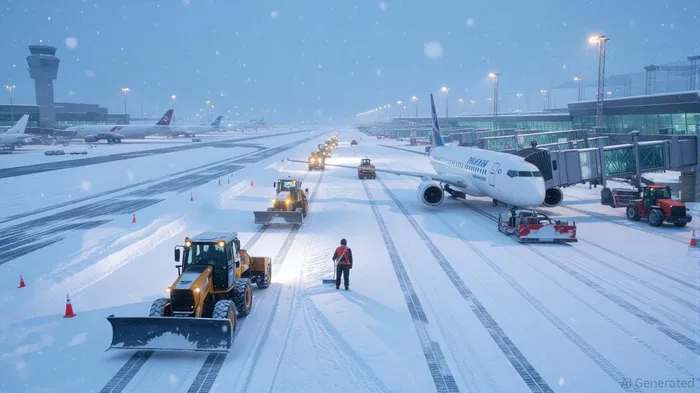
The integration of AI and robotics further underscores the sector's adaptability. Airlines are leveraging to anticipate mechanical failures and optimize flight paths, while airports like Munich have introduced service robots to streamline operations according to industry trends. Such innovations highlight a shift from reactive to proactive , reducing downtime and operational costs.
Financial Implications: Balancing Costs and Long-Term Gains
While the upfront costs of resilience infrastructure are significant, the financial benefits are increasingly evident. A 2025 World Resources Institute study found , including avoided losses from disruptions and improved economic stability. For example, 's cost-benefit analysis demonstrated that resilience upgrades-such as improved drainage and runway heating-could mitigate service interruptions and safeguard revenue streams. Similarly, U.S. airports are addressing through infrastructure hardening, a move projected to prevent costly repairs and maintain accreditation standards.
The aviation sector's financial recovery post-pandemic also underscores the value of resilience. , reflects gains from falling fuel prices and improved efficiency. However, profitability remains fragile, with cargo revenues declining due to trade tensions and ESG-driven decarbonization efforts adding to costs. (SAFs), for instance, than conventional jet fuel, posing a challenge for airlines with limited capital.
ROI and Strategic Capital Allocation: Leasing vs. Direct Investment
Investors are increasingly favoring aircraft leasing over direct purchases, a trend driven by flexibility and liquidity needs. The global , , , as airlines seek to modernize fleets without large capital outlays. This model aligns with the sector's need for agility, particularly in volatile markets where demand fluctuates seasonally. , which includes crew and maintenance, has gained traction for filling capacity gaps during winter disruptions.
Meanwhile, investments in weather resilience technologies are gaining momentum. The Aviation Weather Forecasting Services Market, , , driven by real-time data analytics and regulatory demands. These tools not only reduce weather-related delays but also enhance cargo and passenger revenue by maintaining operational continuity.
Conclusion: A Climate-Resilient Aviation Sector as a Strategic Investment
The aviation industry's response to winter weather disruptions illustrates a broader trend: the convergence of climate adaptation and financial prudence. While short-term costs for infrastructure and ESG compliance are high, the long-term ROI-measured in avoided losses, regulatory compliance, and operational efficiency-justifies these investments. For investors, the key lies in supporting firms that prioritize resilience, whether through leasing models, , or climate-adaptive infrastructure. As the sector navigates a future of increasing volatility, those who act now will not only mitigate risks but also secure a competitive edge in a climate-resilient world.







Comentarios
Aún no hay comentarios