
Winter Flight Safety Infrastructure: An Overlooked Opportunity in Aviation Resilience
Rising Fatalities and the Imperative for Infrastructure Modernization
Data from the (NTSB) reveals a troubling trend: while the U.S. . Tragic incidents like the mid-air collision of American Eagle Flight 3542 and a Sikorsky UH-60 helicopter near Washington Reagan National Airport (67 dead) and the Bering Air Flight 445 crash in Alaska (10 dead) highlight the catastrophic consequences of winter-related failures according to a recent report. These events, though rare, have disproportionately driven up fatality rates, emphasizing the need for infrastructure that mitigates large-scale risks.
The U.S. Transportation Department has already signaled urgency, announcing plans to modernize air traffic control systems . Such measures are critical, but they must be paired with targeted investments in winter-specific safety infrastructure to address the unique challenges of icy conditions.
FAA Funding and Airport Infrastructure Priorities
The (FAA) is stepping up to the challenge. In fiscal year 2026, , , according to the FAA's release. These funds can be directed toward runway and taxiway improvements, safety projects, and sustainability initiatives-categories that now include winter-specific upgrades such as advanced de-icing systems and runway surface treatments.
Notably, the FAA has also for the 2025–2026 winter season, aligning with regulatory standards to ensure safe operations during icy conditions. This guidance, combined with the flexibility to pool AIG funds from FY23 to FY26 for single projects, creates a favorable environment for airports to implement large-scale winter safety upgrades without straining budgets.
Industry Innovations and Market Growth
The aviation technology sector is responding with innovation. Air T, Inc., a leader in ground support equipment, , driven by increased demand for deicing trucks. This growth mirrors broader market trends: is projected to expand , .
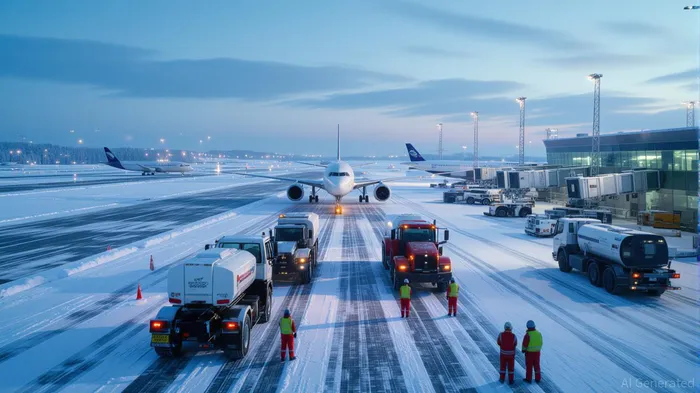
Key advancements include , fixed-boom gantry systems, . These technologies not only enhance safety but also align with sustainability goals, a dual benefit that is increasingly attractive to investors.
Strategic Investment Opportunities
For investors, the convergence of regulatory support, market demand, and technological innovation presents a compelling case for capital allocation in winter flight safety infrastructure. Airports with aging facilities stand to benefit from IIJA funding to modernize deicing infrastructure, while aviation tech firms specializing in sustainable solutions are well-positioned to capture market share.
Moreover, the FAA's emphasis on air traffic management modernization according to industry analysis and the industry's shift toward decarbonization according to research findings suggest that winter safety infrastructure will remain a focal point for years to come. As climate change intensifies winter weather extremes, .
Conclusion
The winter of 2025 has exposed vulnerabilities in aviation's winter safety protocols, but it has also illuminated a path forward. With robust FAA funding, a surge in deicing technology adoption, and a clear market trajectory, winter flight safety infrastructure is no longer an overlooked niche-it is a cornerstone of aviation resilience. For airports and investors alike, the time to act is now.







Comentarios
Aún no hay comentarios