
Winnebago's Strategic Shift and the Booming RV Market: Is This the Start of a Major Bull Run?
The recreational vehicle (RV) industry is undergoing a seismic transformation, driven by a generational shift in ownership patterns. Millennials and Gen Z are redefining the RV landscape, with their preferences for flexibility, digital connectivity, and experience-driven lifestyles creating a fertile ground for long-term growth. For investors, this demographic pivot raises a critical question: Can companies like Winnebago IndustriesWGO-- (NYSE: WGO) capitalize on this trend to deliver sustained stock performance?
A Generational Shift in RV Ownership
The RV market's traditional demographic-older, affluent retirees-has been supplanted by a younger, more diverse cohort. According to a report by the RV Industry Association, the median age of RV owners has dropped from 53 in 2021 to 49 in 2025, with 46% of owners now aged 35–54 and 22% being Millennials. These younger buyers are not only more frequent users (32 days per year vs. 30 days for the overall demographic) but also prioritize compact, versatile RVs like Class B and C motorhomes. Their spending habits further underscore their commitment: 79% prefer new RVs, and 44% pay in cash, reflecting confidence in the asset's value.
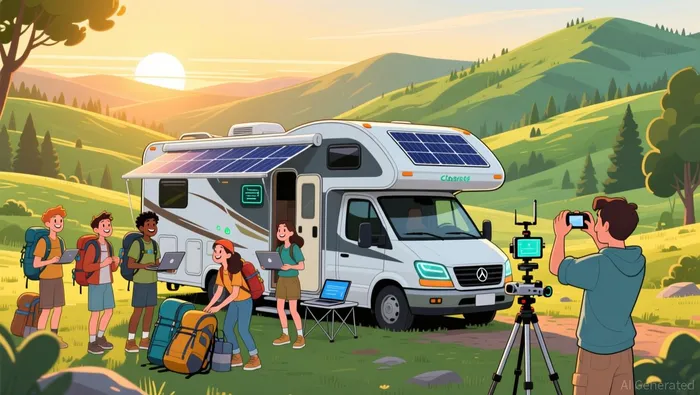
This shift is not merely quantitative but qualitative. Millennials and Gen Z are drawn to RVs for their alignment with modern values-remote work, sustainability, and community. As stated by a 2025 Go RVing analysis, 83% of Millennials and 72% of Gen Z express intent to repurchase RVs, signaling a durable loyalty to the lifestyle. For investors, this represents a high-margin, recurring revenue opportunity.
Winnebago's Strategic Reorientation
Winnebago Industries, a leader in the premium RV segment, has recognized the urgency of this shift. The company's 2025 strategy emphasizes "prudent, demand-driven" product development, with a focus on compact, tech-integrated models like the Sunflyer Class C motorhome and the updated Thrive and Micro Minnie travel trailers according to industry analysis. These offerings cater to younger buyers' desire for mobility and multifunctionality, while also incorporating smart home features and energy-efficient systems to align with sustainability trends.
Marketing efforts have also evolved. WinnebagoWGO-- is leveraging digital platforms-Instagram, TikTok, and YouTube-to engage younger audiences with visually driven content showcasing RV travel, remote work setups, and community events according to market insights. Partnerships with influencers and event venues further position RVs as accessible, cost-effective alternatives to traditional vacations according to recent analysis. This approach mirrors broader industry insights: 95% of younger buyers rely on online resources during the purchasing process.
Financial discipline underpins these initiatives. In Q1 Fiscal 2026, Winnebago reported a 12.3% year-on-year revenue increase to $702.7 million, driven by 13.5% growth in Motorhome RV sales and 15.5% in Towable RVs. The company's adjusted EPS surged to $0.38 from a $0.03 loss in the prior year, while its net leverage ratio improved to 2.7x from 3.1x. Analysts like Citi and Roth Capital have raised price targets, citing Winnebago's premium positioning and operational efficiency.
Industry Growth and Long-Term Prospects
The RV industry's trajectory is equally compelling. North America's RV market is projected to grow at a 8.37% CAGR from 2025 to 2030, expanding from $21.77 billion to $32.54 billion according to market research. Globally, the market is expected to reach $143.99 billion by 2032 at an 8.04% CAGR, fueled by electrification, remote work, and IoT integration according to industry forecasts. Winnebago's focus on motorhomes-a segment projected to grow at 12.7% CAGR-positions it to outperform as demand for comfort-driven RVs rises according to market analysis.
Long-term financial projections for Winnebago are optimistic. The company anticipates $2.75–$2.95 billion in FY26 revenue, with adjusted EPS guidance of $2.10–$2.80 according to financial reports. Analyst extrapolations suggest $3.4 billion in revenue and $217.6 million in earnings by 2028, translating to a 7.2% annual revenue growth rate according to financial analysis. A fair value estimate of $41.45-10% above its current price-reflects confidence in its strategic execution.
Risks and Mitigants
While macroeconomic headwinds-rising interest rates, fuel volatility, and campground shortages-could temper short-term growth, Winnebago's disciplined inventory management and product innovation mitigate these risks. Its 2026 guidance of 315,000–345,000 North American RV shipments balances caution with optimism according to company results. Additionally, the company's focus on electrification and sustainability aligns with regulatory and consumer trends, ensuring long-term relevance.
Conclusion
The confluence of generational demand, strategic agility, and favorable industry dynamics paints a bullish picture for Winnebago. By tailoring its product lineup and marketing to younger demographics, the company is not only capturing a growing market but also redefining the RV lifestyle for a digital-native generation. For investors, this represents a rare combination of near-term momentum and long-term value creation-a recipe for a sustained bull run.





Comentarios
Aún no hay comentarios