
Wind-Assisted Propulsion in Maritime Shipping: A High-Growth Investment Opportunity in Scalable Decarbonization
The maritime shipping industry stands at a pivotal crossroads, driven by urgent decarbonization mandates and rising fuel costs. Wind-assisted propulsion systems (WAPS) have emerged as a transformative solution, offering immediate scalability, cost-effectiveness, and measurable emissions reductions. With the global market projected to grow at a staggering 73.47% CAGR, reaching $40.48 billion by 2034, investors are now prioritizing technologies that align with both environmental and economic imperatives. This analysis explores the investment potential of WAPS, focusing on its technological maturity, real-world adoption, and funding momentum.
Market Growth and Regulatory Drivers
The wind-assisted propulsion market has surged from a valuation of $164.05 million in 2024 to a trajectory of over $40 billion by 2034 according to market analysis. This exponential growth is fueled by regulatory frameworks such as the EU Emissions Trading System and FuelEU Maritime, which penalize high-emission operations while incentivizing efficiency measures. Additionally, the International Maritime Organization's net-zero ambition by 2050 has pushed shipowners to adopt technologies that reduce fuel consumption and carbon footprints.
Retrofit installations, in particular, are gaining traction as a cost-effective alternative to building new vessels. For instance, Union Maritime's SeaBreeze program offers 100% financing for WAPS retrofits, lowering barriers for shipowners. This model has already secured commitments for 34 newbuild tankers, marking the largest commercial wind propulsion contract to date.
Technological Innovations and Performance Metrics
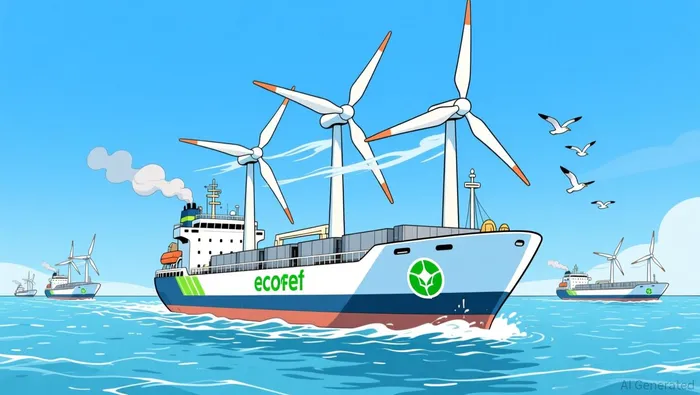
WAPS technologies span rotor sails, suction sails, rigid sails, and kites, each with distinct advantages. Rotor sails, such as those developed by Norsepower, leverage the Magnus effect to generate thrust, achieving fuel savings of 10–20% on average. Suction sails, like bound4blue's eSAIL® system, use aerodynamic principles to reduce drag and enhance efficiency. A case study by LR Advisory found that bound4blue's technology could cut annual fuel consumption by 10% for a major shipping company.
Advanced materials and automation are further boosting scalability. For example, carbon fiber-reinforced plastic rigid sails demonstrated 20–30% fuel savings on a trans-Pacific voyage. Meanwhile, Kongsberg Maritime's K-Sail service integrates sail management with route optimization, automating operations and reducing crew workload. These innovations position WAPS as a viable complement to emerging fuels like green hydrogen and ammonia.
Investment Trends and ROI Projections
The sector has attracted significant capital in 2025. UK-based Anemoi Marine Technologies secured £1.2 million to develop folding rotor sails for bulk carriers, addressing port operational challenges. Similarly, GT Wings raised over £1 million to advance its wind propulsion solutions according to market reports. These investments underscore confidence in the sector's ability to deliver rapid ROI.
Performance validation is critical for investor confidence. BAR Technologies reports average daily fuel savings of 1.5 tonnes across global routes, verified by third-party classification societies. Such data not only attracts funding but also accelerates adoption. As of Q3 2024, 45 commercial vessels were equipped with WAPS, with 34 more installations in the pipeline. Projections suggest over 10,700 systems by 2030 and 40,000 by 2050, highlighting the technology's scalability.
Future Outlook and Strategic Recommendations
The integration of WAPS into vessel design is no longer a niche experiment but a strategic imperative. Bulk carriers and tankers lead adoption, but the technology is expanding to container ships and ferries. Hybrid solutions combining wind propulsion with solar power are also gaining attention, offering additional emissions reductions.
For investors, the key opportunities lie in:
1. Early-stage innovators developing next-generation systems (e.g., Anemoi, GT Wings).
2. Financing platforms like SeaBreeze, which democratize access to WAPS for smaller fleets.
3. Automation and integration services (e.g., Kongsberg's K-Sail), which enhance operational efficiency.
With a 73.47% CAGR and regulatory tailwinds, wind-assisted propulsion is poised to become a cornerstone of maritime decarbonization. Investors who act now can capitalize on a market that is not only environmentally aligned but also economically robust.







Comentarios
Aún no hay comentarios