
Wildfire Smoke Detection: A Burning Opportunity in Tech and Agri-Innovation
The world is on fire—literally. Wildfires have become a climate-driven crisis, devouring ecosystems, economies, and communities at unprecedented rates. In 2024 alone, over 68,000 wildfires ravaged the U.S., burning more than 7 million acres. This escalating threat has ignited a parallel revolution: the rapid evolution of wildfire smoke detection technology. From AI-powered sensors to satellite surveillance systems, this sector is now a goldmine for investors seeking exposure to climate resilience and tech-driven solutions.
Market Potential: A Blaze of Growth
The global wildfire smoke detection market is exploding, valued at USD 1.2 billion in 2024 and projected to reach USD 2.8 billion by 2033, growing at a CAGR of 10.2% (see Figure 1). This trajectory is fueled by three unstoppable forces:
- Climate Catastrophes: Rising temperatures, prolonged droughts, and erratic weather patterns have turned forests into tinderboxes. The U.S. alone has seen a 223% increase in burned forest area since 1980.
- Regulatory Urgency: Governments are pouring funds into prevention. The U.S. Bipartisan Infrastructure Law allocated $1.5 billion for wildfire detection and suppression systems, while the EU's Fire Safety Directive mandates advanced tech adoption.
- Technological Breakthroughs: AI, IoT, and drones are transforming detection from reactive to predictive. For example, Sintecsys' AI system in Brazil identifies fires in under 5 minutes—45 minutes faster than traditional methods.
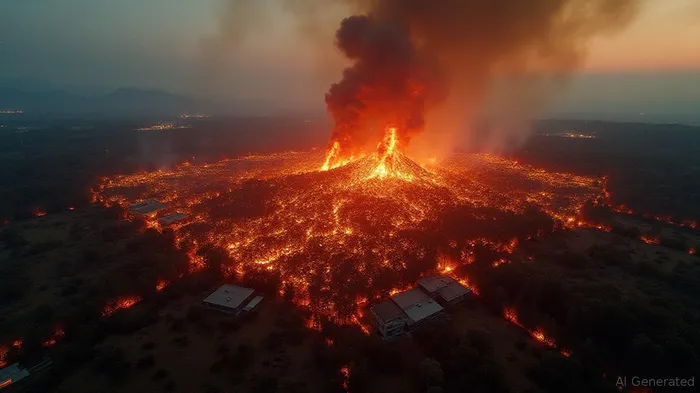
Key Drivers: Where the Smoke Signals Opportunity
Tech Innovations Leading the Charge
The market is split into smart sensors (photoelectric, dual-sensor), satellite systems (e.g., FireSat), and AI-driven platforms. The dual-sensor segment is the fastest-growing, with a CAGR of 8.9%, as it detects both smoldering and flaming fires—a critical advantage in wildfires.
Regional Hotspots for Investment
- North America: Dominates with a 30.8% market share, driven by California's tech hubs and federal funding.
- Asia Pacific: Boasts the fastest growth (8.9% CAGR), fueled by China's smart city initiatives and India's expanding IoT infrastructure.
- Europe: Leverages strict regulations and green tech investments, with Germany and Spain leading drone-based detection trials.
Agri-Business Synergy
Farmers and land managers are adopting detection systems to protect crops and rangelands. Startups like Insight Robotics offer solar-powered sensors for remote farmlands, while JOUAV drones with thermal imaging help ranchers monitor vast grazing areas. For agri-businesses, integrating detection tech into sustainability strategies could become a compliance must-have—and a competitive edge.
Challenges to Watch—And How to Profit From Them
The sector isn't without hurdles. High upfront costs for advanced systems (e.g., NASA's FireSense project at $50 million+ per deployment) and connectivity gaps in rural areas remain barriers. However, these challenges are ripe for disruption:
- Cost Reduction via Scale: As demand surges, economies of scale could drop sensor prices by 30% by 2030.
- 5G and Satellite Partnerships: Low-orbit satellites (e.g., SpaceX's Starlink) are bridging connectivity gaps, enabling real-time data transmission even in remote regions.
Investment Playbook: Where to Light the Fuse
- Tech Giants with Detection Expertise:
- Honeywell (HON): A leader in smart sensors and AI integration.
ABB (ABB): Pioneering IoT-linked wildfire grids for industrial sites.
Emerging AI Startups:
- iThermAI: Partners with Hikvision to embed wildfire detection into security cameras.
Dryad Networks: Their Silvanet mesh network detects fires in under 2 minutes.
Satellite and Drone Plays:
- Planet Labs (PL): Provides high-resolution satellite imagery for predictive modeling.
JOUAV (Private): Invest in drone-as-a-service platforms for agriculture and forestry.
Agri-Tech Synergies:
- John Deere (DE): Integrating detection systems into precision farming tools.
- Syngenta (Private): Pairing detection data with crop resilience R&D.
Final Ignition: Why This Flame Won't Fade
The wildfire detection market isn't just a temporary fix—it's a decade-long megatrend. With climate models predicting a 50% increase in global fire risk by 2050, demand for detection tech will only intensify. Investors who bet on AI scalability, rural connectivity solutions, and agri-tech hybrids stand to reap the rewards of a sector that's both profitable and planet-saving.
The time to act is now—before the next inferno hits.






Comentarios
Aún no hay comentarios