
Wildfire Smoke and the Clean Air Tech Boom: A $250 Billion Investment Opportunity
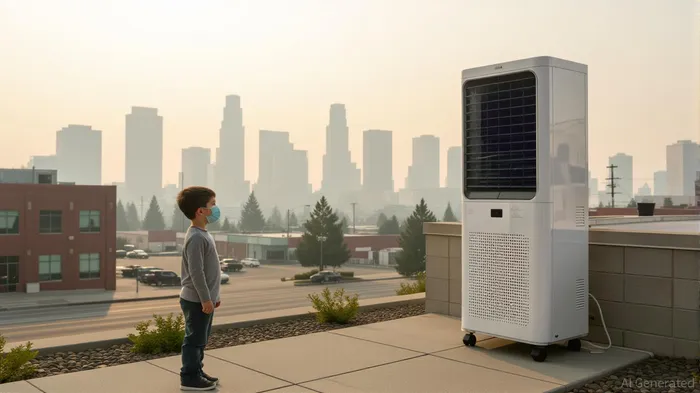
In the summer of 2023, Canadian wildfires blanketed major U.S. cities—including New York, Chicago, and Los Angeles—in a toxic haze of fine particulate matter (PM2.5). The resulting air quality crisis was unprecedented: PM2.5 levels in New York City hit 258.9 µg/m³, a staggering 17.3 times the World Health Organization's safe limit. This was not an isolated event. Over 42 U.S. states saw summer-average PM2.5 concentrations in 2023 exceed historical averages from 2013–2022, with national-median PM2.5 levels hitting 32 µg/m³—the highest since 2007. The economic and health toll is staggering. A 2024 study by the University of Washington estimated that wildfire-related air pollution costs the U.S. economy over $100 billion annually in healthcare, lost productivity, and property damage.
The Perfect Storm: Climate Change and Transboundary Smoke
The 2023 wildfire season was a harbinger of what's to come. Climate models predict that by 2050, the U.S. will experience a 50% increase in days with unhealthy air quality due to wildfire smoke. This is driven by a deadly synergy of factors: prolonged droughts, record-breaking temperatures, and atmospheric patterns like the Alaskan Ridge that funnel smoke across borders. The economic implications are profound. For every 1 µg/m³ increase in PM2.5, GDP growth in affected regions drops by 0.3%, according to the International Energy Agency.
Clean Air Tech: A $250 Billion Market in the Making
The crisis has sparked a surge in demand for clean air technologies. The U.S. Environmental Protection Agency (EPA) is leading the charge with initiatives like the Cleaner Indoor Air During Wildfires Challenge, which has allocated $2.5 million to develop low-cost solutions. One standout is The Cocoon, a $49 DIY air purifier developed by Portland State University researchers. In 2024, the EPA's Small Business Innovation Research (SBIR) program awarded $500,000 to DiPole Materials, a startup creating biodegradable filters that reduce PM2.5 by 95%.
The market is expanding rapidly. The global indoor air quality (IAQ) sector, valued at $15 billion in 2023, is projected to reach $250 billion by 2035. This growth is driven by two trends:
1. Decentralized Solutions: Portable air purifiers and DIY kits (like The Cocoon) are becoming household essentials.
2. Commercial Adoption: Schools and offices are investing in HVAC upgrades and self-cleaning filters. Metalmark Innovations' prototype, which breaks down smoke particles, is already in talks with major commercial HVAC providers.
Public Health Infrastructure: The Next Frontier
Beyond technology, public health infrastructure is emerging as a critical investment area. The EPA's Interagency Wildland Fire Air Quality Response Program (IWFAQRP) has expanded to include early warning systems and community education. In 2024, it partnered with the Hoopa Valley Tribe to test real-time smoke monitoring in rural communities. Such programs are essential: 60% of wildfire-related hospitalizations occur in socially vulnerable populations with limited access to air purifiers.
Investors should also watch Arctic smoke mitigation initiatives. Wildfires in Siberia and Alaska now contribute to 30% of global PM2.5 emissions, with smoke plumes reaching China and Mongolia. The Arctic Council's Community Earth System Model (CESM) is a key tool for predicting smoke dispersion, offering data-driven insights for investors in climate resilience tech.
Strategic Investment Playbook
- Venture Capital in Clean Air Startups: Prioritize firms like DiPole Materials and Metalmark Innovations, which are scaling biodegradable and self-cleaning filter technologies.
- Public Equity in IAQ Firms: Target companies like HoneywellHON-- and LennoxLII-- International, which are integrating wildfire-specific HVAC solutions.
- Public Health Infrastructure Funds: Allocate capital to municipal bonds and ETFs focused on early warning systems and community education programs.
The 2023 wildfires were a wake-up call. With climate-driven smoke events becoming the new normal, clean air technology and public health infrastructure are no longer niche markets—they're essential pillars of a $250 billion opportunity. For investors, the message is clear: the future of air quality is not just about mitigation, but about monetizing resilience.





Comentarios
Aún no hay comentarios