
Wildfire Risks and Utility Sector Investing: Lessons from Xcel Energy's Colorado Settlement
The utility sector, long considered a bastion of stable returns, is increasingly under pressure from climate-related liabilities. Xcel Energy's recent $640 million settlement over the 2021 Marshall Fire in Colorado—partially covered by $350 million in insurance—serves as a microcosm of the broader challenges facing climate-exposed utilities. While Xcel denied fault, the settlement underscores the financial and regulatory risks that utilities must now navigate as wildfires grow more frequent and severe. For investors, the case highlights a critical question: How should capital be allocated in an industry where climate-driven liabilities are reshaping risk profiles?
Xcel's Settlement: A Case Study in Liability Management
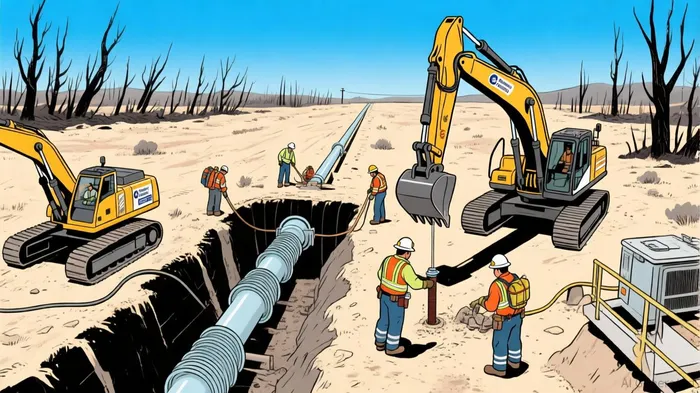
The Marshall Fire, which destroyed over 1,000 homes and caused $2 billion in damages, was sparked by two ignition points: one from a debris burn on the Twelve Tribes property and another from Xcel's electrical infrastructure. Despite disputing its role in the second ignition, Xcel agreed to a settlement that avoided customer rate hikes and emphasized its commitment to wildfire mitigation[1]. The company's 2025–2027 Wildfire Mitigation Plan, approved by the Colorado Public Utilities Commission, includes $1.9 billion in investments for undergrounding power lines, advanced fire modeling, and vegetation management[2].
This proactive approach contrasts with the reactive strategies of utilities like Pacific Gas & Electric (PG&E), which filed for bankruptcy in 2019 after being held liable for $13.5 billion in wildfire damages[3]. Xcel's settlement and mitigation plan reflect a growing industry trend: utilities are shifting from litigation to prevention, even as they face regulatory scrutiny and investor skepticism.
Regulatory and Financial Pressures Across the Sector
The Marshall Fire settlement is not an isolated event. Nearly 100 U.S. utilities have faced credit downgrades since 2020 due to wildfire risks, according to Charles River Associates[4]. Credit rating agencies like S&P and Fitch now routinely factor wildfire liabilities into their assessments, with Southern California Edison and Hawaiian Electric Industries among the most scrutinized. For example, Hawaiian Electric's stock plummeted nearly 70% following the 2023 Lahaina wildfire, illustrating the volatility now inherent in utility investing[5].
Regulatory responses are also evolving. States like California and Utah have established public wildfire insurance pools to share risk between utilities, ratepayers, and taxpayers[6]. Meanwhile, Xcel EnergyXEL-- is lobbying for federal policies that would allow utilities to use compliance with mitigation plans as a legal defense in civil litigation[7]. These developments signal a sector-wide reevaluation of risk distribution, with utilities seeking to balance operational costs, regulatory demands, and shareholder expectations.
Investment Implications: Balancing Risk and Resilience
For investors, the key takeaway is that climate-exposed utilities are no longer low-volatility assets. The PG&E bankruptcy, for instance, wiped out $20 billion in shareholder value and destabilized California pension funds[8]. Conversely, utilities that invest aggressively in mitigation—like Xcel—may see improved credit ratings and investor confidence. BMO Capital recently upgraded Xcel Energy's stock, citing its strong earnings and renewable energy leadership despite wildfire concerns[9].
However, mitigation efforts come at a cost. Xcel's $1.9 billion wildfire plan will likely be funded through a mix of securitization and ratepayer support, a strategy regulators are increasingly approving[10]. This raises questions about how much of these costs will be passed on to consumers, potentially straining affordability in already high-cost regions.
Historical performance data from 2022 to 2025 reveals nuanced insights for investors. Over five instances where Xcel Energy (XEL) beat earnings expectations, the stock initially underperformed in the first week but gained momentum afterward. A 17-day window produced a statistically significant +5.2% abnormal return, with gains tapering but remaining positive through day 30 (+3.3% vs. +0.5% benchmark). This suggests that while short-term market reactions may be mixed, a buy-and-hold strategy following positive earnings surprises has historically delivered outperformance. Investors should consider these patterns when evaluating Xcel's long-term resilience amid regulatory and climate-driven challenges.
Conclusion: A New Era for Utility Investing
Xcel Energy's Marshall Fire settlement encapsulates the dual challenges facing the utility sector: managing climate-driven liabilities while maintaining profitability. As wildfires become more common, investors must weigh a utility's mitigation strategies, regulatory environment, and financial resilience. The sector's future will likely hinge on its ability to innovate in risk management and collaborate with policymakers—a dynamic that will define investment opportunities and risks for years to come.





Comentarios
Aún no hay comentarios