
Why Whitestone REIT (WSR) is Poised to Outperform in 2025: Valuation Arbitrage and Sunbelt Secular Drivers
Whitestone REIT (WSR) trades at a stark 20% discount to its retail REIT peers despite outperforming on nearly every key metric—from same-store NOI growth to tenant quality. This valuation gap presents a rare opportunity for investors to capitalize on a fundamentally strong but underappreciated small-cap REIT. In this analysis, we dissect WSR's undervalued portfolio, recession-resistant tenant mix, and secular growth catalysts in the Sunbelt, while arguing that its current price-to-FFO multiple of 13.7x is far too low relative to its peers and growth trajectory.
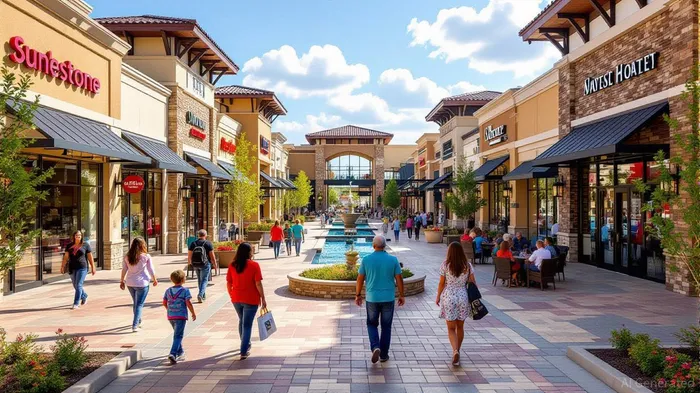
Valuation Arbitrage: A 20% Discount for a Top-Performing Portfolio
Whitestone trades at a P/FFO of 13.7x, significantly below the retail REIT sector average of 17x and peers like Kimco RealtyKIM-- (KIM, 17.2x) and Regency CentersREG-- (REG, 20.5x). This discount is unjustified given WSR's superior operational execution:
- Same-Store NOI Growth: WSR's 4.8% increase in Q1 2025 outperformed the sector average of 3.3%, driven by 5.2% rent growth in its Texas markets, where 80% of its properties are located.
- Balance Sheet Strength: Total debt of $642.2M is offset by $15.8M in liquidity and a conservative debt-to-EBITDAre ratio of 7.5x, far below the 10x+ levels of many peers.
- Analyst Targets: A $16 price target (29% upside) from JMP Securities and Citizens Bank assumes a 15x multiple on its 2025 Core FFO midpoint of $1.05. Even this modest multiple expansion would erase its discount to peers.
Secular Growth Drivers: The Sunbelt Advantage
WSR's focus on Sunbelt markets like Texas and Arizona positions it to benefit from three long-term trends:
Population and Economic Growth: Texas's GDP grew at 3.8% in 2024, outpacing the national rate of 2.4%, while its unemployment rate remains below 4%. This fuels demand for retail spaces in high-traffic areas like Fort Worth's 5000 South Hulen shopping center, acquired in 2024 for its $113,520 average household income catchment area.
Below-Market Lease Upside: Over 30% of WSR's leases expire by 2027, creating an opportunity to reset rents at current market rates. In Q1, new leases were signed at 20.3% higher rates than expiring terms, a trend CEO Jason Perry emphasized as a “key growth lever.”
Tenant Mix Resilience: WSR's portfolio leans toward essential retailers (grocery, healthcare, and convenience stores) and credit-tenanted anchors like Sephora and Old Navy. This mix helped occupancy stay stable at 92.9% despite broader retail sector volatility.
Catalysts for Near-Term Outperformance
- 2025 Guidance: Same-store NOI growth of 3.0–4.5% and a 94–95% occupancy target are achievable given its tenant retention rate of 89% and pipeline of re-leasing opportunities.
- Acquisition Pipeline: WSR's $97.7M of available credit and $1.3B in undepreciated real estate assets allow selective acquisitions in high-growth submarkets. The recent South Hulen deal, for instance, added a 94% occupied asset with 10-year leases.
- Dividend Stability: A payout ratio of 47.6% in 2025 (vs. 121.9% in 2024) leaves ample room to grow the dividend, currently yielding 3.4%—above the sector average of 2.8%.
CEO Insight: A Focus on Operational Discipline
In a recent interview, CEO Jason Perry emphasized WSR's strategy to avoid mall-heavy exposure, instead focusing on “community-anchored centers” in Sunbelt markets. He highlighted the $24.79 net effective rental rate per square foot—up 4% year-over-year—as proof of tenant demand. Perry also noted that WSR's low leverage and high credit quality (BBB- rating) insulate it from rising interest rates, a key concern for cyclical REITs.
Risk Factors to Monitor
- Geographic Concentration: 96% of properties are in Texas, exposing WSRWSR-- to regional downturns. However, Texas's diversified economy (energy, tech, healthcare) mitigates this risk.
- Interest Rate Sensitivity: While WSR's fixed-rate debt (72% of its $642M total) limits refinancing pressure, a prolonged rate hike cycle could compress REIT valuations broadly.
Conclusion: A “Strong Buy” with 30% Upside
Whitestone REIT's undervaluation relative to peers, coupled with its Sunbelt growth tailwinds and operational execution, makes it a compelling Strong Buy. With a $16 price target (28% upside) and catalysts like lease resets and accretive acquisitions, WSR is primed to narrow its valuation gap in 2025. Investors seeking exposure to a resilient, high-growth REIT should consider adding WSR now.
Positioning Recommendation: Buy WSR at current levels, with a price target of $16 and a hold horizon of 12–18 months to capture multiple expansion and FFO growth.





Comentarios
Aún no hay comentarios