
WhiteFiber's Strategic AI Infrastructure Play: A High-Growth Colocation Bet in the New Energy-Driven AI Era
The AI revolution is no longer a distant promise-it's a seismic shift in global energy demand. As artificial intelligence workloads surge, data centers are becoming the new industrial giants, guzzling power at a scale that rivals entire cities. For investors, this creates a unique inflection point: companies that can align their infrastructure with the dual tailwinds of AI growth and energy innovation are poised to dominate the next decade. WhiteFiberWYFI--, Inc. (NASDAQ: WYFI) is one such player, and its recent $865 million, 10-year colocation deal with Nscale Global Holdings is a masterstroke in this high-stakes game.
The Energy Appetite of AI: A $363 Billion Opportunity
AI data centers are projected to consume 945 terawatt-hours (TWh) by 2030, more than double current levels, with AI workloads as the primary driver. To put this into perspective, the U.S. data center sector alone consumed 183 TWh in 2024-4% of the nation's total electricity use-and this is expected to grow by 133% by 2030. The energy sector is scrambling to keep up. Renewables, particularly solar and battery storage, are the fastest-growing solutions, with solar and storage accounting for over 90% of power projects waiting for grid connection. However, grid interconnection delays and rising infrastructure costs remain critical bottlenecks.
WhiteFiber's strategy is to position itself at the intersection of these trends. By securing a 40-megawatt (MW) colocation agreement with Nscale at its North Carolina-1 (NC-1) data center, the company is locking in long-term revenue while addressing the energy challenges head-on. The NC-1 campus, engineered to support 150 kilowatts per cabinet with a power usage effectiveness (PUE) of 1.3 or better, is a blueprint for high-density, energy-efficient AI infrastructure according to company data.
Energy Sector Adaptations: Renewables, SMRs, and the Grid Challenge
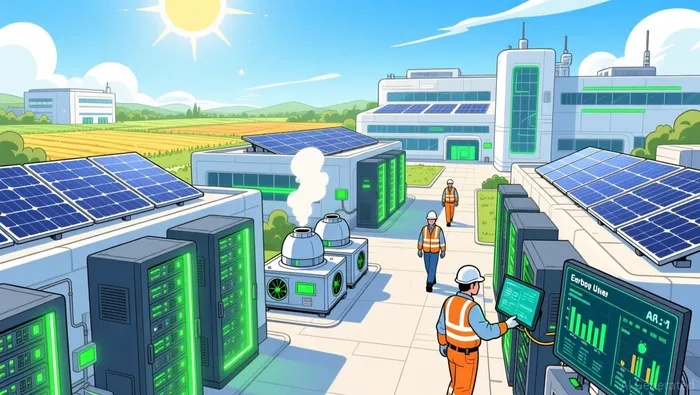 The energy industry is pivoting rapidly to meet AI's insatiable demand. Renewables are expected to meet nearly 50% of the growth in data center electricity demand by 2030, but grid interconnection delays-some stretching seven years-remain a major hurdle. Meanwhile, small modular reactors (SMRs) are emerging as a game-changer. By 2035, SMRs could significantly reduce reliance on coal and natural gas, offering a cleaner, reliable alternative for data centers.
WhiteFiber's partnership with Duke Energy is a strategic win. The utility has secured a 99 MW capacity agreement for NC-1, with potential to scale to 200 MW over time. Duke Energy's 2025 Carolinas Resource Plan underscores its commitment to balancing affordability and reliability, including investments in 5,600 MW of battery storage by 2034 and 4,000 MW of solar capacity by 2034 according to official filings. While the plan also includes extending coal plant operations for short-term stability, the long-term trajectory leans toward renewables and nuclear uprates as reported by local media. For WhiteFiber, this means a power supply that aligns with both immediate scalability and future sustainability goals.
Financial Catalysts: A $865M Contract with 10-Year Visibility
The Nscale deal is a financial blockbuster. With a 3% annual rate escalator and non-recurring installation fees, the contract locks in $865 million in contracted revenue over 10 years. The first 20 MW phase begins billing in April 2026, with the second phase following in May 2026-a timeline that provides immediate cash flow.
WhiteFiber's capital allocation is equally compelling. The company has already invested $150 million in equity into NC-1, de-risking the project and enabling institutional financing in early 2026 according to financial reports. This financial discipline is critical in an industry where upfront costs are astronomical. Additionally, the company's recent acquisition of a one-million-square-foot data center property in North Carolina and a $43.8 million CAD debt facility with Royal Bank of Canada highlight its aggressive yet calculated expansion strategy.
Sustainability as a Competitive Edge
Sustainability is no longer a buzzword-it's a regulatory and reputational imperative. WhiteFiber's NC-1 campus, with its N+1 cooling redundancy and target PUE of 1.3, is a model of energy efficiency according to company documentation. Duke Energy's renewable investments further bolster this narrative. While the utility's 2025 plan includes coal extensions, its 9.2 GW solar target by 2035 and 15 GW by 2040 ensure that WhiteFiber's power supply will increasingly align with decarbonization goals. For ESG-focused investors, this is a critical differentiator.
Risks and Realities
No investment is without risk. WhiteFiber reported a $15.75 million net loss in Q3 2025, reflecting the high costs of scaling infrastructure according to financial reports. Grid interconnection delays and rising component costs could also pressure margins. However, the company's long-term contracts and strategic partnerships with Duke Energy and Nscale mitigate these risks. The AI infrastructure market itself is a $363 billion opportunity by 2030, according to McKinsey analysis, providing ample room for growth.
Conclusion: A High-Conviction Play in the AI Energy Era
WhiteFiber's Nscale deal is more than a contract-it's a strategic pivot into the heart of the AI economy. By securing a decade-long revenue stream, leveraging Duke Energy's evolving power mix, and engineering a facility tailored for high-density AI workloads, the company is positioning itself as a critical node in the AI infrastructure value chain. For investors willing to bet on the energy-driven AI revolution, WhiteFiber offers a compelling combination of growth, scalability, and sustainability.







Comentarios
Aún no hay comentarios