
White House Briefing Fuels Debate on Insider Trading-Pelosi Backs Bill to Ban Predictive Market Participation by Officials
New legislation introduced by U.S. Rep. Ritchie Torres (D-NY) seeks to prohibit government officials from insider trading on prediction markets when they possess non-public information about events. The Public Integrity in Financial Prediction Markets Act of 2026 has received support from over 30 Democrats, including former House Speaker Nancy Pelosi (D-CA) according to reports. The bill is a response to recent cases that have raised ethical concerns about the use of insider knowledge in speculative betting.
A recent incident on Polymarket, where a trader won $436,000 by predicting the removal of Venezuelan President Nicolás Maduro just hours before it occurred, has intensified the debate around prediction market integrity. Critics argue that such trades suggest a potential for insider trading or access to privileged information. The timing of the bet has drawn attention from lawmakers and raised questions about the risks of allowing officials to trade in markets tied to their policy decisions.
Kalshi CEO Tarek Mansour has publicly endorsed the bill and emphasized that regulated platforms like Kalshi already have strict anti-insider trading rules in place. He stated that the company supports the proposed legislation because it aligns with the policies already enforced at Kalshi. Mansour also pointed out the distinction between regulated platforms like Kalshi and unregulated offshore markets, which are more prone to integrity issues.
Why Did This Happen?
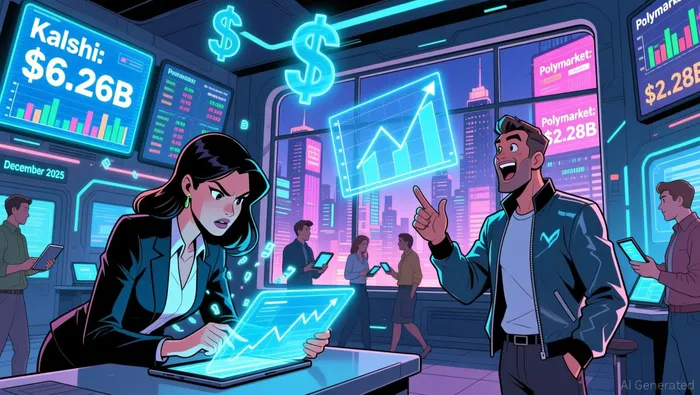
The controversy surrounding prediction markets has grown as their popularity and trading volumes have surged. In December 2025, Kalshi reported $6.26 billion in trading volume, while Polymarket recorded $2.28 billion according to data. The rapid expansion of these platforms has caught the attention of regulators and lawmakers, who are concerned about the risks of insider information and market manipulation.
New York Assemblyman Clyde Vanel has introduced the ORACLE Act, which would restrict prediction market offerings in the state. The bill would ban bets on political outcomes, catastrophic events, and individual deaths, among other categories. Vanel's proposed legislation reflects a broader trend of increased scrutiny of prediction markets by state regulators.
How Did Markets Respond?
Prediction market platforms have already faced regulatory challenges in multiple states. Kalshi has sued state gaming commissions, including New York's, arguing that it operates under federal commodities and futures trading regulations. Meanwhile, Polymarket has faced criticism over disputes involving market definitions and settlement procedures, raising questions about the reliability of such platforms.
The debate has also drawn the attention of institutional investors and media outlets. Dow Jones announced a partnership with Polymarket to embed prediction market data into its financial reporting. Similarly, Kalshi has integrated its market data into CNN and CNBC coverage, signaling growing institutional interest in the sector.
What Are Analysts Watching Next?
Analysts are closely watching whether the proposed legislation will gain momentum in Congress and how it may affect the regulatory environment for prediction markets according to market analysis. The focus is on whether lawmakers will move forward with clear rules that distinguish between regulated and unregulated platforms.
The bill introduced by Rep. Torres and his colleagues seeks to prevent government officials from using their position to gain an unfair advantage in prediction markets. It defines insider trading in the context of prediction markets using language similar to securities law, which could set a precedent for future regulations.
Prediction markets continue to evolve as both a speculative and data-driven tool. Institutional investors are increasingly treating prediction market data as a useful input for financial analysis, even as concerns about integrity and fairness persist. The next few months will be critical in determining how regulators, lawmakers, and the market itself will respond to the growing scrutiny of prediction markets.
The debate over prediction market regulation reflects a broader tension between innovation and oversight in the financial sector according to industry reports. As trading volumes grow and institutional partnerships expand, the need for clear rules and ethical boundaries will become increasingly important. Analysts expect that the coming year will see further developments in how prediction markets are defined and regulated in the United States.







Comentarios
Aún no hay comentarios