
Where Will Verizon Communications Be in 5 Years?
Generado por agente de IAEli Grant
sábado, 7 de diciembre de 2024, 11:33 am ET2 min de lectura
VZ--
Verizon Communications (VZ) is a telecommunications giant that has been a staple in the industry for decades. As the company continues to evolve and adapt to the changing landscape, investors are wondering where Verizon will be in the next five years. This article explores the potential future of Verizon, focusing on its 5G network expansion, fiber optics growth, and competitive position.
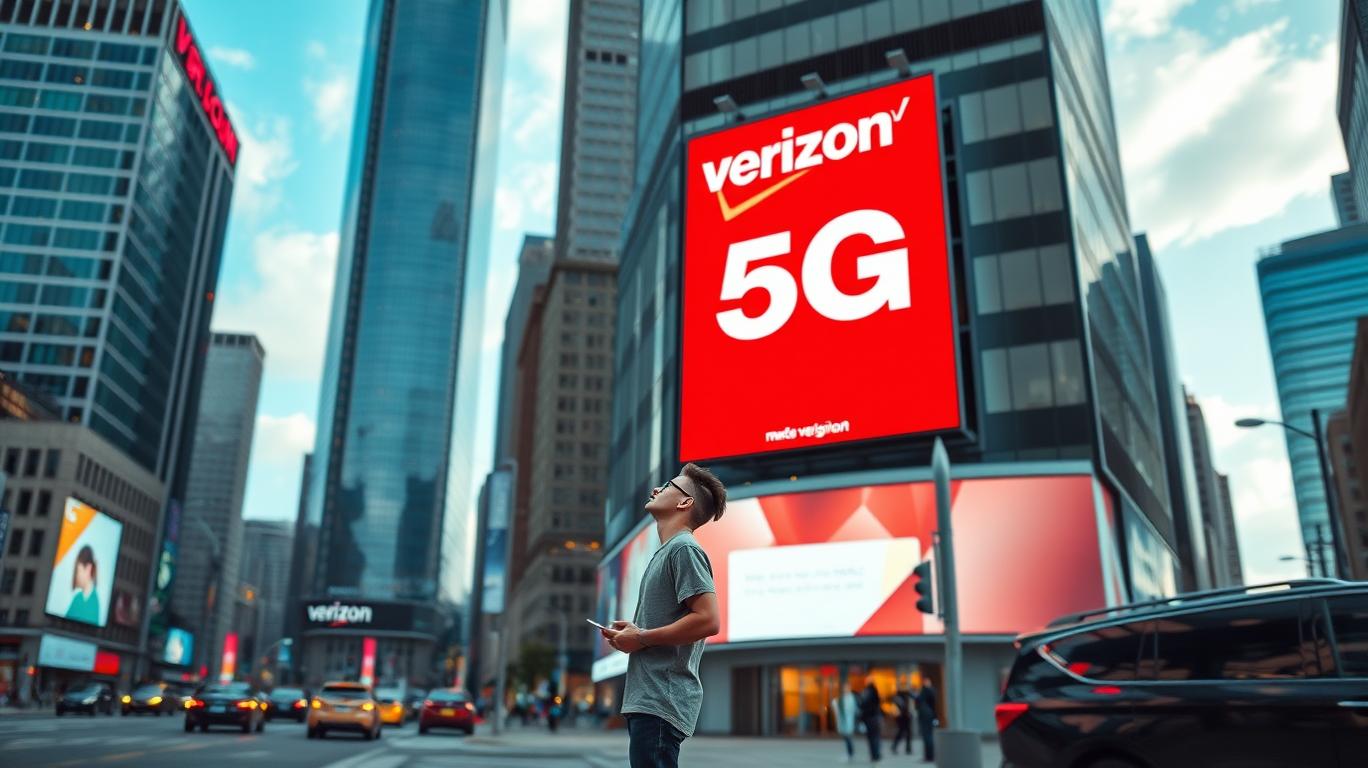
Verizon's 5G network expansion is expected to be a significant driver of growth in the coming years. The company plans to launch its 5G Ultra Wideband Network in more than 30 U.S. cities by 2021, with revenues from 5G Mobility and 5G Home services expected to contribute meaningfully to growth by 2021. As 5G devices and applications become more prevalent, Verizon's network leadership is likely to translate into increased market share and higher revenue.
Verizon's acquisition of Frontier Communications is another strategic move that will drive growth in the coming years. This acquisition will significantly expand Verizon's fiber optics footprint, adding approximately 25 million fiber customers. This expansion will enable Verizon to offer far higher bandwidth, catering to the increasing demand for faster data transmission across various industries. By 2028, Verizon aims to reach 30 million fiber customers and ultimately between 35 million and 40 million.
Verizon's competitive landscape is expected to evolve significantly over the next five years. T-Mobile's recent growth and AT&T's strategic shifts pose challenges to Verizon's market share and stock performance. T-Mobile's acquisition of Sprint has made it a formidable competitor, with a larger customer base and network capacity. Meanwhile, AT&T's focus on content and media has diversified its revenue streams and reduced its reliance on wireless services. Verizon, however, has maintained a singular focus on 5G, investing heavily in its network infrastructure. As 5G becomes more prevalent, Verizon's early lead in network launches and its extensive nationwide coverage may help it maintain its market share.
Despite these challenges, Verizon's dividend remains on solid footing. With a payout ratio of 59% of 2024 earnings estimates, Verizon's dividend is expected to continue increasing over the coming years. Historically, Verizon has grown its dividend by an average of 2% annually, and this pace is expected to continue. With a yield of 6.2% and a payout ratio below 60%, Verizon's dividend remains attractive for income-focused investors.
In conclusion, Verizon's future looks promising, with its 5G network expansion and fiber optics growth strategies expected to drive market share and competitive position in the next five years. However, the competitive landscape will remain dynamic, with all three major carriers continuing to invest in their networks and services to attract and retain customers. Verizon's stock performance will likely be influenced by its ability to adapt to this evolving landscape and capitalize on the growth opportunities presented by 5G. As an investor, it is essential to monitor Verizon's progress in 5G deployment and fiber optics expansion and consider investments in complementary technologies like edge computing.
Verizon Communications (VZ) is a telecommunications giant that has been a staple in the industry for decades. As the company continues to evolve and adapt to the changing landscape, investors are wondering where Verizon will be in the next five years. This article explores the potential future of Verizon, focusing on its 5G network expansion, fiber optics growth, and competitive position.
Verizon's 5G network expansion is expected to be a significant driver of growth in the coming years. The company plans to launch its 5G Ultra Wideband Network in more than 30 U.S. cities by 2021, with revenues from 5G Mobility and 5G Home services expected to contribute meaningfully to growth by 2021. As 5G devices and applications become more prevalent, Verizon's network leadership is likely to translate into increased market share and higher revenue.
Verizon's acquisition of Frontier Communications is another strategic move that will drive growth in the coming years. This acquisition will significantly expand Verizon's fiber optics footprint, adding approximately 25 million fiber customers. This expansion will enable Verizon to offer far higher bandwidth, catering to the increasing demand for faster data transmission across various industries. By 2028, Verizon aims to reach 30 million fiber customers and ultimately between 35 million and 40 million.
Verizon's competitive landscape is expected to evolve significantly over the next five years. T-Mobile's recent growth and AT&T's strategic shifts pose challenges to Verizon's market share and stock performance. T-Mobile's acquisition of Sprint has made it a formidable competitor, with a larger customer base and network capacity. Meanwhile, AT&T's focus on content and media has diversified its revenue streams and reduced its reliance on wireless services. Verizon, however, has maintained a singular focus on 5G, investing heavily in its network infrastructure. As 5G becomes more prevalent, Verizon's early lead in network launches and its extensive nationwide coverage may help it maintain its market share.
Despite these challenges, Verizon's dividend remains on solid footing. With a payout ratio of 59% of 2024 earnings estimates, Verizon's dividend is expected to continue increasing over the coming years. Historically, Verizon has grown its dividend by an average of 2% annually, and this pace is expected to continue. With a yield of 6.2% and a payout ratio below 60%, Verizon's dividend remains attractive for income-focused investors.
In conclusion, Verizon's future looks promising, with its 5G network expansion and fiber optics growth strategies expected to drive market share and competitive position in the next five years. However, the competitive landscape will remain dynamic, with all three major carriers continuing to invest in their networks and services to attract and retain customers. Verizon's stock performance will likely be influenced by its ability to adapt to this evolving landscape and capitalize on the growth opportunities presented by 5G. As an investor, it is essential to monitor Verizon's progress in 5G deployment and fiber optics expansion and consider investments in complementary technologies like edge computing.

Divulgación editorial y transparencia de la IA: Ainvest News utiliza tecnología avanzada de Modelos de Lenguaje Largo (LLM) para sintetizar y analizar datos de mercado en tiempo real. Para garantizar los más altos estándares de integridad, cada artículo se somete a un riguroso proceso de verificación con participación humana.
Mientras la IA asiste en el procesamiento de datos y la redacción inicial, un miembro editorial profesional de Ainvest revisa, verifica y aprueba de forma independiente todo el contenido para garantizar su precisión y cumplimiento con los estándares editoriales de Ainvest Fintech Inc. Esta supervisión humana está diseñada para mitigar las alucinaciones de la IA y garantizar el contexto financiero.
Advertencia sobre inversiones: Este contenido se proporciona únicamente con fines informativos y no constituye asesoramiento profesional de inversión, legal o financiero. Los mercados conllevan riesgos inherentes. Se recomienda a los usuarios que realicen una investigación independiente o consulten a un asesor financiero certificado antes de tomar cualquier decisión. Ainvest Fintech Inc. se exime de toda responsabilidad por las acciones tomadas con base en esta información. ¿Encontró un error? Reportar un problema


SOBRE NOSOTROS
Nuestra historiaAutores de noticiasBase de conocimientosPolítica de privacidadTérmino de usoDescargo de responsabilidad de corretaje de tercerosTérminos de uso de AIMEDivulgaciones de riesgos de AInvest AICarrerasCONTÁCTENOS
Email: support@ainvest.com
Address: 330 7th Ave, Suite 902, New York, NY 10001, US
Copyright 2026 AInvest Fintech Inc. All rights reserved.


Comentarios
Aún no hay comentarios